

What To Know
- A myth is a traditional story that explains natural events, origins, or human behavior through symbolic narratives involving gods and goddesses, heroes, and supernatural forces.
- Mythology is a body of stories belonging to a particular culture that explains the world through narratives involving divine or semi-divine beings.
Mythology Stories: An In-Depth Exploration of Ancient Legends, Gods, Heroes, and Cultural Meaning
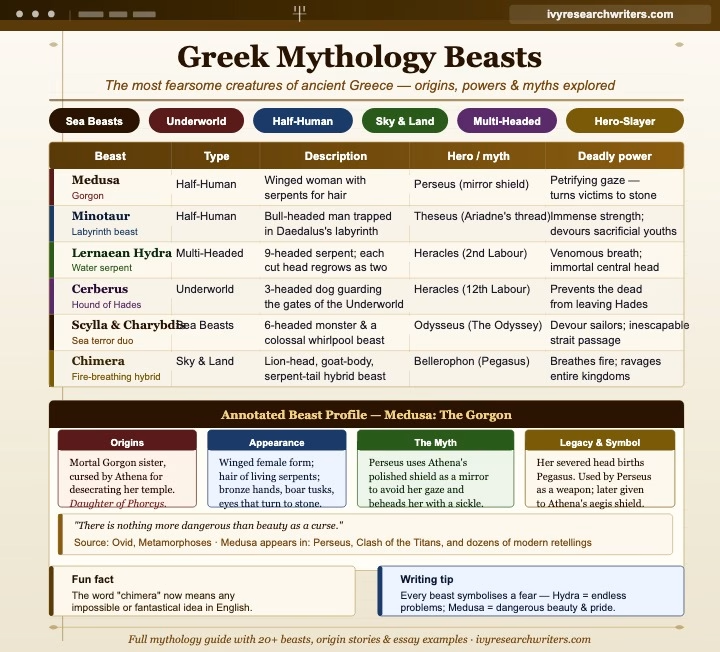
Mythology has fascinated humanity for centuries, offering powerful narratives that explain the unknown, shape cultural identity, and reflect the deepest aspects of human nature. From the heroic tales of greek myth beasts to the cosmic narratives of norse mythology and chinese mythology, these stories continue to influence literature, philosophy, and academic research.
At IvyResearchWriters.com, we help students go beyond surface-level storytelling—guiding them to analyze myths and legends, interpret symbolism, and develop well-structured academic work on mythology.
🧩 Myth and Mythology: Definitions and Cultural Significance
A myth is a traditional story that explains natural events, origins, or human behavior through symbolic narratives involving gods and goddesses, heroes, and supernatural forces.
Academic Definition:
Mythology is a body of stories belonging to a particular culture that explains the world through narratives involving divine or semi-divine beings.
💡 In ancient greece, mythology was deeply embedded in religion, governance, and daily life—making it central to greek culture and education.
⚡ Norse Mythology: Fate, Power, and Cosmic Conflict
Norse mythology presents a darker, more fatalistic worldview compared to Greek traditions.
- Features gods like Odin, Thor, and Loki
- Emphasizes destiny, destruction, and rebirth
- Reflects harsh environmental conditions of the Norse world
💡 Like greek and roman mythology, Norse stories reflect societal values, but they focus more on inevitable fate rather than control.
🏛️ Greek Mythology: The Foundation of Western Storytelling
Greek mythology is one of the richest and most studied traditions in the greek world.
The Greek Pantheon:
The greek pantheon consists of olympian gods who ruled from Mount Olympus:
- Zeus – king of the gods
- Hera – goddess of marriage
- Poseidon – god of the seas
- Hades – ruler of the underworld
- Athena – goddess of wisdom
- Apollo – god of music, prophecy, and light
- Artemis, Hermes, Dionysus, Ares, Hephaestus, Hestia
These powerful gods controlled various aspects of human life and natural forces.
🏹 Greek Myth: Iconic Stories and Their Symbolism
🔥 Prometheus: Knowledge and Sacrifice
Prometheus defied Zeus by giving fire to humanity.
- Represents enlightenment and rebellion
- Punishment reflects divine authority
💡 His brother Epimetheus plays a role in the story of pandora’s box, where a beautiful woman unknowingly releases suffering into the world.
🏺 Pandora’s Box: Curiosity and Consequences
This story explains why suffering exists.
- Pandora, created by the gods, opens a forbidden box
- Releases all evils except hope
💡 A central lesson in stories of myth—human curiosity can have consequences.
⚔️ Trojan War: The Ultimate Mythological Conflict
The Trojan War is one of the most famous epic poems in ancient greek mythology.
- Fought between Greek warriors and Troy
- Features heroes like Achilles and Odysseus
- Includes divine intervention from olympian gods
💡 The war reflects themes of honor, fate, and human conflict.
🌊 The Odyssey: Journey, Identity, and Perseverance
The Odyssey follows Odysseus as he navigates dangers after the Trojan War.
- Encounters monsters and gods
- Explores intelligence over strength
💡 A foundational narrative in Western literature and storytelling.
🧠 Athena: Wisdom and Strategic Power
Athena, daughter of Zeus, is a central goddess in many myths.
- Represents wisdom and strategy
- Protector of heroes like Odysseus
🔥 Apollo and Daphne: Transformation and Desire
In apollo and daphne, Apollo falls in love with Daphne.
- Daphne transforms into a tree to escape him
- Explores themes of desire and transformation
🧵 Arachne: Pride Against the Divine
Arachne challenges Athena in weaving.
- Punished for her arrogance
- Turned into a spider
💡 Highlights the dangers of challenging the gods.
🪨 Medusa: Beauty, Power, and Punishment
Medusa, once a beautiful woman in the world, becomes a monster.
- Her gaze turns people to stone
- Symbolizes transformation and injustice
🎶 Orpheus: Love, Music, and Loss
Orpheus journeys into the underworld ruled by Hades.
- Attempts to rescue his beloved
- A tragic example of love and human error
🌸 Persephone: Seasons and the Underworld
The abduction of persephone explains seasonal cycles.
- Daughter of Demeter
- Becomes queen of the underworld
💡 Reflects agricultural cycles in ancient greece.
⚔️ Theseus: Heroism and Intelligence
Theseus defeats the Minotaur using strategy.
- Represents intelligence over brute strength
☀️ Icarus: The Cost of Ambition
Icarus flies too close to the sun.
- His wings melt
- A cautionary tale about overconfidence
🏆 Jason and the Argonauts: Adventure and Loyalty
In jason and the argonauts, Jason leads a quest.
- Includes heroes and divine challenges
- A character fell in love with jason, adding emotional depth
💰 King Midas: Wealth and Consequences
King Midas turns everything to gold.
- A warning against greed
🛠️ The Twelve Labors: Hercules’ Strength and Endurance
The twelve labors or labors of hercules were impossible labors assigned to Hercules, the son of zeus.
- Tested courage, strength, and resilience
🌍 Greek and Roman Mythology: Shared Narratives
Greek and roman mythology share similar structures:
- Zeus → Jupiter
- Athena → Minerva
💡 Demonstrates cultural adaptation of myths.
🏯 Chinese Mythology: Balance and Cosmic Order
Chinese mythology emphasizes:
- Harmony and balance
- Creation stories
- Mythical creatures like dragons
🌌 Theogony: Origins of the Gods
The Theogony explains the creation of the greek pantheon.
- Written by Hesiod
- Describes the rise of the olympian gods
💡 Themes Across Mythology Stories
Across all traditions, mythology stories explore:
- Power and morality
- Love and loss
- Fate and free will
- Human flaws and divine justice
💡 These stories from greek mythology and beyond continue to shape modern storytelling.
🎓 Academic Importance of Mythology
Mythology is a key subject in:
- Literature studies
- Cultural analysis
- Philosophy and history
At IvyResearchWriters.com, we help students:
- Analyze ancient greek mythology
- Compare greek and roman mythology with other traditions
- Develop strong essays and research papers
Turn Mythology Into Mastery with IvyResearchWriters.com
Mythology is rich, complex, and full of meaning—but turning those powerful stories of myth into high-quality academic work can be challenging. From analyzing a greek god like Apollo to interpreting themes in famous stories such as the 12 labors or the tale of Aphrodite, the goddess of love, you need more than just understanding—you need structure, clarity, and strong academic writing.
Related Assignments
If you’re studying mythology stories, there are several engaging academic assignments that allow you to explore ancient narratives, analyze symbolism, and connect myths to modern ideas. At IvyResearchWriters.com, we help students turn these topics into insightful, well-structured academic work.
📘 1. Myth Analysis Essay
A common assignment in literature and cultural studies.
- Task:
- Analyze a specific myth (e.g., Prometheus, Pandora, or Hercules)
- Focus:
- Themes, symbolism, and moral lessons
- Example:
- Explore how gifts from Zeus in Pandora’s story represent unintended consequences
💡 These stories of myth often reveal deeper meanings about human behavior.
🧠 2. Comparative Mythology Assignment
Students compare myths across cultures.
- Compare:
- Greek vs Norse or Chinese mythology
- Analyze:
- Different interpretations of gods and deity figures
💡 You can examine how a greek god differs from gods in other traditions.
🧾 3. Character Analysis Paper
Focus on mythological figures.
- Example:
- Aphrodite, the goddess of love, and her influence in myths
- Hercules and his 12 labors
- Discuss:
- Character traits
- Symbolic meaning
📊 4. Research Paper on Mythology and Culture
A more advanced assignment.
- Explore:
- Role of mythology in ancient societies
- Influence of myths on modern culture
💡 Include famous stories like the tale of Narcissus (love with his own reflection) or Psyche (psyche fall in love).
🧪 5. Thematic Essay on Mythological Lessons
Focus on recurring themes.
- Topics:
- Love, pride, punishment, and sacrifice
- Example:
- Analyze how myths portray consequences of human actions
🎭 6. Creative Writing Assignment
Students recreate or reinterpret myths.
- Task:
- Write your own version of a myth
- Example:
- Retell the story of Prometheus and include the role of Prometheus’ brother
📈 7. Mythology Presentation or Project
A visual or oral assignment.
- Include:
- Key characters
- Plot summary
- Cultural significance
💡 Highlight major figures like the god Apollo or heroes from epic myths.
🎯 Why These Assignments Matter
These assignments help students:
- Develop critical thinking and analytical skills
- Understand cultural and historical contexts
- Interpret symbolic meaning in literature
They also prepare you for advanced research and writing tasks.
✍️ Need Help With Mythology Assignments?
At IvyResearchWriters.com, we provide expert assistance with:
- Essays and research papers on mythology
- Comparative and thematic analysis
- Creative and academic writing projects
👉 Whether you’re analyzing a greek god, exploring famous stories, or writing about mythological themes, we help you produce high-quality, insightful academic work.
🚀 Conclusion: Why Mythology Still Matters
From the trojan war to the tragic tale of orpheus, mythology remains a timeless source of knowledge and inspiration.
👉 These stories are not just ancient—they are deeply relevant, offering insights into human nature, culture, and belief systems.
Explore mythology. Analyze its meaning. Let it inspire your academic and creative journey.
Frequently Asked Questions (FAQs)
What is the best mythological story?
There is no single “best” mythological story, but many scholars and students consider stories from greek mythology among the most influential due to their depth, symbolism, and lasting impact.
Popular contenders include:
- The story of Prometheus and his sacrifice for humanity
- The tragic love tale where Psyche fall in love with Eros
- The myth of Narcissus, who fell in love with his own reflection
- The heroic journey of Hercules and his 12 labors
Prose insight:
What makes these famous stories stand out is their exploration of human nature—love, pride, sacrifice, and ambition. For instance, Prometheus’ rebellion (and the involvement of Prometheus’ brother) reflects the tension between divine authority and human progress.
👉 At IvyResearchWriters.com, we help students analyze such stories of myth in depth—connecting themes, symbolism, and historical context in academic writing.
What are the top 5 mythologies?
The most studied and influential mythologies in academic and cultural contexts include:
- Greek mythology – rich in stories of gods like Zeus, Aphrodite, and the god Apollo
- Roman mythology – closely related to Greek traditions
- Norse mythology – centered on fate and heroic struggle
- Chinese mythology – focused on harmony and cosmic balance
- Egyptian mythology – explores life, death, and the afterlife
Prose insight:
Each mythology features a unique deity system and worldview. For example, in Greek myths, Aphrodite, the goddess of love, represents beauty and desire, while other cultures emphasize different aspects of existence.
What are the 10 major mythologies?
In broader academic discussions, the 10 major mythologies often include:
- Greek
- Roman
- Norse
- Egyptian
- Chinese
- Hindu
- Japanese
- Celtic
- Mesopotamian
- African mythologies
Prose insight:
These traditions collectively form the foundation of global storytelling. They all feature gods and goddesses, powerful deity figures, and symbolic narratives that explain the world.
💡 Many of these myths include themes like divine punishment, such as gifts from Zeus that come with hidden consequences, or heroic trials like the 12 labors.
What is the most famous myth?
One of the most famous myths is the story of Pandora, often linked to the idea of curiosity and consequence, but several others are equally iconic.
Widely recognized myths include:
- Pandora’s story involving unexpected gifts from Zeus
- The tale of Narcissus and his love with his own reflection
- The story of Eros and Psyche, where Psyche fall in love under challenging circumstances
- The adventures of Hercules and his 12 labors
Prose insight:
These myths remain famous because they address universal human experiences—love, temptation, power, and consequence. Whether centered on a greek god, a heroic figure, or a symbolic narrative, they continue to resonate across cultures and generations.

