

What To Know
- Whether you are delivering a speech, giving a presentation, or speaking during a public speaking engagement, the ability to communicate ideas clearly can make a powerful impact.
- Whether you are speaking in public during a classroom presentation or talking in front of groups in professional settings, strong speaking skills help your message resonate.
Public Speaking Tips: How to Become a Better Public Speaker and Deliver Impactful Presentations
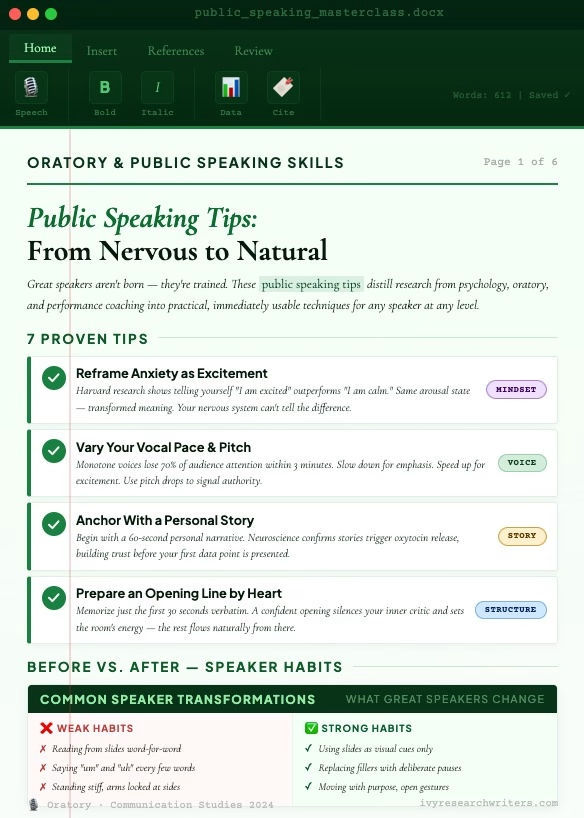
Public speaking is one of the most valuable communication skills in academic, professional, and leadership settings. Whether you are delivering a speech, giving a presentation, or speaking during a public speaking engagement, the ability to communicate ideas clearly can make a powerful impact.
Many people experience public speaking anxiety or even the fear of public speaking, but the good news is that effective speaking skills can be learned and improved with practice. This guide explores practical public speaking tips that will help you become a better public speaker, engage listeners, and deliver a confident message.
Understanding Public Speaking and Why It Matters
At its core, public speaking involves presenting ideas, information, or arguments to an audience in a clear and engaging way. A public speaker must communicate effectively while keeping the listener interested and focused.
Strong speaking skills help you:
- Deliver ideas clearly
- Grab your audience’s attention
- Communicate with confidence
- Improve overall communication skills
Whether you are speaking in public during a classroom presentation or talking in front of groups in professional settings, strong speaking skills help your message resonate.
Public Speaking Anxiety: Why People Feel Nervous
Many individuals experience public speaking anxiety when they have to speak in front of an audience. This anxiety often causes symptoms like:
- Palms sweat
- Rapid heartbeat
- Difficulty remembering information
- Increased nervousness
This reaction is a physiological response triggered by the body’s stress response. Even experienced speakers sometimes feel anxiety before delivering a speech.
However, preparation and practice can help reduce anxiety and make speakers feel more confident.
Tips for Public Speaking: Preparing Beforehand
Preparation is one of the most effective tips for public speaking. Preparing beforehand allows you to organize your ideas and build confidence.
Research and Organize Your Message
A good speech begins with a clear structure. Identify your key message and ensure your audience is able to understand the purpose of your presentation.
Practice Your Speech
Practice is essential if you want to become a better public speaker. Try these methods:
- Practice in front of a mirror
- Practice front of a friend or family member
- Record yourself speaking
You can also practice in front of a friend or family member and ask them to ask for feedback on clarity and delivery.
Make Eye Contact to Connect with Your Audience
One of the most important public speaking techniques is maintaining eye contact.
When you make eye contact with listeners:
- You create a stronger connection with the audience
- You appear more confident
- You keep the audience’s attention
Instead of staring at your notes the entire time, focus on facing the audience and engaging different audience members throughout your talk.
Use Hand Gestures and Body Language Effectively
Nonverbal communication plays a major role in effective public speaking.
Strong speakers use:
- Natural hand gestures
- Open body language
- Confident posture
These movements help emphasize key ideas and make your speech more engaging. When used correctly, gestures can engage your audience and reinforce your message.
Speak Clearly and Slow Down
One of the most common mistakes speakers make is talking too fast due to nervousness.
Instead:
- Slow your speaking pace
- Pause between important ideas
- Take deep breaths
Pausing can help slow your thoughts and make your message easier for listeners to understand.
Avoid Filler Words Like “Um”
Many speakers use filler words such as “um”, “uh,” or “like” during a presentation.
These habits can distract the audience. Instead of filling silence with unnecessary words, take a short pause. Pauses often make speeches sound more professional and thoughtful.
Use Visual Aids to Enhance Your Message
Visual aids can make presentations more engaging and easier to understand.
Examples include:
- Slides
- Charts
- Images
- Video clips
Visual aids help speakers deliver a message effectively while keeping the audience’s attention.
However, avoid reading slides word for word. Slides should support your message rather than replace your speech.
How to Become Comfortable Speaking in Front of Groups
Confidence develops over time through practice and exposure.
To become comfortable with public speaking:
- Join public speaking training programs
- Participate in organizations such as Toastmasters International
- Watch professional presentations like TED Talks
Observing experienced speakers can help you hone your own speaking style.
Need Help Preparing a Powerful Speech or Presentation?
Delivering a speech or giving presentations in front of a group can feel intimidating—especially if you’re dealing with public speaking anxiety or preparing for an important academic or professional event. That’s where IvyResearchWriters.com can help.
Strategies to Help Reduce Public Speaking Anxiety
There are several effective techniques to help reduce anxiety before a speech.
Visualization
Imagine yourself delivering a successful presentation. Visualization can help you feel more prepared and confident.
Positive Self-Talk
Use encouraging self-talk such as:
- “I am prepared.”
- “I know my topic.”
Positive thinking can help calm your mind before speaking.
Breathing Techniques
Taking deep breaths before speaking helps control stress and improve focus on the task at hand.
Delivering an Impactful Speech
To deliver an impactful speech:
- Start with an interesting anecdote
- Use a compelling statistic
- Share real-world examples
These techniques help grab your audience’s attention and make your message memorable.
A strong speaker does not simply present information—they deliver a message that resonates with the audience.
Final Public Speaking Tips for Students and Professionals
These public speaking tips will help anyone improve their speaking ability and confidence:
- Prepare and rehearse beforehand
- Maintain strong eye contact
- Use natural hand gestures
- Speak clearly and at a steady pace
- Ask peers to ask for feedback
With consistent practice, you will gradually become a better public speaker and feel more confident talking in front of groups.
Thesis Defense and Research Presentation Preparation: A Complete Guide for Graduate Students 🎓
Preparing for a thesis defense and research presentation is one of the most important milestones in graduate and postgraduate education. The defense is your opportunity to demonstrate mastery of your research topic, explain your methodology, present findings, and defend your conclusions before an academic committee.
A successful thesis defense requires strong preparation, a well-structured presentation, and confident delivery. This guide explains how to prepare effectively and present your research clearly.
Understanding the Purpose of a Thesis Defense
A thesis defense allows students to present their research and demonstrate their ability to conduct scholarly work.
During the defense, the committee evaluates:
- Your understanding of the research problem
- The quality of your methodology
- The validity of your results
- The significance of your research contribution
Unlike a written thesis, the defense focuses on summarizing key insights and explaining the reasoning behind your research decisions.
Step 1: Understand Your Research Thoroughly
Before presenting your work, ensure you understand every aspect of your research.
You should be able to explain:
- Why you selected the research topic
- The theoretical framework guiding your study
- Your research design and methods
- The significance of your findings
Committee members often ask questions about methodological choices or theoretical assumptions, so preparation is critical.
Step 2: Design a Clear Research Presentation Structure
A well-organized presentation helps the committee follow your argument.
Typical Thesis Defense Slide Structure
- Title Slide
- Introduction and Background
- Research Problem
- Research Objectives
- Research Questions or Hypotheses
- Literature Review
- Methodology
- Data Analysis
- Key Findings
- Discussion
- Conclusions
- Recommendations
- Limitations
- Future Research
- Questions
This structure ensures your presentation moves logically from problem identification to conclusions.
Step 3: Create Clear and Professional Slides
Your presentation slides should highlight key ideas rather than display large blocks of text.
Slide Design Best Practices
- Use short bullet points
- Include charts and graphs for data
- Maintain consistent formatting
- Avoid overcrowded slides
- Use readable fonts and clear visuals
Slides should support your explanation rather than replace it.
Step 4: Present Your Research Problem Clearly
The research problem is one of the most critical elements of your thesis defense.
Your presentation should clearly answer:
- What problem does your research address?
- Why is this problem important?
- What gap exists in previous research?
A strong problem statement helps the committee understand the significance of your study.
Step 5: Explain the Methodology
The methodology slide explains how you conducted the research.
Include:
- Research design (qualitative, quantitative, or mixed methods)
- Data collection methods
- Sample size and sampling techniques
- Data analysis tools (e.g., SPSS, R, NVivo)
This section demonstrates the rigor of your research approach.
Step 6: Present Key Findings Clearly
The findings section should focus on the most important results of your study.
Use:
- Graphs
- Tables
- Charts
- Visual summaries
Avoid overwhelming the audience with too many numbers. Instead, explain what the results mean and how they relate to your research questions.
Step 7: Discuss the Implications of Your Research
The discussion section connects your findings to broader academic and practical implications.
Address:
- How your results relate to previous studies
- What new insights your research provides
- How your findings can be applied in practice
This section demonstrates the academic value of your research contribution.
Step 8: Present Clear Conclusions and Recommendations
Your conclusion should summarize the key insights of your research.
Example structure:
Key Conclusions
- The research confirms that variable X influences outcome Y.
- Data analysis revealed significant relationships between variables.
Recommendations
- Organizations should implement strategy X.
- Policymakers should consider policy Y.
Clear conclusions help reinforce the importance of your study.
Step 9: Prepare for Questions from the Committee
After your presentation, the committee will ask questions about your research.
Common defense questions include:
- Why did you choose this research topic?
- Why did you select this methodology?
- What are the limitations of your study?
- How can your research be applied in practice?
Preparing answers in advance helps you respond confidently.
Step 10: Practice Your Presentation
Practice is essential for a confident thesis defense.
Practice Strategies
- Rehearse your presentation multiple times
- Practice explaining complex ideas clearly
- Record yourself presenting
- Practice answering potential questions
The more you practice, the more confident you will feel during the defense.
Common Mistakes to Avoid in a Thesis Defense
Students sometimes make avoidable mistakes during their research presentation.
Common errors include:
- Overloading slides with text
- Reading slides word-for-word
- Speaking too quickly due to nervousness
- Failing to explain research contributions clearly
Avoiding these mistakes can significantly improve your presentation.
Tips for Delivering a Successful Research Defense
To deliver a strong thesis defense:
- Speak clearly and confidently
- Maintain eye contact with the committee
- Focus on key findings rather than details
- Manage your presentation time carefully
Remember, the defense is not meant to trick you—it is an opportunity to demonstrate your expertise.
Final Thoughts
Preparing for a thesis defense and research presentation requires careful planning, practice, and confidence. By structuring your presentation effectively and clearly explaining your research contributions, you can present your work with authority and professionalism.
A well-prepared defense not only demonstrates your academic skills but also showcases your ability to communicate complex research ideas effectively.
🎓 Need Help Preparing Your Thesis Defense?
At IvyResearchWriters.com, our academic experts help students prepare professional research presentations, thesis defense slides, and speaking scripts.
Our services include:
- 📊 Thesis defense PowerPoint design
- 📝 Research presentation scripts
- 🎤 Coaching for research presentations
- ✏️ Editing and structuring academic presentations
👉 Get expert help today: https://ivyresearchwriters.com
Deliver your thesis defense with confidence and clarity.
A public speaking PowerPoint presentation
The presentation includes:
- Introduction to public speaking
- Importance of communication skills
- Common public speaking anxiety
- Preparation tips
- Audience engagement strategies
- Body language and eye contact
- Visual aids and presentation tools
- Managing mistakes and nervousness
- Conclusion and Q&A slide
Conclusion: Mastering Public Speaking Skills
Although many people experience anxiety about public speaking, the ability to communicate ideas effectively can be developed through practice, preparation, and feedback.
Strong speakers focus on:
- Clear communication
- Confident delivery
- Audience engagement
- Strong preparation
By applying these tips for public speaking, anyone can overcome nervousness, improve their communication skills, and confidently deliver speeches or presentations that leave a lasting impact.
Frequently Asked Questions
What are the 5 C’s of public speaking?
The 5 C’s of public speaking are principles that help speakers communicate clearly and confidently when delivering a presentation or delivering the speech in front of an audience. These elements ensure that speakers communicate more effectively and maintain audience engagement.
The five C’s typically include:
- Clarity – A speaker must present ideas in a simple and structured way so listeners can easily follow the message. Avoid filler words such as “um”, which may interrupt clarity.
- Confidence – When standing behind a podium or speaking front of a group, confidence helps the audience trust the speaker. Confidence also helps you feel more confident while presenting.
- Connection – A good speaker connects with the audience by telling stories, asking questions, and engaging listeners during the talk.
- Credibility – Presenting accurate information and speaking with authority helps establish trust.
- Control – Managing the time you have to speak, voice tone, and body language ensures a professional delivery.
When speakers apply these five principles, they can deliver your speech in a clear and impactful way.
What are 10 tips for successful public speaking?
Successful speakers rely on several strategies that improve confidence and engagement when giving presentations or giving a speech.
Here are 10 practical public speaking tips:
- Prepare thoroughly beforehand so you know your material well.
- Practice delivering a presentation multiple times to become comfortable with the content.
- Use notecards instead of memorizing your speech word-for-word.
- Take a few minutes before speaking to breathe and focus.
- If you make a mistake, stay calm and continue speaking.
- Speak clearly and avoid overusing filler words such as “um.”
- Maintain eye contact to keep your audience engaged.
- Use natural gestures and movement when speaking front of a group.
- Practice in front of friends to help you feel more comfortable.
- After your talk, reflect on what worked well and what could improve for your next presentation.
These techniques help speakers deliver your speech more confidently and improve overall communication.
What are the 5 P’s of public speaking?
The 5 P’s of public speaking provide a simple framework for preparing and delivering an effective speech.
They include:
- Preparation – Research your topic and organize your ideas before delivering a speech.
- Practice – Rehearse multiple times so you feel comfortable speaking front of a group.
- Passion – Speak with enthusiasm so the audience stays interested.
- Projection – Use a clear and strong voice when you give a speech.
- Presence – Maintain confident posture and control when speaking at a podium or stage.
These principles help speakers overcome nervousness and provide a clear way to overcome public speaking anxiety.
What are the 7 powerful speaking tips?
Public speaking becomes easier with practice and the right strategies. The following seven powerful speaking tips can help speakers improve confidence and engagement when delivering a presentation.
1. Prepare and organize your message
Preparation is the foundation of good speaking. When you understand your topic, public speaking comes more naturally.
2. Manage nervousness
Even experienced speakers feel nervous before delivering the speech. Taking deep breaths and focusing on the message can help you feel calmer.
3. Use notes effectively
Use notecards as reminders rather than reading your entire speech.
4. Focus on the audience
Make eye contact and engage listeners to keep your audience interested.
5. Control the pace of your speech
Speak clearly and pause occasionally to ensure listeners understand the message.
6. Accept mistakes
If you make a mistake, simply correct it and move forward. Audiences often do not notice small errors.
7. Practice for improvement
Practice consistently to improve your speaking skills and prepare for your next presentation.
When speakers apply these techniques, they can deliver your speech confidently and create a stronger connection with listeners.
✔️ Tip: Public speaking skills improve with experience. Every opportunity to speak front of a group is a chance to develop confidence and refine your communication abilities.

