

DOIs: The Key to Reliable Scholarly References
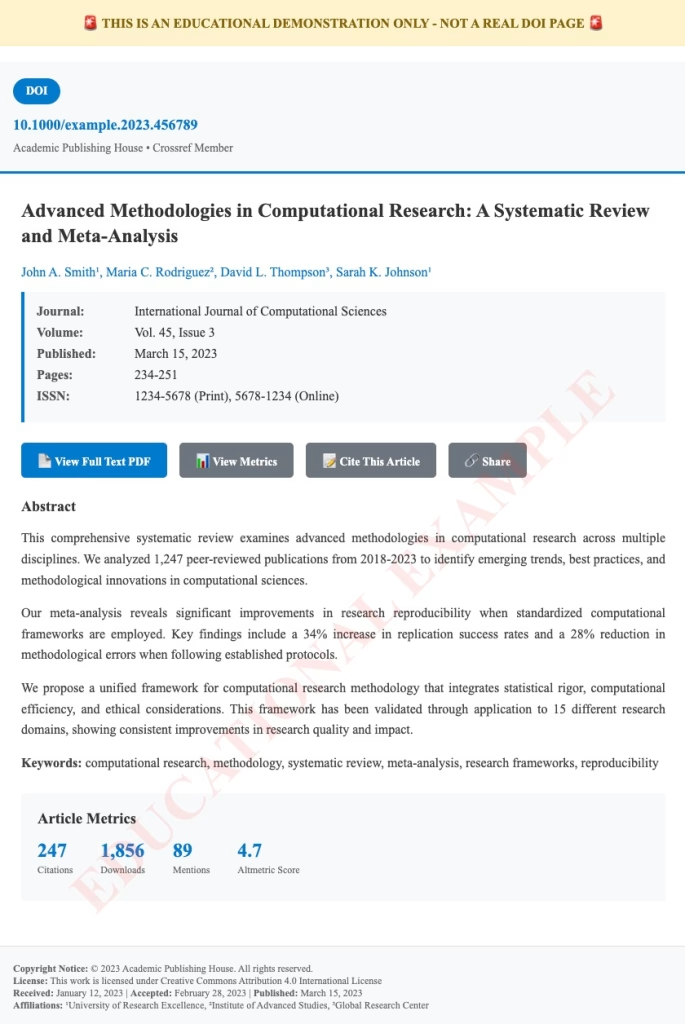
In the world of academic research and scholarly publishing, Digital Object Identifiers (DOIs) have become a crucial part of the citation and referencing process. Whether you’re working with APA, MLA, or any other citation style, understanding the significance of DOIs and how to use them correctly can greatly enhance the accuracy and credibility of your research. This blog post provides an extensive guide on DOIs, explaining their meaning, how to find them, how they’re used in citations, and addressing some frequently asked questions related to their usage.
DOI in References APA
When it comes to citing academic sources in APA style, the DOI (Digital Object Identifier) is a key component. Including the DOI in your references ensures that your readers can reliably access the exact article you’re citing, even if the article is moved to a new location or the publisher’s URL changes. The APA 7th edition format requires the DOI to be presented as a hyperlink, ensuring easy access for readers.
Example in APA format:
- Author(s). (Year). Title of the article. Journal Name, Volume(Issue), pages. https://doi.org/xxxxxxx
In APA references, the DOI is placed at the end of the citation in the format:
https://doi.org/[DOI number].
This format helps ensure that your citations are actionable and can be resolved reliably, regardless of changes in URL or location.
DOI Meaning
A DOI is a unique identifier for a digital object—such as a journal article, research paper, ebook, or dataset. It serves as a permanent identifier that provides a stable link to the object, even if the content is relocated or the publisher’s URL changes. This persistent nature of DOIs is vital in scholarly publishing because it ensures that research materials are always accessible.
- The DOI system ensures reliable access to scholarly articles and other resources, making it an essential part of academic research.
- The DOI is assigned by a registration agency (such as CrossRef or Datacite) to identify academic objects globally and uniquely.
The DOI system is governed by the International DOI Foundation (IDF), which ensures its standardization across digital publishing platforms.
How to Find DOI
If you are looking for the DOI of a specific journal article or research publication, there are several methods you can use:
1. Check the Article’s Webpage
- Many journals and publishers include the DOI directly on the article’s webpage, often near the title or abstract.
- For example, Elsevier journals, Springer, and Wiley typically display the DOI in a prominent location on their article pages.
2. Use DOI Lookup Tools
- Websites like CrossRef (www.crossref.org) allow you to search for a DOI by entering details like the article title, author(s), or journal name.
3. Look at the Article’s PDF or HTML
- The DOI is often included in the metadata of the PDF or HTML version of the article, typically on the first page of the document.
4. Use Google Scholar
- Google Scholar often provides the DOI alongside citation information for indexed articles. Simply search for the article, and click on the Cite button to see the DOI.
What Does DOI Mean in APA?
In APA style, the DOI refers to a persistent digital object identifier assigned to an academic article, research paper, or dataset. The DOI ensures that the source is reliable and can be easily accessed by readers.
- APA 7th edition requires the DOI to be formatted as a clickable URL: https://doi.org/xxxxxxx.
- The DOI is part of the citation, enabling academic research to be reliably accessed and verified.
In APA citations, the DOI typically follows the article’s bibliographic information. This allows the reader to find the full-text version of the article by simply clicking the DOI link. Here’s a more extensive example of a DOI in APA format, including various types of sources:
What Is DOI in Citation?
In a citation, the DOI acts as a unique identifier for the article, ensuring that it can be reliably located, even if the article is moved to a different URL or online platform. When you include a DOI in your citation, you are providing readers with a direct link to the scholarly article, eliminating the risk of broken or outdated links.
Example in Citation (APA):
- Author(s). (Year). Title of the article. Journal Name, Volume(Issue), pages. https://doi.org/xxxxxxx
By including the DOI, you are helping ensure that scholarly work is easily traceable and accessible, regardless of platform changes or website disruptions.
DOIs: A Persistent Digital Identifier for Scholarly Resources
DOIs (Digital Object Identifiers) serve as persistent identifiers for digital content, ensuring that scholarly articles, books, datasets, and other academic resources are reliably tracked and accessible online. The DOI system provides a unique and stable link to a specific article or object, regardless of changes in its URL or location. This makes DOIs indispensable in scholarly publishing.
- DOI name consists of a prefix (assigned to the publisher) and a suffix (that uniquely identifies the resource).
- The DOI serves as a locator for the article, ensuring it can always be found, even if the article’s online location changes over time.
How to Use DOIs in Scholarly Publishing
DOIs are commonly used in scholarly publishing to ensure reliable access to research materials. When you use a DOI, you’re providing a digital identifier for an article that can persistently identify the object, making it easy to find, cite, and share.
- DOIs are assigned to journal articles, ebooks, and other digital content and help to maintain the integrity of academic references.
- Many publishers and research information organizations use DOIs to ensure accessibility, even if an article moves to a different URL.
To use DOIs, simply include them in your citations (APA, MLA, etc.) and link them to articles or datasets to ensure others can track and access the original source easily.
Common Doubts About DOIs
1. What Is a DOI in a Citation?
- A DOI in a citation acts as a unique identifier for an academic object, such as a journal article, ensuring that the referenced work can be reliably accessed. It provides a direct, actionable link to the content.
2. What Is DOI in APA?
- In APA format, the DOI is a persistent digital identifier that provides a reliable and consistent link to a specific article. It is included at the end of the citation for the article, formatted as a clickable URL: https://doi.org/xxxxxxx.
3. How to Find DOI of an Article?
- To find the DOI of an article, check:
- The article’s webpage, often near the title or abstract.
- The publisher’s site where the article was originally published.
- Use DOI lookup tools such as doi.org or CrossRef for articles that might not display the DOI visibly.
4. What If the Article Has No DOI?
- If an article doesn’t have a DOI, you can use its URL or citation details, depending on the citation style (e.g., APA or MLA).
- For online sources without a DOI, always check for alternative links such as DOI.org or CrossRef.
The DOI Foundation and Its Role in Scholarly Publishing
The DOI Foundation is responsible for overseeing the DOI system globally. It manages the rules for DOI registration and ensures that DOIs are standardized and globally unique.
- The International DOI Foundation (IDF) is an international organization for standardization that governs the DOI system.
- CrossRef.org, one of the DOI registration agencies, ensures the proper assignment and resolution of DOIs, allowing users to find DOI links and access scholarly articles with ease.
DOI Prefix and Suffix
- DOI is divided into two parts: the prefix and the suffix.
- Prefix: Represents the publisher or registration agency (e.g., 10.1000).
- Suffix: Uniquely identifies the digital object (e.g., 182).
This combination of letters and numbers ensures that each DOI remains globally unique, making it a vital persistent identifier in scholarly publishing.
DOI Resolution: A Persistent Identifier
The primary function of a DOI is to act as a persistent identifier for scholarly content, ensuring that even if the object moves to a different URL or publisher, the DOI will still point to the correct resource.
- DOI resolution is the process by which a DOI link directs you to the article or dataset associated with the identifier, providing easy access to research articles and scholarly data.
- By resolving the DOI, users can track academic sources even if they change locations on the web.
Using DOI in Citation Styles
APA Style
- In APA style, the DOI is used in citations to provide a permanent link to the article. The DOI is formatted as a URL starting with “https://doi.org/” followed by the unique identifier.
MLA Style
- In MLA, DOIs are also included in citations. The format is similar, but MLA does not require the “https://” portion. Instead, the DOI is typically listed in the citation like this:
- DOI: 10.xxxx/xxxxx
How DOI Benefits Scholarly Publishing
The use of DOIs in scholarly publishing is essential for ensuring the reliability and stability of references. When a DOI is assigned to an article, it allows researchers, readers, and databases to identify the article reliably and persistently, even as the article moves across platforms or publishers.
- DOIs help scholarly journals track citations, ensure accessibility to full-text articles, and contribute to research information being organized and easily shared.
- DOIs also help publishers maintain consistency in their references and ensure global recognition for their articles.
DOI Name: Understanding the Structure of DOIs
A DOI name is composed of two primary parts: the prefix and the suffix. Together, these elements form a unique identifier for digital objects like journal articles, datasets, and other scholarly resources.
Breakdown of the DOI:
- Prefix: The prefix is assigned by the DOI registration agency (such as CrossRef) and typically represents the publisher or organization that is responsible for the content. For example, 10.1000 could be assigned to a particular publisher or institution.
- Suffix: The suffix is unique to the digital object and helps identify the specific article or resource. This part is often a string of letters and numbers that is created by the publisher or registry to differentiate the content.
Together, the DOI name (prefix + suffix) serves as a persistent identifier that remains consistent and globally unique, even if the URL or hosting platform changes.
Example of a DOI:
- DOI: 10.1000/abcd1234
This DOI uniquely identifies a specific academic article, and no two articles will ever share the same DOI name.
IDF: The International DOI Foundation
The International DOI Foundation (IDF) is a not-for-profit organization responsible for managing and standardizing the DOI system globally. The IDF ensures that the DOI system remains reliable and is accessible worldwide.
- ISO Standard: The DOI system is standardized by the International Organization for Standardization (ISO) under the ISO 26324 standard, which outlines the guidelines for DOI registration and resolution.
- Non-profit Organization: The IDF operates as a non-profit and works with various registration agencies like CrossRef, Datacite, and others to assign DOIs and maintain the infrastructure necessary for DOI resolution.
The IDF also oversees the DOI handbook, which provides guidelines on DOI display, usage, and metadata management.
What Is DOI in a Citation?
When you cite a scholarly article, including the DOI in the citation serves as a digital identifier of the object. The DOI provides a persistent link to the article, ensuring that the citation remains reliable and accessible, even if the article is moved or the URL changes.
- DOI in citation: The DOI should be included at the end of the citation in a specific format (e.g., APA, MLA).
Example of a DOI in Citation (APA format):
- Author(s). (Year). Title of the article. Journal Name, Volume(Issue), pages. https://doi.org/10.xxxx/xxxxxxx
The DOI helps identify an article uniquely across multiple platforms and academic databases, even if the article moves to a different URL.
DOIs: A Digital Identifier Used to Identify Objects
The DOI system allows for the unique identification of digital objects, such as journal articles, books, and datasets, across the web. A DOI ensures that a digital object can be located and accessed reliably by anyone, even if the object moves to a new online location or is hosted by a different platform.
- Persistent Identifier: The DOI is a persistent identifier that links directly to a specific object, whether it’s a journal article, ebook, or dataset.
- Used to Identify: DOIs are used to identify academic articles, research papers, and other scholarly content, providing publication information and metadata associated with the resource.
By providing a unique identifier, DOIs eliminate the problem of broken links and ensure that articles and other digital objects are always accessible, no matter what happens to their original hosting site or URLs.
The DOI System: Prefix and Suffix
As mentioned earlier, DOIs are divided into two main components: the prefix and the suffix.
DOI Prefix:
- The prefix is part of the DOI name and indicates the registrar or publisher. It often begins with “10.” followed by a number that uniquely identifies the publisher.
- Example: The prefix 10.1000 might be assigned to a particular publisher or institution.
DOI Suffix:
- The suffix is the part of the DOI that uniquely identifies the digital object itself. The suffix is often a string of numbers and letters that is assigned by the publisher or registration agency.
- Example: The suffix abcd1234 could represent a specific article published by that publisher.
Together, the prefix and suffix make up the complete DOI, ensuring that each digital object is assigned a globally unique identifier.
DOI in Scholarly Publishing: How DOIs Are Assigned
DOIs are assigned by registration agencies such as CrossRef, Datacite, and IDF to scholarly publications like journal articles, ebooks, and research datasets. The DOI system helps ensure that academic research articles are correctly attributed and can be easily located.
- DOI Assigned: Once an article is published, it is assigned a DOI by the publisher or registration agency.
- Metadata: The DOI is connected to the metadata of the article, including the author(s), title, journal name, and DOI resolution URL, which ensures that the article can be accessed persistently.
In scholarly publishing, DOIs play an essential role in maintaining the integrity and accessibility of academic resources.
DOI and URLs: Why DOIs Are Important
Although URLs are commonly used to link to academic articles, they are prone to change over time, especially if the article moves to a new publisher or platform. DOIs, however, are persistent identifiers that never change, ensuring that the article can always be located.
- DOIs are important because they provide a reliable locator for the article, even if the URL changes or the article is moved to a different online location.
- DOI resolution is the process by which DOIs are translated into a working URL, making sure the article is still accessible even if it moves.
DOIs help track and manage academic resources across time, ensuring that articles and publications remain reliable and accessible.
The DOI Handle System
The DOI system operates using the handle system, a technology that allows digital objects to be permanently identified and accessed. The DOI handle system ensures that each DOI leads to the correct digital object and is always retrievable, even as content changes locations.
- Persistent Links: The handle system ensures that the DOI links remain functional and persistent, providing a reliable way to access digital resources.
DOI and ISO Standards
The DOI system is standardized by the International Organization for Standardization (ISO), specifically under ISO 26324, which governs how DOIs are assigned and resolved. This standardization helps ensure DOIs are globally recognized and usable across multiple platforms and systems.
- ISO Standard: The DOI system adheres to a globally accepted standard that ensures DOIs can be used in academic and research databases worldwide.
- IDF and ISO work together to ensure that the DOI system remains consistent and reliable for use across different academic fields and regions.
DOIs are an essential tool in scholarly publishing that provide persistent identifiers for academic articles, books, and other research objects. By including DOIs in your citations, you can ensure that your references remain reliable and accessible for future research. Understanding how to find DOIs, how they are structured, and how they play a crucial role in scholarly publishing will help you cite and locate academic resources more effectively.
Need help finding DOIs for your citations or writing academic papers in the correct format? IvyResearchWriters.com is here to assist with expert APA, MLA, and other citation style formatting. Contact us today for professional research and writing support!
DOI Display Guidelines
- DOI display guidelines recommend that DOIs be included in a citation as a hyperlink, particularly in online content. This ensures that readers can click on the DOI and immediately access the article.
DOI in Research Data and Metadata
- DOIs are often assigned to datasets and other research data to ensure proper citation and use in academic contexts.
- DOI metadata includes important details about the article, such as the author(s), journal name, publication date, and more, making it easier for users to find and cite scholarly work.
Final Thoughts
The use of DOIs has revolutionized the way researchers and academics reference and access scholarly content. Whether you are citing journal articles, ebooks, or datasets, understanding how to use DOIs correctly can ensure your work remains reliable and easily accessible. From ensuring persistent identifiers for research objects to helping track citation counts, DOIs play a critical role in scholarly publishing and academic referencing.
Need help with your citations or finding the right DOI for your research? IvyResearchWriters.com provides expert assistance in APA, MLA, and other citation styles. Contact us today to ensure your work is properly referenced and accessible!
DOI Prefix and Suffix
A DOI is made up of two main components: the prefix and the suffix.
- Prefix: The prefix typically identifies the publisher or registration agency that assigns the DOI (e.g., 10.1000).
- Suffix: The suffix is a unique identifier for the digital object, typically a combination of numbers and letters (e.g., 182). This ensures each object is distinctly identified in the DOI system.
The DOI system is managed by CrossRef, Datacite, and other DOI registration agencies, which are responsible for assigning DOIs and ensuring that they are unique and reliable.
Struggling with your citations or finding the right DOI for your research?
IvyResearchWriters.com is here to help! Our expert team can assist with APA, MLA, and other citation styles, ensuring your academic work is properly formatted and easily accessible. Contact us today for professional research support and citation assistance!
DOI and Metadata
A crucial aspect of the DOI system is its connection to metadata. Each DOI is associated with metadata about the digital object, such as the author(s), title, publication date, journal name, and more. This metadata is essential for identifying and retrieving the correct version of the digital object.
- The metadata associated with the DOI helps researchers track the publication details of articles, enabling better organization and referencing in academic work.
- The DOI and its metadata ensure that the object remains easily identifiable, even if it moves to a different URL or hosting platform.
Conclusion
DOIs are vital for ensuring reliable access to scholarly articles, research data, and other digital content. They provide a persistent link to the content, ensuring it can be found and cited, even if the article’s URL changes. By understanding how to find, use, and cite DOIs, you can enhance the credibility and accessibility of your research articles and academic work.
Need help with citations or finding DOIs for your research? IvyResearchWriters.com offers expert writing and research assistance to ensure your citations are correctly formatted in APA, MLA, and other styles. Contact us today for personalized research support!
Frequently Asked Questions (FAQs): DOI: Using Digital Object Identifiers for Citation
1. What is a DOI?
- A DOI (Digital Object Identifier) is a unique identifier assigned to digital content like articles, datasets, and books. It helps locate and access the digital object reliably.
2. How Do I Find the DOI of an Article?
- You can find the DOI by checking the article’s publisher webpage, using DOI lookup tools (like CrossRef), or checking the article’s PDF or HTML metadata.
3. Are All Articles on Google Scholar Peer-Reviewed?
- Not all articles indexed in Google Scholar are peer-reviewed. Some articles may come from predatory journals or non-peer-reviewed sources. Always verify the source before citing.
4. What Does DOI Mean in APA?
- In APA, DOI refers to the unique identifier assigned to an academic article, ensuring the article’s reliability and accessibility.
5. What Happens if an Article Doesn’t Have a DOI?
- If an article doesn’t have a DOI, you should use the URL of the article or its citation information for proper referencing.
6. Can I Assign a DOI to My Own Research?
- As an author, you cannot directly assign a DOI. The DOI is assigned by the publisher or DOI registration agency, such as CrossRef or Datacite.

