

Millennial Consumer Behavior: Trends, Spending Habits, and Buying Behavior in 2025 and Beyond
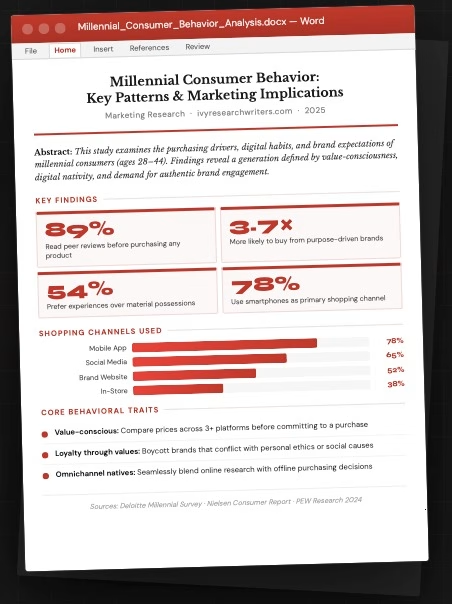
Understanding millennial consumer behavior is essential for any research paper examining modern markets. The millennial generation, born between 1981 and 1996, is currently the largest generational segment among consumers in the United States and is now in its prime spending years. Because of the sheer size of the millennial population and their growing buying power, businesses and researchers must explore how millennials shop, spend their money, and influence broader generational trends.
This guide provides an in-depth academic-style overview of millennials, millennial spending habits, and emerging trends for 2026.
Who Are Millennials? Understanding the Millennial Generation
Millennials—also called Generation Y—were born between 1981 and 1996. They came of age during the 2008 financial crisis and the Great Recession, which significantly shaped their financial security concerns and consumer behaviour.
Unlike older generations such as Gen X, millennials are digital natives who grew up during the rise of social media and online shopping. This generational positioning has created a unique consumer group characterized by:
- High student debt levels
- Delayed home ownership
- Strong digital fluency
- A preference to shop online
- Increased reliance on peer reviews and influencer marketing
Millennials are a highly adaptive consumer group, and understanding millennial behavior requires analyzing both their life stage and economic context.
Millennial Consumer Behavior: Definition and Key Characteristics
Millennial consumer behavior refers to the purchasing decisions, preferences, and spending patterns demonstrated by millennials across products and services.
Among millennial consumers, research consistently identifies several defining characteristics:
- Millennials value brands that align with their values.
- Millennials prioritize experiences over material goods.
- Millennials actively research before making purchases.
- Millennials typically compare online offers before committing.
- Millennials prefer to shop online rather than in-store.
- Millennials feel strongly about social and environmental responsibility.
Because millennials are currently in major life milestones—marriage, parenthood, and career advancement—their consumer behaviour is evolving in 2024 and 2025.
Need Help Writing Your Comparative Research Paper?
Struggling to turn your analysis of Millennials vs. Gen Z into a polished, publication-ready paper?
Millennial Spending Habits in 2023, 2024, and 2025
Millennial spending habits have shifted significantly since 2023. Many millennials plan purchases carefully due to economic pressures, including inflation and student debt.
7 Millennial Spending Habits
- Prioritizing financial security over luxury purchases
- Preferring online shopping platforms
- Spending on experiences (travel, dining, wellness)
- Supporting brands that resonate with millennial values
- Using influencer recommendations before buying
- Comparing prices across multiple platforms
- Choosing subscription-based services
Millennials spend their money more cautiously than older generations, yet they maintain strong spending power. Half of millennials report that affordability and long-term value influence their buying behavior more than brand prestige.
Millennial parents, in particular, represent a powerful segment within consumer packaged goods markets.
Millennial Buying Behavior vs. Gen Z and Gen Alpha
When comparing Gen Z and millennial consumers, several distinctions emerge:
| Factor | Millennials | Gen Z | Gen Alpha |
|---|---|---|---|
| Digital Behavior | Digital natives | Mobile-first | AI-native |
| Brand Loyalty | Moderate | Low | Still forming |
| Spending Focus | Experiences + value | Trend-driven | Parent-influenced |
| Influencer Impact | High | Very high | Growing |
Gen Z shoppers often display faster trend adoption, while millennials are more stability-focused due to life stage responsibilities.
Although millennials are still the dominant generational force in many industries, Gen Z’s growth means marketers must adapt cross-generational marketing strategies.
Millennial Shopping Habits: Online and Social Media Influence
Millennials shop primarily through digital channels. Online shopping continues to dominate millennial buying patterns, and social media platforms significantly shape product discovery.
Key Influences on Millennial Shopping:
- Social media influencer marketing
- Peer reviews
- Brand transparency
- Ethical sourcing
- Convenience and fast delivery
Because millennials are digital natives, they expect seamless mobile interfaces and personalized marketing experiences. Brands need to connect with millennial audiences by creating content-driven strategies that foster loyalty and drive sales.
📊 A Comparative Study of Millennials and Gen Z Consumer Behavior
Understanding generational consumer differences is essential for academic research and strategic marketing analysis. This comparative study examines how millennials and Gen Z shoppers differ in their buying patterns, financial priorities, and digital engagement.
Millennials (born 1981–1996) are now in their prime earning years, while Gen Z (born 1997–2012) is emerging as a powerful economic force. Although a third of Gen Z already demonstrates significant purchasing influence, their motivations and consumption patterns differ from those of millennials.
🛒 Shop Online: Digital Habits of Millennials and Gen Z Shoppers
Both generations are digital natives, but their online behavior varies in sophistication and motivation.
Millennials typically use multiple platforms before making a purchase. They:
- Compare reviews
- Research pricing
- Evaluate long-term value
- Prioritize convenience
Gen Z shoppers, however:
- Discover products through short-form video content
- Make impulse purchases influenced by social media trends
- Prefer mobile-first and app-based shopping
While millennials shop online strategically, Gen Z shoppers are more trend-responsive and socially driven. Millennials often prioritize functionality; Gen Z emphasizes identity expression.
📅 Millennials Plan vs. Gen Z Impulse Buying Patterns
One of the clearest differences lies in planning behavior.
Millennials plan their purchases carefully, often budgeting before major expenditures. This cautious approach stems from:
- Student debt burdens
- The 2008 financial crisis experience
- Home ownership goals
- Family milestone responsibilities
Gen Z, in contrast, shows greater openness to spontaneous purchasing. Although financially aware, Gen Z demonstrates:
- Higher brand-switching tendencies
- Increased willingness to try new brands
- Faster reaction to influencer-driven trends
In research surveys, millennial respondents frequently report financial planning as central to their consumer identity.
💳 Spend Their Money: How Millennials Spend Their Money Compared to Gen Z
The phrase “spend their money” takes on different meanings across generations.
How Millennials Spend Their Money:
- Experiences (travel, dining, wellness)
- Subscription services
- Child-related products (for millennial parents)
- Long-term investments and savings
Millennials spend their money with long-term utility in mind. Their life stage influences cautious allocation of resources.
How Gen Z Spends:
- Fashion and fast-changing trends
- Digital products (gaming, virtual goods)
- Influencer-endorsed products
- Affordable lifestyle brands
Although Gen Z is still building wealth, a third of Gen Z already influences household purchasing decisions, especially in technology and fashion sectors.
🧠 Millennials Typically Value Stability While Gen Z Values Expression
Millennials typically prioritize:
- Financial security
- Career growth
- Ethical and sustainable brands
- Long-term value
Gen Z prioritizes:
- Social justice alignment
- Individual identity
- Brand authenticity
- Immediate digital engagement
While millennials would choose practicality over prestige, Gen Z often chooses self-expression over longevity.
👥 A Third of Gen Z vs. Millennial Economic Dominance
Currently, millennials remain the dominant economic group due to higher income levels. However:
- A third of Gen Z already participates actively in digital commerce.
- Gen Z’s influence is amplified by social media virality.
- Millennials maintain stronger purchasing power due to life-stage earnings.
This shift suggests a transitional marketplace where both generations co-shape consumption patterns.
📈 Key Comparative Insights for Research
| Category | Millennials | Gen Z |
|---|---|---|
| Planning Behavior | Budget-oriented | Flexible and spontaneous |
| Brand Loyalty | Moderate to high | Low, trend-driven |
| Digital Use | Research-heavy | Discovery-heavy |
| Financial Outlook | Security-focused | Opportunity-focused |
| Influencer Impact | Strong | Extremely strong |
Millennials also show stronger attachment to long-term brand relationships, while Gen Z shoppers shift preferences quickly.
🎯 Implications for Academic and Marketing Research
For research papers, this comparison highlights:
- Generational influence on buying behavior
- Life-stage impact on spending habits
- Digital transformation of consumer engagement
- Emerging competitive pressure from Gen Z
Although millennials remain economically dominant, Gen Z’s rapid growth suggests a rebalancing of consumer power.
📌 Conclusion
In summary:
- Millennials plan purchases and prioritize stability.
- Gen Z shoppers prioritize trends and digital expression.
- Millennials spend their money strategically; Gen Z experiments more.
- A third of Gen Z is already shaping future market trends.
Understanding these differences is critical for scholars analyzing consumer behavior, generational marketing, and economic transitions.
Millennial Buying Power and Economic Context
Millennials are currently in their prime spending years. As consumers in the United States, their buying power impacts:
- The housing market
- Automotive industries
- Technology adoption
- Consumer packaged goods
- Subscription services
However, the 2008 financial crisis continues to shape millennial financial behavior. Many millennials aren’t financially positioned the same way older generations were at similar life stages.
Although millennials prioritize home ownership, student debt and housing market challenges delay purchasing decisions. As a result, millennials tend to rent longer and invest in flexible living arrangements.
How Marketers Can Connect with Millennial Consumers
To connect with millennial consumers effectively, brands need to:
- Align with millennial values
- Emphasize authenticity
- Invest in influencer marketing
- Provide online offers and flexible payment options
- Highlight sustainability
Understanding millennial consumer insights allows marketers to tailor campaigns that resonate with this generational segment.
Brands need to adapt their marketing strategies by incorporating digital storytelling, community-building, and personalized outreach.
5 Millennials Traits That Shape Consumer Behaviour
- Value-driven purchasing
- Preference for convenience
- Experience-focused spending
- Socially conscious decision-making
- Long-term financial planning
These five millennials characteristics influence product positioning and brand messaging.
Trends for 2026: What’s Next for Millennial Consumer Behavior?
Looking ahead to trends for 2026, research suggests:
- Continued growth in ethical consumption
- Increased integration of AI in online shopping
- Greater emphasis on financial wellness products
- Expansion of subscription-based services
- Hybrid retail models combining online and in-store experiences
As Gen Z’s purchasing power grows, millennials may represent a third of generational spending dominance in certain sectors by 2026.
However, millennials are still a powerful and evolving consumer group. Their adaptability and economic maturity ensure they will remain central to strategic analysis.
Conclusion: Why Millennial Consumer Behavior Matters for Research
Millennials are leading a transformation in consumer behaviour. Their generational influence, combined with significant spending power, makes them essential for academic research papers in marketing, business strategy, and consumer psychology.
Understanding millennial spending habits, millennial buying trends, and shifts in millennial shopping habits allows scholars and marketers to:
- Explore consumer insights
- Analyze market changes
- Develop predictive marketing strategies
- Assess industry competitiveness
For research papers in 2024 and 2025, studying millennial consumer behavior provides critical insights into modern commerce and the future of generational economics.
Frequently Asked Questions
What Is the Consumer Behavior of Millennials?
Millennial consumer behavior refers to the purchasing patterns, motivations, and decision-making processes demonstrated by individuals born between 1981 and 1996. Among millennials, buying decisions are strongly influenced by digital access, economic realities, and personal values.
In both academic research and market analysis, several consistent patterns emerge:
- Value-driven decisions – Millennials would choose brands that align with their ethical, environmental, and social values.
- Digital-first research habits – Millennial respondents report researching products extensively before purchasing.
- Experience-focused spending – Instead of purely material goods, millennials also prioritize travel, dining, and lifestyle experiences.
- Cautious financial planning – Major milestone events (marriage, home ownership, parenthood) significantly shape spending behavior.
- Openness to innovation – Millennials tend to try new products, especially when endorsed by peers or influencers.
Compared to older generations, millennials show higher digital engagement. Compared to Gen Z, millennials are often more financially pragmatic due to life-stage responsibilities.
At IvyResearchWriters.com, we help students analyze these nuanced consumer behavior patterns in research papers using data-driven insights and scholarly framing.
What Are the 7 Basic Traits of Millennials?
When writing a research paper, understanding the seven core traits of the millennial generation is critical. These traits help explain why spending habits and buying behavior differ from other generational groups.
7 Basic Traits of Millennials
- Digital Native Mindset – Comfortable with technology and online platforms.
- Value-Conscious Spending – Millennials would choose affordability and long-term value over luxury branding.
- Experience-Oriented – They prioritize memorable experiences.
- Socially Responsible – Among millennials, ethical consumption is a recurring theme.
- Financially Cautious – Student debt and economic shifts influence saving habits.
- Brand-Skeptical but Loyal – Millennial respondents show loyalty once trust is established.
- Life-Stage Driven – Major milestone events heavily shape purchasing decisions.
Research shows that nearly a third of Gen Z shares some overlapping traits, but millennials’ life-stage maturity differentiates their behavior significantly.
What Do Millennial Consumers Value?
Millennial consumers value more than just products—they value meaning, transparency, and connection.
Among millennials, the most commonly cited priorities include:
- Authentic brand storytelling
- Sustainability and ethical sourcing
- Convenience and digital accessibility
- Flexible pricing models
- Community engagement
Millennials also expect brands to communicate clearly and demonstrate social impact. When faced with competing options, millennials would choose brands that reflect their identity and worldview.
Interestingly, millennial respondents indicate a willingness to try new brands if they perceive innovation or authenticity. This openness to experimentation makes them responsive to influencer-driven campaigns and digital word-of-mouth marketing.
For academic research, exploring what millennials value provides insight into broader shifts in consumer behavior theory.
What Are the 4 Consumer Behaviors?
In marketing and consumer psychology, four primary consumer behaviors are commonly discussed. These behaviors apply across generational groups but manifest uniquely among millennials.
1. Complex Buying Behavior
High involvement purchases (e.g., homes, cars).
- Among millennials, milestone purchases such as home ownership trigger extensive research and comparison.
2. Dissonance-Reducing Buying Behavior
Consumers seek reassurance after making significant purchases.
- Millennial respondents often rely on reviews and peer validation.
3. Habitual Buying Behavior
Low involvement, routine purchases.
- Millennials also engage in subscription-based shopping habits.
4. Variety-Seeking Behavior
Consumers switch brands for novelty rather than dissatisfaction.
- Millennials tend to try new brands more frequently than older generations.
Although a third of Gen Z demonstrates similar variety-seeking tendencies, millennials combine this behavior with greater financial evaluation due to their current life stage.
Why This Matters for Academic Research
Understanding millennial consumer behavior is essential for:
- Marketing research papers
- Consumer psychology analysis
- Business strategy case studies
- Generational comparison studies
Among millennials, patterns are shaped not only by age but by economic context and milestone transitions. Millennials also influence cross-generational trends, especially as a third of Gen Z models digital purchasing behaviors after them.
At IvyResearchWriters.com, we specialize in transforming these insights into well-structured, scholarly research papers with:
- Clear theoretical frameworks
- Empirical data integration
- APA or MLA formatting
- Literature reviews and case studies
If you need help developing a strong research paper on millennial consumer behavior, generational marketing, or comparative consumer analysis, we’re here to assist.

