

Left Wing vs Right Wing: Ideology, History, and Modern Political Divides Explained
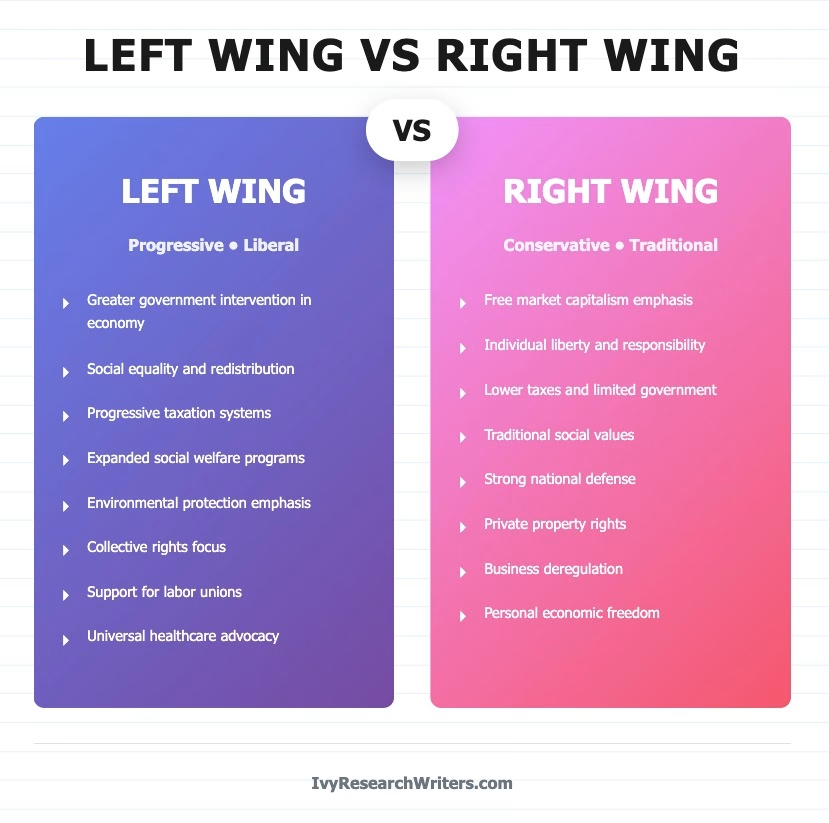
The debate over left wing vs right wing politics shapes elections, public discourse, and political theory across the globe. But what do these terms actually mean? Where did they originate? And how do they apply to modern political parties like the Democratic Party and the Republican Party in the U.S.?
In this comprehensive guide, we explore ideology, the difference between right-wing and left-wing political beliefs, and how political ideologies evolve across time and cultures.
Ideology: The Foundation of Political Beliefs
An ideology is a structured set of political ideas, values, and beliefs about how society should be organized. In political science, ideology helps explain political orientation, policy preferences, and party alignment.
Political ideologies shape:
- Views on social and economic systems
- The role of government intervention
- Attitudes toward social equality
- Perspectives on hierarchy and privilege
At its core, ideology defines how people interpret political issues and decide whether they align with the political left or the political right.
Right-Wing: Tradition, Hierarchy, and Conservative Political Thought
The term right-wing refers to political positions that emphasize tradition, order, hierarchy, and limited government intervention in the economy.
Historically, right-wing politics emerged during the French Revolution. Members of the National Assembly who supported the monarchy and the privileges and powers of established institutions sat on the right side of the French National Assembly. Those defending hierarchy of birth and traditional authority became associated with the political right.
Core Features of Right-Wing Ideology
Right-wing beliefs often include:
- Support for free markets and individualist economics
- Limited government intervention
- Respect for traditional institutions
- Socially conservative positions on social issues
- Emphasis on national sovereignty
At the far right end of the spectrum, extreme right movements may embrace reactionary politics, seeking to restore past social orders.
In the U.S., the Republican Party is generally associated with right-wing political ideology, advocating conservative political policies and market-based solutions.
Left-Wing: Equality, Reform, and Social Change
The term left-wing also originated during the French Revolution. Members of the National Assembly who supported reform, equality, and reduced power for the monarchy sat on the left side.
Left-wing political ideology typically emphasizes:
- Social equality
- Equality and egalitarianism
- Equalization of advantage
- Government intervention to reduce inequality
- Internationalism
The political left often advocates policies aimed at redistributing wealth and expanding social programs.
In the U.S., the Democratic Party is generally associated with left-leaning political views, although it contains moderate and centrist factions.
Political Ideologies: Mapping the Left-Right Spectrum
The left-right spectrum is a conceptual model used in political theory to categorize political ideologies.
On the left end of the spectrum:
- Far left ideologies may include anarchist or radical egalitarian positions.
- Emphasis on dismantling hierarchies.
On the right end of the spectrum:
- Far right ideologies may support strict hierarchy or extreme nationalism.
- Emphasis on preserving traditional social structures.
Between these extremes are moderates and centrists who blend elements of left-wing and right-wing political ideas.
Political ideologies change over time. What counted as left-wing politics in the 18th century may differ significantly from modern interpretations.
Need Help With a Political Science Essay?
Order your custom political science paper today and submit with confidence.
Political Parties: Democrats, Republicans, and Wing Politics
Political parties translate ideology into practice. In the U.S., the major political parties reflect broad left-right divisions.
Democrats and Republicans
- The Democratic Party is often considered left-leaning.
- The Republican Party is often identified with right-wing politics.
However, political positions within these parties vary. Both include moderate and more ideologically committed factions.
Historically, party alignments have changed. For example, the Democratic-Republican Party of the early United States held political beliefs very different from modern parties.
Wing politics within parties can create internal divisions between centrist, left-wing political, or right-wing political factions.
Left Wing and Right Wing: The Core Difference
The difference between right-wing and left-wing ideologies centers primarily on:
1. Social and Economic Policy
- Left-wing politics favors government intervention in economic systems to promote social equality.
- Right-wing politics emphasizes market freedom and individualist economic structures.
2. Social Issues
- Left-wing people often advocate progressive positions on social issues.
- Right-wing governments tend to adopt socially conservative policies.
3. Hierarchy vs Equality
- The political left prioritizes equality and egalitarianism.
- The political right supports structured hierarchy and established institutions.
This left-right divide shapes political thought across nations.
Far Left and Far Right: At the Ends of the Spectrum
At the far left:
- Radical calls for dismantling capitalism
- Emphasis on internationalism
- Advocacy for extreme equalization of advantage
At the far right:
- Extreme nationalism
- Reactionary politics
- Populism tied to traditional identity
The extreme right and far left often reject centrist compromise.
However, extreme positions are not representative of all left-wing or right-wing individuals.
Political Orientation in the U.S.
In the U.S., political orientation often reflects identification with one of the major political parties.
Left-wing vs right-wing debates typically center on:
- Healthcare
- Immigration and freedom of movement
- Taxation
- Environmental policy
- Civil rights
Left-wing ideology tends to support more government intervention to achieve social equality.
Right-wing ideology typically supports individual responsibility and limited federal oversight.
Political Perspective: Beyond Simple Labels
Although the left-right model is widely used, it simplifies complex political perspectives.
Some individuals identify as libertarian, emphasizing minimal government intervention in both economic and social matters. Others may blend conservative political views with progressive social ideas.
Thus, left-wing or right-wing labels capture general tendencies but not every political belief.
How Ideologies and Parties Change Over Time
Political ideologies are not static. They evolve in response to:
- Economic shifts
- Social movements
- International conflicts
- Technological change
For example, right-wing governments today may differ significantly from conservative political thought in the 19th century.
Similarly, left-wing politics has evolved in response to global capitalism and internationalism.
Final Thoughts
The debate over left wing vs right wing politics is rooted in centuries of political thought, dating back to the French Revolution and the seating arrangement of members of the National Assembly.
At its core:
- The political left emphasizes equality and egalitarianism.
- The political right emphasizes hierarchy, tradition, and individualism.
However, modern political ideologies are complex and dynamic.
Understanding the difference between right-wing and left-wing political beliefs requires historical context, knowledge of political theory, and awareness of how ideologies and parties evolve.
Need Help With a Political Science Essay?
If you’re writing about:
- Political ideologies
- The left-right spectrum
- Democrats and Republicans
- The French Revolution
- Political theory and party systems
IvyResearchWriters.com provides:
✔ Expert political science writers
✔ Clear analysis of ideology and political orientation
✔ APA, MLA, Chicago formatting
✔ In-depth research and structured arguments
✔ Undergraduate to PhD-level assistance
Order your custom political science paper today at IvyResearchWriters.com and submit with confidence.
Frequently Asked Questions
Is Trump left or right-wing?
In the left vs right political framework, Donald Trump is generally classified as right-wing.
From a political science perspective:
- His policy positions align with the political right on taxation, deregulation, and conservative judicial appointments.
- His rhetoric often reflects nationalist themes associated with right-wing political movements.
- His platform has emphasized reduced government intervention in business and policies appealing to traditional conservative voters.
When analyzing whether a political leader is left or right, scholars evaluate economic policy, social policy, and political ideology — not just party affiliation.
For academic essays, it’s important to move beyond opinion and explain the reasoning using the left-to-right spectrum. That analytical depth is exactly what IvyResearchWriters.com helps students achieve.
What is the difference between left and right-wing?
The core difference between right and left political ideologies lies in their approach to social and economic organization.
Left-Wing (Political Left)
- Emphasizes social equality
- Supports government intervention to reduce inequality
- Advocates redistribution of wealth
- Focuses on protecting marginalized groups
Right-Wing (Political Right)
- Emphasizes individual responsibility
- Supports free-market capitalism
- Often prioritizes tradition and hierarchy
- Protects property rights and sometimes the interests of the upper economic classes
When placed on the left to right political spectrum:
- The far left prioritizes equality above hierarchy.
- The far right prioritizes order, tradition, and economic freedom.
The difference between left-wing and right-wing politics is often rooted in contrasting views about equality versus hierarchy, collective welfare versus individualism, and the proper size of government.
In academic writing, explaining the left vs right divide requires structured comparison and theoretical context — something IvyResearchWriters.com specializes in.
Is Democrat left or right?
In the United States, the Democratic Party is generally considered left-wing or left-leaning relative to the Republican Party.
On the left vs right spectrum:
- Democrats are positioned on the political left.
- Republicans are positioned on the political right.
However, this placement is relative. The U.S. political system operates within a narrower ideological range compared to some other countries.
Within the Democratic Party:
- Some members are moderate or centrist.
- Others are more strongly left-wing.
Understanding whether a party is left or right requires analyzing policy positions, not just party labels.
For political science assignments, professors expect students to explain how U.S. party ideology compares globally. IvyResearchWriters.com helps students contextualize these differences clearly and academically.
What is the left-wing ideology?
Left-wing ideology centers on promoting equality and reducing social and economic disparities.
Core elements include:
- Government intervention in the economy
- Social welfare programs
- Equal access to education and healthcare
- Advocacy for workers’ rights
- Policies aimed at reducing the interests of the upper elite dominating economic systems
Left-wing ideology often emphasizes collective responsibility and social justice.
On the left to right continuum:
- The political left prioritizes social equality.
- The political right prioritizes individual freedom and market autonomy.
In left vs right debates, the key philosophical divide concerns whether society should prioritize economic freedom or equality.
Explaining left-wing ideology academically requires clarity about political theory, historical development, and comparative frameworks — precisely the kind of structured analysis IvyResearchWriters.com provides.

