

Human Resource Management System for Research Paper: A Complete Guide for Students and Scholars
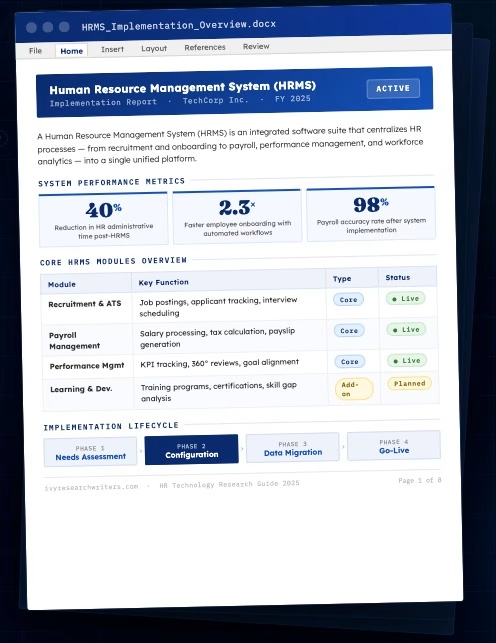
In today’s digital business environment, organizations rely heavily on technology to streamline operations, improve decision-making, and enhance employee productivity. One of the most critical innovations in organizational management is the Human Resource Management System (HRMS).
If you are writing a research paper on a Human Resource Management System, this comprehensive guide will help you understand definitions, system features, applications, benefits, and practical examples—while also exploring how HRMS integrates with broader enterprise systems such as enterprise resource planning, customer relationship management, supply chain management, and financial management systems.
HRMS Meaning and Human Resource Management System Defined
Before diving deeper, it is important to understand the HRMS meaning clearly.
A Human Resource Management System (HRMS) is a digital management system that integrates core HR functions into a centralized platform to manage employee data, payroll, recruitment, performance management, and workforce analytics.
What Is Human Resource Management?
Human Resource Management (HRM) refers to the strategic approach to managing people within an organization. It involves:
- Recruitment and talent acquisition
- Performance management
- Employee engagement
- Compensation and performance management
- Workforce planning
- Learning and development
- Benefits management
A Human Resource Management System automates and integrates these HR functions into a structured HRMS system.
HRMS vs HRIS vs HCM System: Understanding the Differences
When writing your research paper, it is important to distinguish between:
1. HRIS and HRMS
- Human Resource Information System (HRIS) focuses primarily on storing and managing employee information.
- HRMS system extends HRIS capabilities by including advanced modules like payroll software, learning management, and performance review tools.
2. HCM System (Human Capital Management)
An HCM system goes beyond administrative HR tasks and focuses on strategic human capital management, including:
- Talent management modules
- Advanced talent management system features
- Succession planning
- Employee experience enhancement
In simple terms:
| System Type | Primary Focus |
|---|---|
| HRIS | Employee data management |
| HRMS | Complete HR functions automation |
| HCM Software | Strategic human capital management |
Core HR Functions Supported by an HRMS System
A modern HRM system supports multiple human resources functions, including:
1. Employee Data Management
- Centralized employee management tool
- Secure storage of employee information
- HR data management
- Employee lifecycle tracking
2. Payroll System and Payroll Software
- Automated salary calculations
- Tax management
- Benefits management
- Integration with financial management systems
3. Performance Management and Performance Review
- Goal tracking
- Continuous feedback
- Performance review automation
- Compensation and performance management alignment
4. Talent Management and Applicant Tracking System
- Recruitment workflow automation
- Candidate relationship management
- Talent management modules
- Applicant tracking system (ATS) integration
5. Learning Management System (LMS)
- Training programs
- Certification tracking
- Employee skill development
- Integration with learning management HRMS software
HR Software and Modern HRMS Platforms
Modern HR software has evolved significantly from traditional HR systems.
Key Characteristics of Modern HRMS Platforms:
- Cloud-based HRMS (Software as a Service model)
- Dedicated HRMS portals for managers and employees
- Mobile accessibility
- AI-powered analytics
- Advanced management capabilities
Many organizations now use HRMS platforms as part of a larger suite of software integrated with:
- Enterprise Resource Planning (ERP)
- Customer Relationship Management (CRM)
- Supply Chain Management systems
- Financial management software
This integration enables seamless data flow across departments.
Employee Self-Service and HRMS Portals
One of the most transformative features of modern HR software is employee self-service (ESS).
What Is Employee Self-Service?
Employee self-service allows employees to:
- Update personal employee data
- Download payslips
- Apply for leave
- Access benefits management details
- Track performance review results
HRMS portals reduce administrative burden on the HR team and improve the overall employee experience.
Benefits of an HRMS: Why Organizations Use HRMS Software
Understanding the benefits of an HRMS is crucial for research analysis.
1. Centralized Employee Data Management
A complete HRMS provides a centralized employee management tool that:
- Eliminates manual paperwork
- Improves data accuracy
- Enhances HR data management
2. Improved Employee Engagement
Modern HR software supports:
- Continuous feedback
- Recognition systems
- Transparent performance management
This significantly enhances employee engagement.
3. Streamlined Workforce Management
Workforce management tools help:
- Track attendance
- Manage shifts
- Optimize resource allocation
4. Better Decision-Making Through HR Data
Advanced HRMS solutions offer analytics dashboards to help HR departments:
- Monitor employee lifecycle trends
- Analyze turnover rates
- Predict workforce needs
5. Enhanced Payroll and Benefits Management
Integrated payroll system features reduce errors and ensure compliance.
6. Increased Efficiency in Human Resources Departments
Automation of repetitive tasks allows HR teams to focus on strategic human capital management.
Use an HRMS: Practical Organizational Examples
Example 1: Large Enterprise
A multinational company implements a cloud-based HRMS integrated with ERP and financial management software. The system automates payroll software, performance management, and employee lifecycle tracking across global offices.
Example 2: Mid-Sized Technology Firm
The company adopts modern HR software with talent management modules and applicant tracking system integration to improve hiring efficiency and candidate relationship management.
Example 3: Educational Institution
The institution uses HRMS portals to manage faculty payroll, learning management system integration, and employee self-service features for administrative staff.
HR Management and Strategic Value of an HRMS
The value of an HRMS extends beyond automation. It supports strategic HR management by:
- Aligning compensation and performance management
- Supporting talent management and succession planning
- Improving employee experience
- Strengthening relationship management between HR and staff
Modern HR software solution platforms are designed to treat employees as strategic assets rather than administrative records.
Choose an HRMS: Key Considerations for Organizations
When organizations choose an HRMS, they evaluate:
1. System Features
- Core HR functions
- Advanced talent management system features
- Payroll system capabilities
- Learning management integration
2. Deployment Model
- Cloud-based HRMS (Software as a Service)
- On-premise HR systems
3. Scalability
Can the HRMS software grow with the organization?
4. Integration Capabilities
- ERP
- Customer relationship management
- Supply chain management
- Financial management systems
5. Vendor Reputation
Organizations compare HR software vendors to select the best HR software or best human resources software available in the market.
Best HR Software and Best Human Resources Software Applications
Although there are many HR software vendors, the best HR software typically includes:
- Complete HRMS solutions
- Advanced HCM software features
- Mobile-ready HRMS platforms
- Comprehensive HR data management
- Talent management modules
- Employee self-service portals
The best human resources software applications combine usability, scalability, analytics, and integration capabilities.
Complete HRMS Architecture: How It Works
A complete HRMS generally includes:
- Core HR functions module
- Payroll software module
- Talent management module
- Learning management system
- Workforce management tools
- Performance management tools
- Employee engagement tools
All modules operate within a centralized HRMS system, ensuring seamless information flow.
Need a custom HR research paper?
From topic selection to final proofreading, our expert academic writers support you at every milestone of your academic journey.
Use HRMS Software Across the Employee Lifecycle
An HRMS supports every stage of the employee lifecycle:
- Recruitment (Applicant tracking system)
- Onboarding (Employee information setup)
- Performance review and performance management
- Compensation and benefits management
- Learning management and development
- Exit management
By using HRMS software, organizations improve transparency and efficiency at every stage.
Modern HR Software vs Traditional HR Systems
| Traditional HR Systems | Modern HRMS Platforms |
|---|---|
| Manual paperwork | Cloud-based HRMS |
| Disconnected tools | Integrated suite of software |
| Limited analytics | Advanced HR data management dashboards |
| Basic payroll | Full payroll system integration |
| Administrative focus | Strategic human capital management |
Modern HRMS platforms emphasize employee experience, workforce management information system integration, and data-driven HR management.
HRMS Solutions in Enterprise Resource Planning Environments
Many organizations integrate HRMS solutions into broader enterprise resource planning systems.
This integration enables:
- Financial management synchronization
- Payroll system alignment
- Supply chain management coordination
- Customer relationship management data consistency
Such integration strengthens overall management software efficiency.
Conclusion: The Growing Importance of Human Resource Management Systems
A Human Resource Management System (HRMS) is no longer optional—it is essential for modern organizations. From HR data management and payroll software to advanced talent management and employee engagement tools, HRMS software plays a central role in strategic HR management.
For your research paper, you can explore:
- The evolution of HRIS and HRMS
- The impact of cloud-based HRMS platforms
- Benefits of an HRMS in improving employee experience
- Integration of HR systems with ERP and CRM
- Future trends in modern HR software
Ultimately, the value of an HRMS lies in its ability to transform human resources departments into strategic partners that drive organizational success through efficient human capital management.
Frequently Asked Questions
1. What Is a Human Resource Management System?
A Human Resource Management System (HRMS)—often used interchangeably with HRIS (Human Resource Information System)—is a digital platform designed to manage, automate, and optimize HR processes within an organization.
In Simple Terms:
It is software that helps organizations:
- Store and manage employee data
- Process payroll
- Track attendance
- Manage recruitment
- Conduct performance reviews
- Support employee engagement initiatives
In Academic Language:
A Human Resource Management System integrates administrative, operational, and strategic HR functions into a centralized database to enhance efficiency, compliance, and workforce analytics.
Why It Matters Today
Among millennials, digital-first workplace tools are not optional—they are expected. Research shows that millennials also prefer transparent systems that allow easy access to employment records, benefits, and performance feedback.
For example:
- A third of gen (Generation Z and younger millennials) employees expect mobile HR access.
- Many millennial respondents report that outdated HR processes reduce workplace satisfaction.
- Millennials would choose employers that offer intuitive, self-service HR platforms over those relying on manual paperwork.
For students writing research papers, understanding HRMS represents a milestone in the evolution of HR—from manual administration to strategic workforce management.
At IvyResearchWriters.com, we help break down these concepts into clear, research-ready explanations with real-world examples.
2. What Are the Top 5 HRIS Systems?
While rankings may vary based on business size and needs, the following are widely recognized HRIS/HRMS platforms:
Top 5 HRIS Systems
- Workday
- SAP SuccessFactors
- Oracle HCM Cloud
- ADP Workforce Now
- BambooHR
Why These Systems Stand Out:
- Comprehensive employee data management
- Cloud-based access
- Payroll and benefits integration
- Advanced analytics
- Mobile accessibility
Generational Insight
Among millennials and Gen Z professionals:
- Modern interface design strongly influences adoption.
- Millennials also tend to try new workplace technologies faster than previous generations.
- A third of gen employees say user-friendly HR software is a factor in long-term job commitment.
For research papers, you can compare these systems based on:
- Scalability
- Data security
- Cost efficiency
- Employee experience impact
IvyResearchWriters.com helps students analyze these platforms critically rather than simply listing them.
3. Is Excel an HRIS System?
Short answer: No.
Why Excel Is Not an HRIS
Although Excel can:
- Store employee lists
- Track payroll manually
- Create attendance sheets
It lacks:
- Automation
- Secure role-based access
- Integrated payroll systems
- Real-time analytics
- Cloud scalability
- Compliance monitoring
Excel is a spreadsheet tool—not a comprehensive HRIS system.
Academic Perspective
Using Excel for HR management may work for very small businesses, but it becomes inefficient and risky as organizations grow. Modern HRMS platforms represent a technological milestone in workforce management because they reduce human error and enhance data security.
Among millennials working in HR roles, many report frustration with manual Excel-based systems. Millennials would choose automated HR tools that reduce repetitive administrative work and allow more focus on strategic initiatives.
At IvyResearchWriters.com, we often help students compare traditional spreadsheet-based HR management versus integrated HRIS systems in their research papers.
4. Can I Access HRIS on My Phone?
Yes—most modern HRIS and HRMS platforms are mobile-enabled.
Mobile HR Access Allows Employees To:
- View payslips
- Submit leave requests
- Update personal information
- Track performance reviews
- Access benefits information
Why Mobile Access Matters
Among millennials and Gen Z employees:
- Mobile accessibility is considered a workplace standard.
- Millennials also expect real-time notifications.
- Many millennial respondents say they try new mobile workplace apps quickly.
- A third of gen professionals indicate they would choose employers with strong digital HR infrastructure.
Mobile HR access is another milestone in the evolution of workplace technology, reflecting the shift toward flexible, remote, and hybrid work environments.

