

What To Know
- From a research perspective, an oil change can be defined as a systematic process of replacing old oil with new oil to maintain engine efficiency.
- The oil pan and drain system represents the foundational structure of the oil system, much like a research framework supports an academic paper.
How to Change Oil: A Practical Guide Framed Through Research, Precision, and Technical Writing
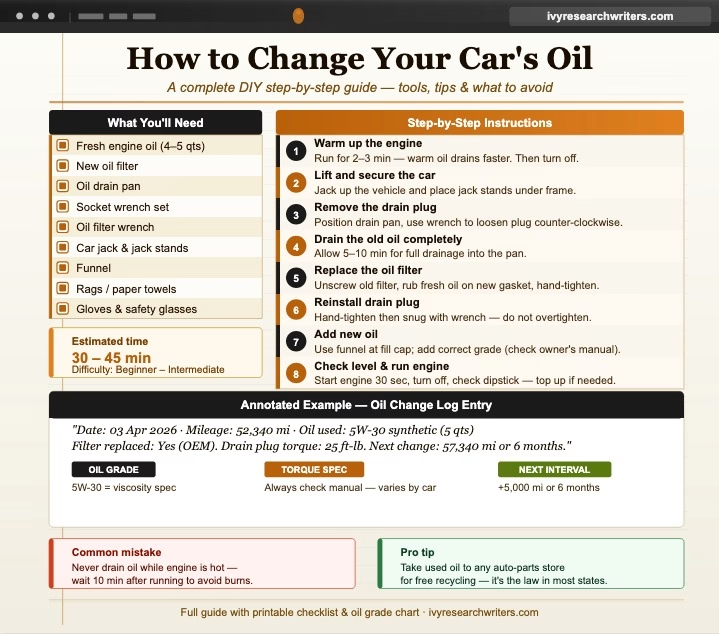
In both automotive maintenance and academic writing, precision, structure, and attention to detail determine the quality of outcomes. Learning how to change your oil is not only a practical life skill but also an excellent example of procedural knowledge—something frequently analyzed in technical and research-based writing.
This article presents a structured, research-informed approach to an oil change, demonstrating how real-world processes can be documented, analyzed, and communicated effectively—just like a well-crafted research paper.
Change Your Oil: A Procedural Task Through a Research Lens
From a research perspective, an oil change can be defined as a systematic process of replacing old oil with new oil to maintain engine efficiency. Just as in academic writing, each step must follow a logical sequence.
- Definition: Motor oil is a lubricating substance that reduces friction and wear within an engine.
- Application Example: Failing to change your oil regularly leads to contamination buildup, similar to how poor citation practices degrade the quality of a research paper.
Understanding this process allows students and writers to better conceptualize procedural writing—common in engineering and technical disciplines.
Oil Filter: Filtering Data vs Filtering Contaminants
The oil filter plays a role analogous to literature review filters in research.
- It removes debris from circulating oil, ensuring clean performance.
- A new oil filter must replace the old filter to prevent contamination.
In academic writing:
- Filtering sources ensures only credible data informs your argument.
- In mechanics, the filter onto the engine ensures only clean oil circulates.
Oil Pan and Drain: Structural Foundations of the System
The oil pan and drain system represents the foundational structure of the oil system, much like a research framework supports an academic paper.
- The oil pan stores oil.
- The oil pan drain plug allows controlled draining oil.
To begin:
- Use a jack and jack stands to safely elevate the car that is held above ground.
- This step ensures safe access in order to access the oil system.
Drain Plug: Controlled Removal in Technical Processes
The drain plug regulates the release of oil, similar to how methodologies control data collection in research.
Steps:
- Locate the oil pan drain plug
- Use a wrench to loosen the drain plug
- Carefully remove the drain plug
As the process continues:
- The oil will drain into an oil catch pan
- Ensure the catch pan is large enough
Observation is key:
- The flow of oil has slowed
- Eventually, the oil is finished draining
This mirrors how researchers observe data trends before concluding analysis.
Motor Oil Pan: Data Collection and Containment
The oil catch pan functions as a containment tool for used oil, similar to how researchers collect raw data.
- Proper placement ensures no loss of material.
- Observing the condition of the oil provides insight into engine health.
This parallels qualitative analysis—interpreting the “state” of collected data.
Old Oil vs New Oil: Before-and-After Analysis
The transition from old oil to new oil represents transformation through intervention.
- Old oil: Degraded, contaminated
- New oil: Clean, efficient, optimized
In research:
- This reflects pre- and post-experiment comparison.
Oil Filter Removal: Methodological Precision
Removing the Old Filter
- Locate the oil filter
- Use an oil filter wrench
- Remove the oil filter
Be mindful:
- Oil may still be clinging to the engine mounting
- Residual oil may remain still clinging to the engine
This step requires precision, much like removing flawed data points in research.
Installing a New Filter: Controlled Replacement
- Take your new oil filter
- Apply oil around the rubber gasket
- Focus on the rubber gasket on the top
- Take your new oil filter and apply a thin coating
Then:
- Install the filter onto the engine
- Tighten the filter carefully
- Complete a full turn after the filter contacts the surface
This reflects proper implementation of revised methodologies in research writing.
Drain Plug and Oil Filter: Reassembly and Validation
After draining oil:
- Inspect the drain plug
- Check oil pan threads
- Replace the drain plug
- Ensure drain plug and tighten securely
This stage is equivalent to validating results in a research study—ensuring no oil leaks or structural issues.
New Oil: Input Variables and Accuracy
Adding new oil requires adherence to specifications, much like using correct variables in research.
Key considerations:
- Oil type (e.g., synthetic oil)
- Oil capacity
- Recommended oil
Steps:
- Remove the oil cap
- Add the correct amount of oil
- Avoid excess—too much oil can distort system performance
Check The Oil Level: Measurement and Verification
Using a dipstick, you can check the oil level:
- Allow oil to settle
- Measure the oil level
- Confirm the oil is at the proper level
If needed:
- Proceed with adding more oil incrementally
This mirrors data verification in research—ensuring accuracy before final conclusions.
Change My Own Oil: A Structured Process Model
For students studying process documentation, here is a simplified structured model:
- Get your car ready using jack stands
- Locate the oil pan
- Place an oil catch pan
- Remove the drain plug
- Allow oil to drain
- Remove the oil filter
- Install a new filter
- Replace the drain plug
- Add new oil
- Check the oil level
This reflects the IMRAD structure (Introduction, Methods, Results, and Discussion) used in research papers.
Oil Type and Research Decision-Making
Choosing between oil types reflects decision-making based on evidence:
- Synthetic oil: High performance, longer lifespan
- Conventional oil: Cost-effective, standard performance
Selecting the correct oil for your vehicle parallels selecting appropriate sources in academic writing.
Changing the Oil: Lessons for Academic Writers
The process of changing your own oil demonstrates:
- The importance of sequence and structure
- The need for accurate measurement (e.g., amount of oil, volume of oil)
- The role of verification (e.g., check the oil level)
These are the same principles that guide high-quality research writing.
Related Assignments
If you are exploring topics like how to change your oil, there are several academic assignments that naturally connect with this subject—especially in fields such as engineering, technical writing, automotive studies, and applied sciences. At IvyResearchWriters.com, we frequently assist students with assignments that require both practical understanding and strong analytical writing.
Here are some relevant assignment ideas:
🛠️ 1. Technical Process Essay
A process essay explains how a task is performed in a clear, step-by-step format.
- Example topic: “How to Perform an Oil Drain and Replace Engine Oil in a Modern Vehicle”
- Focus areas:
- How to access the oil pan at the bottom of your car
- Steps to remove the oil drain plug and safely drain the oil
- Importance of replacing the drain plug and filter
This type of assignment emphasizes clarity and logical sequencing—skills our writers at IvyResearchWriters.com specialize in.
🚗 2. Automotive Engineering Report
This assignment explores the science behind engine oil and lubrication systems.
- Example topic: “The Role of Engine Oil in Enhancing Vehicle Performance”
- Key discussion points:
- How oil circulates through the oil in your vehicle
- Interaction between the oil pan and oil system
- How proper lubrication helps help keep your engine efficient
Students often need to combine theory with real-world application—something we help structure effectively.
🧪 3. Comparative Analysis Paper
A research-based assignment comparing different oil types or maintenance methods.
- Example topic: “Synthetic vs Conventional Engine Oil: Performance and Longevity”
- Possible inclusions:
- Impact of oil quality on engine wear
- Efficiency of filtration systems (filter on your vehicle)
- Maintenance differences in oil and oil systems
📊 4. Case Study Assignment
Focus on real-world scenarios involving engine maintenance.
- Example topic: “Consequences of Poor Oil Maintenance in Passenger Vehicles”
- Discussion points:
- Failure to allow the oil to fully drain during an oil drain
- Issues caused by improper handling of the oil drain plug
- Effects of neglecting the filter and apply a light lubrication step during installation
🧾 5. Instructional Manual or Lab Report
Common in technical and vocational courses.
- Example: Writing a manual detailing:
- How to make sure the catch pan is positioned correctly
- Why you must hold onto the drain plug during removal
- Proper steps before lowering the car back after maintenance
🎓 Why This Matters for Academic Writing
Assignments like these require:
- Clear structure and methodology
- Accurate use of technical terminology
- Logical explanation of procedures
These are the same principles used in high-quality research papers.
Need Help with Similar Assignments?
Whether you’re explaining how to drain the oil or analyzing lubrication systems, our experts can help you craft precise, well-researched, and academically sound assignments.
Conclusion: From Car Maintenance to Research Mastery
Understanding how to change your oil and filter is more than a mechanical task—it is a model of structured thinking, precision, and methodological execution.
At IvyResearchWriters.com, we emphasize these same principles in academic writing:
- Clear structure
- Accurate data handling
- Logical progression of ideas
Whether you’re learning to oil your vehicle or write a research paper, success lies in mastering the process.
👉 Need help translating complex processes into high-quality academic work? Our expert writers are here to assist you.
Frequently Asked Questions (FAQs)
How do I change my oil myself?
Changing your own oil is a practical, step-by-step process that mirrors the structured approach used in academic writing—something we emphasize at IvyResearchWriters.com.
Here’s a simplified blend of guidance and explanation:
- First, get your car safely elevated so you can access the oil pan at the bottom of your car.
- Position a container—make sure the catch pan is properly placed to collect the oil drain.
- Locate the oil drain plug and carefully drain the oil. As you do this, hold onto the drain plug to avoid dropping it into the pan.
- Allow the oil to fully empty from the oil pan and oil system, ensuring no residue remains.
- Remove the old filter on your vehicle—this is where both the drain plug and filter work together in maintaining clean engine oil.
- Install a new filter and filter and apply a light coat of oil to its seal before tightening.
- Reinstall the plug, refill the oil in your vehicle, and check levels before lowering the car back to the ground.
From a research perspective, this process demonstrates procedural clarity—breaking down complex tasks into logical steps, much like writing a methodology section. If documenting such processes feels overwhelming, IvyResearchWriters.com can help transform technical steps into clear academic content.
What engine oil for Lexus?
Choosing the right engine oil for a Lexus depends on the model and year, but most modern Lexus vehicles recommend high-quality synthetic oil.
- Lexus engines typically require engine oil such as 0W-20 or 5W-30.
- The correct oil type ensures proper lubrication of the oil and oil system, helping help keep your engine efficient and long-lasting.
- Always consult your owner’s manual to confirm specifications for the filter on your vehicle and oil compatibility.
From an academic standpoint, this is similar to selecting credible sources—precision matters. At IvyResearchWriters.com, we apply the same principle when choosing authoritative references for your research papers.
How much oil for GR86 oil change?
The Toyota GR86 generally requires approximately 5.3 to 5.7 quarts of engine oil, depending on whether the filter is replaced.
- When performing an oil drain, ensure you completely drain the oil from the oil pan and oil channels.
- After replacing the oil drain plug and filter, refill gradually.
- Check the oil level after you allow the oil to settle, ensuring accuracy.
Think of this like data measurement in research: the correct quantity (or variable) is essential for valid results. IvyResearchWriters.com ensures similar precision when handling numerical or technical academic assignments.
What kind of oil does a Nissan Rogue take?
Most Nissan Rogue models use synthetic engine oil, commonly 0W-20.
- This oil supports efficient flow through the oil in your vehicle, especially during cold starts.
- During maintenance, you’ll still follow the same steps: access the oil pan, remove the oil drain plug, and drain the oil safely from the bottom of your car.
- Replace the drain plug and filter, ensuring everything is secure before refilling.
Using the correct oil type is like aligning your research topic with the right methodology—it ensures optimal performance and credible outcomes.


