

What To Know
- Whether you are a Harvard College student, a recent graduate, or a professional applying for competitive roles, a well-structured resume template can help you stand out to any employer.
- This guide explains what a Harvard resume is, how to use a Harvard CV format, and how to create a strong resume and cover letter that increases your chances of getting an interview.
Harvard Resume Template: A Complete Guide to Writing a Professional Harvard-Style Resume
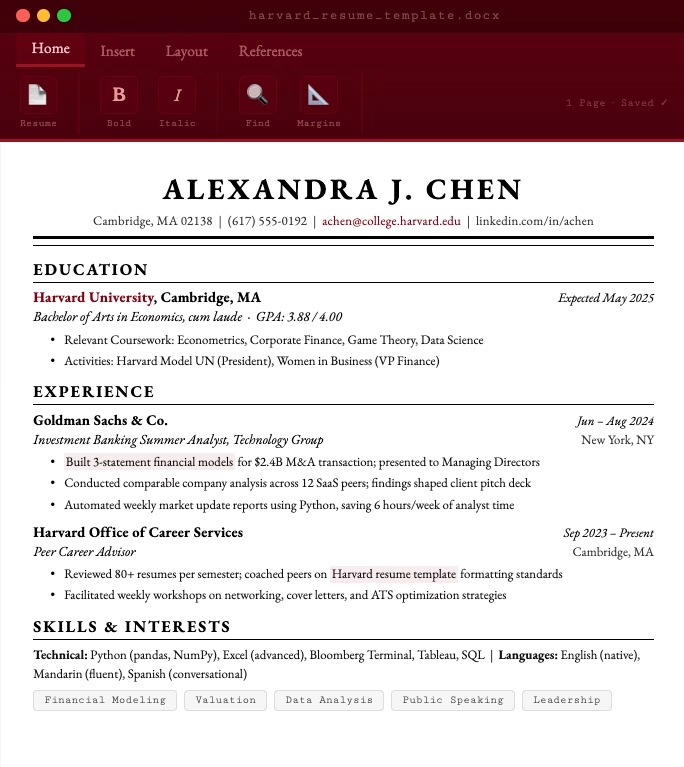
A Harvard resume template is widely recognized for its clean structure, academic professionalism, and effectiveness in helping candidates present their qualifications clearly. Whether you are a Harvard College student, a recent graduate, or a professional applying for competitive roles, a well-structured resume template can help you stand out to any employer.
This guide explains what a Harvard resume is, how to use a Harvard CV format, and how to create a strong resume and cover letter that increases your chances of getting an interview.
What Is a Harvard Resume Template?
A Harvard resume template is a structured resume format used by students and graduates from Harvard University, particularly through the Mignone Center for Career Success (MCS) at Harvard College.
The template emphasizes:
- Clear category headings
- Simple layout
- Concise bullet points
- Professional formatting
Unlike overly designed resumes, the Harvard style focuses on content, ensuring that your qualifications and relevant experience are presented clearly to an employer.
Most Harvard resumes are prepared as a PDF document before submitting a job application.
Harvard Resume vs Harvard CV: Understanding the Difference
When creating a job application, candidates must understand whether to submit a resume or a curriculum vitae (CV).
Harvard Resume
A resume is typically used when applying for jobs or internships. It focuses on:
- Employment history
- Skills and qualifications
- Relevant experiences
Harvard CV
A Harvard CV or curriculum vitae is longer and used mainly in academia and research.
A CV may include:
- Publications
- Academic record
- Research projects
- Teaching experience
- Professional development
Both documents follow similar formatting principles, but CVs are typically longer and more detailed.
The Harvard Resume Format Explained
A typical Harvard resume template contains several sections that organize the candidate’s qualifications clearly.
1. Header Section
This section includes your personal information.
Example:
- Full name
- Email address
- Phone number
- City and state
Avoid unnecessary details such as photos or personal information unrelated to the job.
2. Education Section
The educational section highlights your academic background.
Example format:
Harvard College, Cambridge, MA
Bachelor of Arts in Economics
Expected Graduate Date: May 2026
Include:
- Concentration
- Honors or awards
- GPA (optional)
3. Experience or Employment Section
The employment section shows your professional experience.
Example:
Marketing Intern
ABC Company, New York, NY
June 2024 – August 2024
Description
- Developed marketing campaigns that increased engagement by 25%
- Conducted market research and presented findings to senior management
- Assisted with project presentation and reporting
Use bullet points to clearly describe your responsibilities and achievements.
4. Skills and Professional Development
Employers want to see the skills that differentiate you from other candidates.
Examples include:
- Data analysis tools
- Programming languages
- Communication skills
- Leadership experience
This section should highlight your strongest assets relevant to the job or internship.
5. Publications or Research (Optional)
If applying for academia and research, include a publication section.
Example:
Smith, J. (2023). Economic Growth Patterns in Emerging Markets. Journal of Economic Studies.
This section is typically optional for non-academic positions.
How to Write Strong Resume Bullet Points
One of the most important elements of a Harvard resume is writing strong bullet points.
Effective bullet points should:
- Begin with an action verb
- Include measurable results
- Highlight accomplishments
Example:
❌ Weak bullet point
Assisted with research tasks.
✅ Strong bullet point
Conducted market research and analyzed data that improved marketing strategy efficiency by 30%.
This approach helps highlight your strongest assets and improves your chances of being noticed by recruiters.
Tips from Harvard’s Mignone Center for Career Success
The Mignone Center for Career Success (MCS) provides valuable guidance for students creating resumes.
Attend MCS Hours
Students can attend MCS hours for personalized resume review and career guidance.
These sessions help candidates:
- Tailor your resume to specific jobs
- Improve formatting and layout
- Prepare for upcoming interviews
How to Tailor Your Resume for Each Job Category
A common mistake applicants make is submitting a generic resume for multiple positions.
Instead, you should:
- Use job-specific keywords
- Emphasize relevant experience
- Adjust job titles and descriptions when appropriate
Customizing your resume ensures it aligns with the expectations of the employer.
Creating a Harvard Resume Using AI Tools
Modern AI tools and resume platforms can help candidates create professional resumes quickly.
An AI resume tool can:
- Suggest resume keywords
- Optimize formatting
- Improve bullet point descriptions
- Analyze job descriptions
However, candidates should always edit and review AI-generated resumes to ensure accuracy and authenticity.
Choosing the Right Resume Layout and Font
The Harvard resume format emphasizes clarity and simplicity.
Recommended Formatting Tips
- Use a professional font such as Times New Roman or Arial
- Maintain consistent spacing
- Avoid excessive design elements
- Use clear section headings
A well-designed resume focuses on readability rather than decoration.
How to Download and Edit a Harvard Resume Template
Many students look for a free resume template or free printable version online.
A typical Harvard resume template is available as a:
- DOC document
- Editable resume editor file
Steps to use a template:
- Download the template
- Edit the sections with your information
- Customize experiences and achievements
- Save the final version as a PDF document
This ensures your resume looks professional when you upload it to job platforms.
Harvard Resume Example (Sample Structure)
Below is a simplified sample Harvard resume structure.
Name
Email | Phone | Location
Education
Harvard College – Cambridge, MA
Bachelor of Arts in Government
Expected Graduation: May 2026
Experience
Policy Research Intern
Global Policy Institute
June 2024 – August 2024
- Conducted policy analysis and wrote reports on international development
- Presented research findings during internal presentation meetings
Skills
- Data analysis
- Research writing
- Public speaking
Common Mistakes to Avoid When Writing a Curriculum Vitae
Candidates should avoid the following mistakes:
- Including irrelevant experiences
- Writing long paragraphs instead of bullet points
- Submitting resumes without proofreading
- Using an overly creative or complicated format
A clean and organized resume is more effective for hiring managers.
Need a Professional Harvard-Style Resume?
At IvyResearchWriters.com, our expert resume specialists help students, graduates, and professionals craft Harvard-style resumes, CVs, and cover letters designed to impress employers.
Why a Harvard Resume Template Works
The Harvard format is effective because it focuses on clarity and professionalism.
Advantages include:
- Easy for employers to scan
- Highlights achievements
- Organized sections
- Professional presentation
This structure helps recruiters quickly understand the candidate’s qualifications and experience.
Final Thoughts on the Harvard College Resume Template
A Harvard resume template is one of the most trusted formats used by students and professionals worldwide. By following its structured layout, candidates can effectively present their employment, education, and skills in a way that appeals to employers.
Whether applying for a job or internship, graduate school, or a research role, using a Harvard resume format can significantly improve the quality of your application.
📄 Need Help Creating a Harvard Resume?
At IvyResearchWriters.com, our professional writers help students and professionals create Harvard-style resumes, CVs, and cover letters that stand out in competitive job markets.
Our services include:
- Harvard resume and cover letter writing
- CV editing and formatting
- Academic curriculum vitae preparation
- Job application support
- Professional resume editing
👉 Get expert help today:
https://ivyresearchwriters.com
Stand out to employers with a professionally crafted Harvard resume template designed to highlight your strengths.
Frequently Asked Questions
Is the Harvard resume good?
Yes, the Harvard resume template is widely considered one of the most effective resume formats because it emphasizes clarity, professionalism, and organization. The format used by Harvard FAS (Faculty of Arts and Sciences) and the Mignone Center for Career Success helps candidates present their qualifications in a structured way that employers easily understand.
A strong Harvard-style resume works well because it:
- Focuses on clear organization and readable structure
- Allows the user to highlight key achievements and skills
- Includes sections for education, experience, and credentials
- Uses concise bullet points to emphasize accomplishments
Candidates who find the template through Harvard career resources can easily select and adapt the format for their needs. However, writing an effective resume still requires careful editing and customization.
At IvyResearchWriters.com, professional writers help applicants prepare Harvard-style resumes that properly reflect their strengths and career goals, ensuring the final document is polished before you attach or print it for job applications.
Does Harvard allow you to submit a resume?
Yes. Harvard students frequently submit resumes when applying for internships, research positions, and graduate opportunities.
Students at Harvard FAS are often guided by career advisors on how to prepare professional resumes and cover letters for employers. These resumes are typically used for:
- Internship applications
- Research assistant positions
- Fellowship opportunities
- Entry-level job applications
To apply effectively, students should:
- Find the template recommended by Harvard career services
- Select the most relevant experiences
- Ensure each section clearly highlights credentials and achievements
- Follow professional formatting instructions
Many applicants also include a recommendation letter or additional documents alongside their resume depending on the job or academic opportunity.
What are the 3 C’s of a resume?
The 3 C’s of a resume are commonly defined as Clarity, Conciseness, and Consistency. These principles help ensure the resume communicates information effectively to potential employers.
1. Clarity
A resume must clearly present your profile, skills, and experiences so recruiters can quickly understand your qualifications.
2. Conciseness
Employers often review hundreds of applications. Therefore, the resume should sort information efficiently and focus on the most applicable achievements.
3. Consistency
Formatting, dates, and section headings should remain consistent throughout the resume. Consistency strengthens the overall organization and professionalism of the document.
By following these principles, candidates can create resumes that stand out while maintaining a professional structure.
What are the 5 golden rules of resume writing?
The five golden rules of resume writing help applicants create resumes that effectively communicate their value to employers.
1. Highlight your strongest credentials
Your resume should clearly emphasize the credential, skills, and achievements that make you a strong candidate.
2. Tailor your resume for each position
Always customize the resume for the specific job or organization to ensure it is applicable to the employer’s needs.
3. Maintain strong organization
Use clear headings and logical sections so hiring managers can easily sort information and evaluate your qualifications.
4. Follow professional formatting instructions
A resume should follow standard instructions for formatting, font use, and section structure.
5. Reflect your unique strengths
While resumes should follow professional standards, they should also reflect your personal achievements and experience. Strategic use of creativity—without overdesigning the document—can help your resume stand out.

