

Define Ambivalent: Meaning, Usage, Examples, and Synonyms
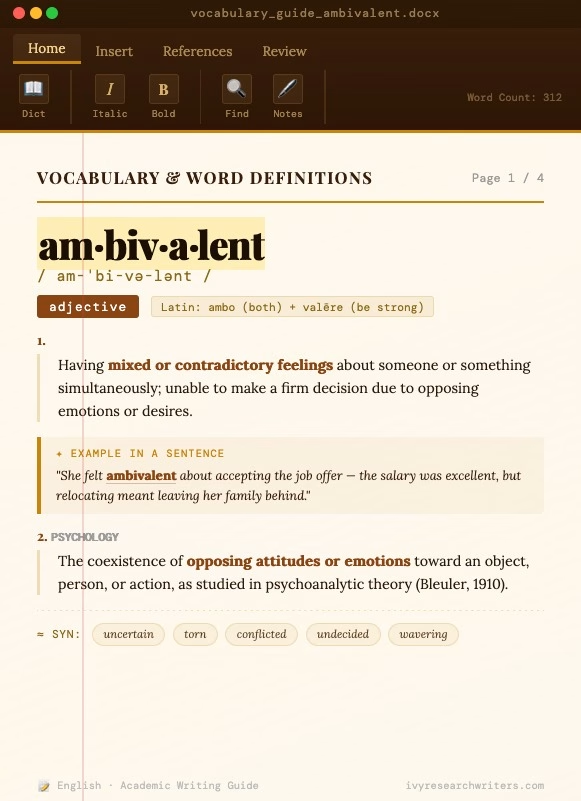
Understanding vocabulary is essential for academic writing, communication, and critical thinking. One commonly misunderstood English word is ambivalent. In psychology, literature, and everyday conversation, the term ambivalent describes a situation in which a person experiences mixed feelings about someone or something.
This guide explains the ambivalent meaning, its usage, synonyms, and provides clear example sentences to help students and writers understand how to use the word correctly.
What Does the Word Ambivalent Mean?
The meaning of ambivalent refers to having mixed feelings, contradictory attitudes, or uncertainty toward something or someone. When a person feels ambivalent, they simultaneously feel both positive and negative emotions about the same thing.
In the English language, ambivalent is used as an adjective describing emotional conflict or uncertainty.
Simple Definition
Ambivalent (adjective):
Having conflicting or mixed feelings toward someone or something, often making it difficult to decide or express a clear opinion.
For example, a person might love a job but dislike the long working hours, leading them to feel ambivalent about staying.
Ambivalent Meaning and the Concept of Ambivalence
The noun form of ambivalent is ambivalence. While ambivalent describes the emotional state, ambivalence refers to the condition of experiencing those conflicting emotions.
The term ambivalence was introduced by Swiss psychiatrist Eugen Bleuler, who used the concept to describe psychological situations in which a person holds opposing emotions at the same time.
According to Bleuler, individuals may experience both love and resentment toward the same person, creating psychological tension.
This psychological concept continues to influence modern discussions of human emotion and behavior.
Ambivalent as an Adjective in English Usage
In English usage, ambivalent functions as an adjective that describes emotional or intellectual uncertainty.
Writers commonly use the word when a person is uncertain about a decision, belief, or relationship.
Examples of ambivalent usage include situations where someone:
- Is uncertain about a career choice
- Has conflicting emotions about a relationship
- Feels both excitement and fear about a new opportunity
The word ambivalent is frequently used in psychology, literature, sociology, and everyday conversation to express emotional complexity.
Example Sentences Showing Ambivalent Feelings
Learning vocabulary becomes easier when we examine example sentences that illustrate the meaning of a word.
Below are several example sentences demonstrating the usage of the term ambivalent.
Example Sentences
- She felt ambivalent about moving to a new city because she loved her hometown but wanted new opportunities.
- The student was ambivalent toward the course because it was interesting but extremely challenging.
- He expressed ambivalent feelings toward the promotion since it offered higher pay but required longer working hours.
- Many voters were ambivalent about the policy because it had both advantages and disadvantages.
- The manager seemed ambivalent about the new strategy and delayed making a decision.
These example sentences demonstrate how the word describes conflicting emotions or uncertainty.
Ambivalent vs Other Emotional Terms
Understanding the difference between ambivalent and similar words helps clarify its meaning.
Ambivalent vs Indifferent
- Ambivalent: Experiencing mixed emotions about something
- Indifferent: Not having any strong feelings about something
A person who is ambivalent cares but feels conflicted, whereas an indifferent person feels neutral.
Ambivalent vs Uncertain
While uncertain refers to a lack of knowledge or confidence, ambivalent specifically refers to mixed feelings.
For example:
- Someone may be uncertain about the outcome of a project.
- Someone may feel ambivalent about accepting a job offer.
Synonym of Ambivalent
Several words can function as a synonym of ambivalent depending on context.
Common Synonyms
- Conflicted
- Undecided
- Torn
- Hesitant
- Doubtful
However, not every synonym fully captures the emotional complexity of ambivalence. The term ambivalent specifically emphasizes the coexistence of opposing feelings.
Need Help With Vocabulary Essays, Research Papers, or Academic Writing?
Understanding terms like ambivalent, indifferent, and uncertain is essential for strong academic writing. However, turning definitions and comparisons into a clear, well-structured essay or research paper can be challenging.
How to Use Ambivalent in a Sentence
To correctly use the word ambivalent, the sentence should describe a situation involving conflicting emotions.
Structure Example
Subject + feels ambivalent about + something
Example:
The researcher felt ambivalent about the results because they supported the theory but raised new questions.
Another example:
The student remained ambivalent about studying abroad due to financial concerns.
Ambivalent Feelings Toward Someone or Something
Ambivalence often occurs in relationships, career decisions, or major life changes.
People may experience ambivalent feelings toward someone or something when they simultaneously appreciate and criticize the same thing.
Real-Life Example
A person might feel ambivalent about social media. They enjoy staying connected with friends but dislike the time it consumes.
Such emotional complexity is common in modern life, making the term ambivalent widely applicable.
Comparison: Ambivalent vs. Indifferent vs. Uncertain
Understanding the differences between ambivalent, indifferent, and uncertain can improve vocabulary usage in academic writing and everyday English communication. Although these words may seem similar, they describe different emotional or cognitive states. The table below provides a clear comparison of each term, along with definitions, explanations, and example sentences.
Table: Differences Between Ambivalent, Indifferent, and Uncertain
| Word | Part of Speech | Meaning | Emotional State | Example Sentence |
|---|---|---|---|---|
| Ambivalent | Adjective | Having mixed or conflicting feelings toward someone or something | Positive and negative feelings at the same time | She felt ambivalent about accepting the job because it offered a higher salary but required relocating. |
| Indifferent | Adjective | Having no strong feelings or interest toward something | Neutral or emotionally detached | He seemed indifferent to the outcome of the meeting because the decision did not affect his department. |
| Uncertain | Adjective | Lacking confidence or clarity about something | Doubt or lack of knowledge | The student was uncertain about which university to attend next year. |
Ambivalent: Experiencing Mixed Feelings
When a person feels ambivalent, they experience mixed feelings toward someone or something. This means they simultaneously feel both positive and negative emotions about the same thing.
For example, a person may love their hometown but also want to move to a new city for better opportunities. This emotional conflict creates ambivalence.
Example sentence:
She was ambivalent about the promotion because it required longer working hours but also offered career growth.
Ambivalence is commonly discussed in psychology and was originally explored by Swiss psychiatrist Eugen Bleuler, who described emotional conflicts within individuals.
Indifferent: Showing No Strong Feelings
The word indifferent describes a situation where a person has little or no emotional response toward something.
Unlike ambivalence, where conflicting feelings exist, indifference means a person simply does not care strongly.
Example sentence:
The manager seemed indifferent to the debate because the policy change would not affect his department.
Indifference often reflects emotional detachment rather than confusion or internal conflict.
Uncertain: Lacking Clarity or Confidence
The word uncertain describes a situation in which a person does not have enough information or confidence to form a clear opinion.
Uncertainty may occur when someone needs more knowledge before making a decision.
Example sentence:
The researcher felt uncertain about the results because additional data was required.
Unlike ambivalence, uncertainty does not necessarily involve emotional conflict—it simply reflects a lack of clarity.
Key Differences Between the Three Words
The three terms differ primarily in the type of feeling or mental state they describe.
- Ambivalent → Mixed feelings toward someone or something
- Indifferent → Lack of interest or emotional concern
- Uncertain → Lack of knowledge or confidence about a decision
In many academic discussions, these distinctions help writers clearly express complex emotions or attitudes.
Why This Comparison Matters in Academic Writing
Students writing essays, research papers, or literature analyses often need precise vocabulary to describe emotions, opinions, and psychological states. Using the correct word helps ensure clarity and accuracy in academic writing.
For example:
- A character in a novel may feel ambivalent about a relationship.
- A voter may be uncertain about a political policy.
- A manager may be indifferent to a decision that does not affect their work.
Understanding these differences helps writers communicate ideas more effectively.
The Historical Origin of the Term Ambivalent
The word ambivalent originates from the German language, combining:
- “ambi” meaning both
- “valent” meaning strength or worth
The concept became popular in psychology through Swiss psychiatrist Eugen Bleuler, who studied emotional conflicts in human behavior.
Bleuler used the concept of ambivalence to explain situations where individuals hold opposing emotions toward the same person or thing.
Why Understanding Ambivalent Is Important in Academic Writing
Understanding the ambivalent meaning is especially useful in academic writing because researchers frequently describe complex attitudes, beliefs, and emotional reactions.
For example, scholars might analyze:
- Public opinion about political policies
- Consumer attitudes toward new technologies
- Psychological responses to social change
Using the word ambivalent allows writers to accurately describe situations where individuals express mixed feelings rather than simple agreement or disagreement.
Conclusion
The word ambivalent describes a state of experiencing mixed feelings or conflicting emotions toward someone or something. As an adjective in English, it reflects emotional complexity and uncertainty in human decision-making.
Understanding the meaning of ambivalent, its usage, and its example sentences can help students, writers, and researchers communicate ideas more precisely.
By recognizing how people feel ambivalent about different issues, we gain deeper insights into human behavior, relationships, and decision-making processes.
Frequently Asked Questions
What does it mean if someone is ambivalent?
When someone is ambivalent, it means they have mixed feelings toward someone or something. A person may feel both positive and negative emotions at the same time, which makes it difficult to form a clear opinion or decision.
- For example, a student might feel excited about graduating but sad about leaving friends and campus life.
- These emotions can relate to many life situations such as career decisions, relationships, or major life changes.
In educational resources such as articles or a short explanatory video, the idea of ambivalence is often illustrated through everyday scenarios. However, it is important to remember that examples do not represent every situation where ambivalence occurs; they simply help explain the concept.
At IvyResearchWriters.com, we help students understand complex vocabulary like this when writing essays, research papers, or literature analyses.
Does ambivalent mean unsure?
Ambivalent can sometimes mean unsure, but the meaning is slightly more complex. Being unsure usually means lacking enough information to make a decision. In contrast, ambivalent describes a situation where a person experiences conflicting emotions at the same time.
For instance:
- A person may be unsure about which career to choose.
- A person may feel ambivalent about a promotion because it offers higher pay but requires relocation.
In other words, ambivalence involves emotional conflict, while uncertainty involves lack of clarity. These differences are often expressed in the examples used in academic writing and psychology discussions.
What is an example of ambivalence?
A simple example of ambivalence might involve someone deciding whether to move to a new city for work.
- They may feel excited about career growth.
- At the same time, they may feel sad about leaving family and friends.
These mixed emotions demonstrate ambivalence. Many academic explanations include everyday situations to help readers relate to the concept.
For instance, educational materials or short teaching video explanations often illustrate ambivalence through personal choices, social relationships, or career decisions.
Again, while such explanations help clarify the concept, examples do not represent every possible scenario where ambivalence may occur.
Is ambivalent a negative word?
No, ambivalent is not necessarily a negative word. It simply describes the experience of holding conflicting feelings or attitudes toward something.
In many cases, ambivalence is a normal human response when facing complex decisions. People often feel ambivalent when they must balance competing priorities such as work, family, or personal goals.
For example, a graduate student might feel ambivalent about finishing a degree—proud of the achievement but nervous about entering the job market. These emotional contrasts are often expressed in the examples used in psychology and language studies.
Understanding words like ambivalent helps students develop clearer writing and stronger analytical skills—something the academic experts at IvyResearchWriters.com support through high-quality research and writing assistance.

