

Bureaucracy Examples: Definition, Real-World Applications, and How Bureaucracy Works
If you’ve ever waited weeks for an approval, filled out endless paperwork, or navigated complex rules and regulations, you’ve experienced bureaucracy in action. But what exactly is bureaucracy? Why do so many large organizations rely on it? And is it truly inefficient—or is it actually a rational way to get things done?
In this comprehensive guide, we’ll explore bureaucracy examples, definitions, theory, and how bureaucracy works in both government and private sectors.
Bureaucracy
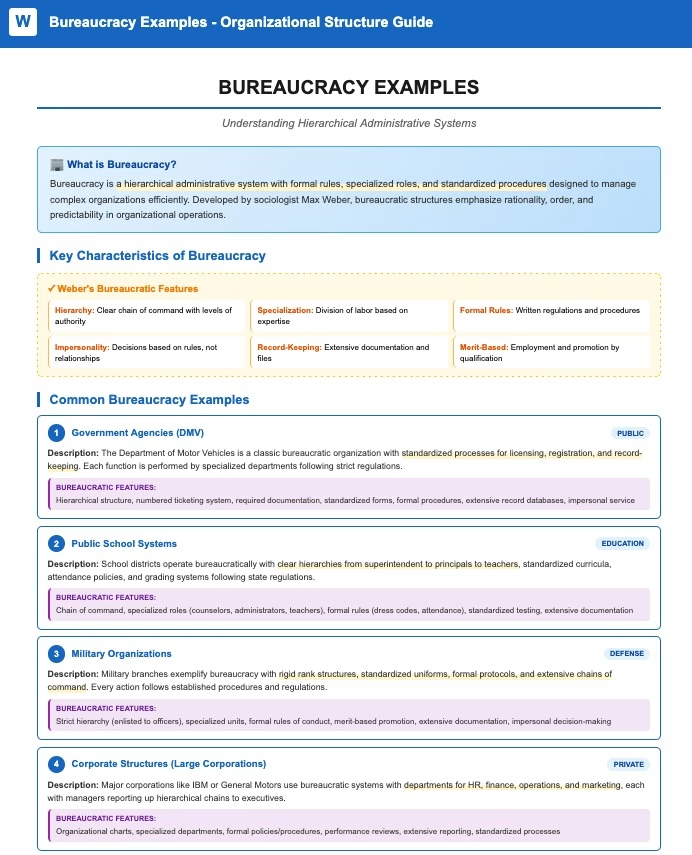
The term bureaucracy refers to a structured, rule-based system of administration used by large organizations to manage operations efficiently and rationally.
At its core, bureaucracy is a system characterized by:
- A hierarchical structure
- Clearly defined roles
- Division of labor
- Written rules and procedures
- Impersonality in decision-making
- A chain of command
The concept was most famously developed by German sociologist Max Weber, who is often credited as the first scholar to systematically study bureaucracy as a social phenomenon.
Max Weber and the Theory of Bureaucracy
Max Weber was the first major sociologist to develop a formal theory of bureaucracy. In his work Economy and Society, Weber argued that bureaucracy represents the most efficient and rational organizational form for large institutions.
Weber saw bureaucracy as part of a broader process of rationalization, where society becomes increasingly organized through rules, logic, and calculation rather than tradition or charisma.
According to Weber, an ideal bureaucracy includes:
- A clearly defined chain of command
- A division of labor
- Impersonality in decision-making
- A rule-based system
- Formal hiring processes
- Merit-based promotion
Weber emphasized the importance of written rules and procedures to ensure fairness and predictability.
However, he also warned about the iron cage of bureaucracy — a metaphor describing how excessive rationalization could restrict individual freedom.
Need Expert Help With Your Bureaucracy Essay?
Struggling to explain bureaucracy clearly? Confused about the four types of bureaucracies or how modern government agencies operate? Trying to turn basic definitions into a strong, analytical research paper?
Example of Bureaucracy
To better understand the concept, let’s look at a clear example of bureaucracy.
1. Government Agencies
One of the most recognizable examples is government bureaucracy. Within the government, agencies such as the Social Security Administration operate under strict rules and procedures.
For instance:
- The Social Security Administration processes benefits through a structured approval process.
- Employees follow complex rules and regulations.
- Decisions are made based on written criteria rather than interpersonal relationships.
- Civil servants are hired based on qualifications, not political loyalty.
This is an example of a bureaucracy operating within the federal bureaucracy.
2. Regulatory Agencies
Government regulatory agencies must conduct oversight through standardized procedures. For example:
- Environmental approval processes
- Business licensing approvals
- Public health compliance
These government regulatory bodies rely on bureaucratic structures to ensure accountability and checks and balances.
3. Large Corporations
Bureaucracy is not limited to government. Many large corporations and large businesses rely on bureaucratic organization.
For example:
- A multinational company may require approval from multiple departments before launching a product.
- Human resources departments follow formal hiring procedures.
- Employees operate within a clearly defined chain of command.
In these large organizations, bureaucracy helps maintain order and efficiency.
4. The British Civil Service
Another classic example of a bureaucracy is the British Civil Service, which operates under formal rules and emphasizes allegiance to stable administrative procedures rather than allegiance to fleeting politics.
Bureaucrat
A bureaucrat is an official who works within a bureaucratic system. The term bureaucrat often refers to unelected civil servants who carry out policies within the government.
Characteristics of bureaucrats include:
- Following written rules
- Adhering to impersonal decision-making
- Maintaining neutrality
- Operating within hierarchical structures
Because bureaucrats are unelected, they are sometimes criticized for lacking democratic accountability. However, bureaucrats are more likely to focus on long-term organizational goals rather than short-term political interests.
Bureaucrats and Political Science
In political science, scholars study bureaucracy to understand how policies are implemented. Many bureaucracies operate within the government but are insulated from partisan politics to ensure continuity and stability.
Bureaucracy Works
Despite frequent criticism, bureaucracy works when designed properly.
Why Bureaucracy Works
- Predictability – A clear process ensures fairness.
- Efficiency – Division of labor allows specialization.
- Accountability – Written rules reduce arbitrariness.
- Stability – Impersonality prevents favoritism.
- Consistency – Complex systems require standardized procedures.
Weber argued that bureaucracy represents the most rational way to manage a large organization.
Bureaucracy Often Criticized
However, bureaucracy is often criticized for:
- Red tape
- Stagnation
- Bureaucratic incapacity
- Layers of bureaucracy that slow progress
- Approval processes that take a long time
Sociologist Robert K. Merton, in Social Theory and Social Structure, analyzed how bureaucratic rigidity could lead to dysfunction. He argued that excessive adherence to rules might create inefficiency rather than effectiveness.
Many bureaucracies struggle when rigid rules fail to account for special circumstances.
Bureaucracy and the Modern State
The state bureaucracy plays a central role in modern governance. It is not merely an administrative tool; it shapes public policy, economic regulation, and social services.
The federal bureaucracy within the United States includes numerous government agencies responsible for implementing laws passed by Congress.
Because bureaucracy include complex decision-making processes, they require:
- Clear oversight
- Structured approval processes
- Defined responsibilities
- Professionalized hiring people through merit systems
Bureaucratization and the Iron Cage
Weber saw bureaucracy as inevitable in modern society. He described the process of bureaucratization as the expansion of rule-based systems into every aspect of life.
The danger, according to Weber, was the iron cage — where individuals become trapped in systems governed entirely by rational calculation.
In such systems:
- Interpersonal relationships become secondary
- Decisions are made impersonally
- Individual freedom may feel constrained
Yet Weber also recognized that bureaucracy allows complex systems—like modern economies—to function.
Bureaucratic Structures in the Private Sector
Beyond government bureaucracy, bureaucratic structures dominate:
- Hospitals
- Universities
- Large corporations
- International organizations
These bureaucratic organizations rely on:
- Clearly defined job roles
- Formal procedures
- Division of labor
- Written rules
Even in large corporations, bureaucrats play essential roles in maintaining order and ensuring the organization benefits from standardized operations.
Why Study Bureaucracy?
To study bureaucracy is to understand how modern society functions. In sociology, public administration, and political science, the study of administration reveals how policies are translated into action.
Bureaucracies are often complex systems designed to balance efficiency and accountability.
When structured properly, they:
- Get things done
- Reduce arbitrariness
- Promote fairness
- Provide stability
When poorly managed, they can create red tape and inefficiency.
Final Thoughts
Bureaucracy is a system designed to organize large institutions through hierarchy, rules, and specialization. While bureaucracy often receives criticism for red tape and stagnation, it remains one of the most effective organizational models for managing large organizations and government agencies.
Max Weber argued that bureaucracy represents a rational and efficient way to conduct administration. Although many bureaucracies face challenges, their structure provides predictability, accountability, and order.
Understanding bureaucracy examples—from the Social Security Administration to the British Civil Service and large corporations—helps us appreciate both its strengths and limitations.
Need Help With Your Political Science or Sociology Paper?
If you’re writing about:
- The theory of bureaucracy
- Max Weber’s iron cage
- Federal bureaucracy examples
- Bureaucratic structures in modern states
- Political science research on regulatory agencies
IvyResearchWriters.com provides:
✔ Expert sociology and political science writers
✔ APA, MLA, and Chicago formatting
✔ In-depth research support
✔ Plagiarism-free academic work
✔ Graduate and PhD-level assistance
Order your custom research paper today at IvyResearchWriters.com and submit with confidence.
Frequently Asked Questions
What are the best examples of bureaucracies today?
When students ask for real-world bureaucracy examples, professors expect both clarity and analysis — not just a list. Here are some of the strongest modern examples:
Common Examples of Bureaucracies Today
- Government agencies (e.g., tax authorities, social security offices)
- Public school systems
- Military organizations
- Large corporations
- Hospitals and healthcare systems
- Universities
Why These Are Strong Examples
- They operate within a hierarchical structure
- They follow formal rules and procedures
- They use a clear chain of command
- They are designed to benefit the organization through efficiency and order
- They require formal approval systems to need to conduct operations legally and ethically
For instance, a federal agency processes applications through structured procedures. Decisions are made based on written criteria rather than personal preference. This rule-based approach helps ensure fairness and accountability.
In academic writing, it’s important to explain why these examples qualify as bureaucracies. At IvyResearchWriters.com, we help students move beyond listing examples to analyzing their structure and function at a deeper level.
What is bureaucracy in simple words?
In simple words, bureaucracy is a system where an organization runs according to rules, procedures, and a chain of command.
You can think of bureaucracy as:
- A structured way to organize work
- A system of clearly defined roles
- A process for making decisions through formal approval
It is not necessarily a form of government, though many governments rely heavily on bureaucratic systems. Instead, bureaucracy is a way organizations — including governments and businesses — operate.
In modern institutions, bureaucracy helps:
- Keep operations consistent
- Ensure decisions follow clear guidelines
- Maintain accountability
- Prevent arbitrary decision-making
A good academic answer explains that bureaucracy is about structure and process — not just “red tape.” That level of clarity is exactly what IvyResearchWriters.com ensures in student papers.
What are the 4 types of bureaucracies?
In political science and public administration, scholars commonly identify four types of bureaucracies:
1. Cabinet Departments
Major executive departments within the federal government (e.g., Departments of Education, Defense).
2. Independent Executive Agencies
Agencies that operate somewhat independently but remain within executive authority.
3. Regulatory Agencies
Organizations that create and enforce rules in specific sectors (e.g., financial or environmental regulation).
4. Government Corporations
Public entities that function like businesses but serve public interests.
Each type exists to manage complex responsibilities and benefit the organization or society as a whole. They follow structured procedures and must conduct operations according to established laws and regulations.
When writing about these categories, professors expect students to explain how each operates within a broader system of checks and balances — not simply define them. At IvyResearchWriters.com, we provide structured explanations that demonstrate mastery of political science concepts.
What is bureaucracy in modern society?
In modern society, bureaucracy refers to the structured administrative systems that allow large organizations and governments to function efficiently.
Today, bureaucracy:
- Exists within government agencies
- Operates in large corporations
- Structures educational institutions
- Regulates healthcare systems
- Supports economic systems
Modern societies rely on bureaucracy because complex institutions need to conduct operations in a predictable and organized way.
Bureaucracy ensures:
- Consistent decision-making
- Fair application of policies
- Proper oversight
- Stability beyond political change
Although often criticized for being slow or rigid, bureaucracy plays a critical role in maintaining order in a complex system.
Understanding bureaucracy in modern society requires more than surface-level definitions. Academic analysis should explore its advantages, limitations, and relationship to democratic governance — something IvyResearchWriters.com specializes in helping students articulate clearly and effectively.

