

Job Interview Questions: A Complete Guide to Preparing, Answering, and Succeeding
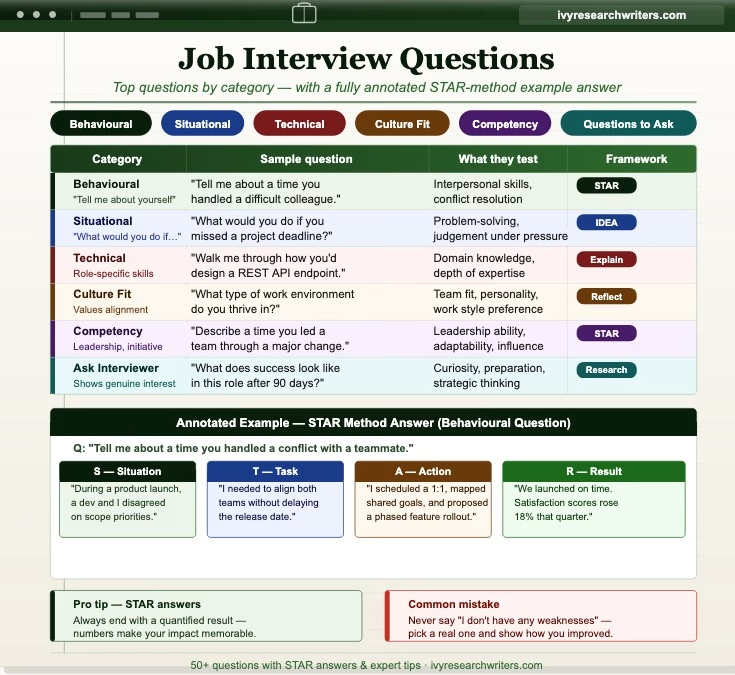
Preparing for a job interview can feel overwhelming, especially when you don’t know what to expect. However, understanding common interview questions, how to answer them, and how to present your work experience effectively can significantly increase your chances of success.
At IvyResearchWriters.com, we not only help students with academic writing but also guide them in professional development—including mastering interview questions and preparing for real-world career opportunities.
🎤 Interview: What It Is and Why It Matters
An interview is a structured conversation between a candidate and an interviewer (or hiring manager) to evaluate whether the candidate is a great fit for a role.
Definition:
A job interview is part of the hiring process where employers assess your qualification, skills and attributes, and compatibility with the role and company.
💡 Example: A recruiter may ask questions to determine if you align with the work environment and expectations of the organization.
❓ Interview Questions: Understanding What Employers Want
Interview questions are designed to evaluate:
- Your professional background
- Your ability to handle situations effectively
- Your career goals
- Your fit for the job you’re applying
Most interviewers ask questions that require both factual answers and storytelling using specific examples.
💼 Job Interview: Types and Formats You Should Know
There are several types of interview, including:
- Behavioral interviews
- Technical interviews
- Panel interviews
- Virtual interviews
Each type requires a different level of interview prep, but all aim to determine if you’re a fit for the role.
⭐ Top Posts: Most Common Interview Questions You’ll Face
Some commonly asked or standard questions include:
- “Tell me about yourself”
- “Why do you want to work here?”
- “Where do you see yourself in 5 years?”
- “Describe a challenge or conflict you’ve faced at work”
These questions often come up in interviews regardless of the types of jobs.
🧠 Common Interview Questions: How to Answer Effectively
1. “Tell Me About Yourself”
This is an open-ended question in an interview.
Best approach:
- Summarize your professional background
- Highlight key skills and attributes
- Connect your experience to the role you’re applying
2. “Why Do You Want to Work Here?”
Employers want to know why you want to work for their company.
Tips:
- Review the job description
- Align your values with the company
- Show enthusiasm for the role and team
💡 Example:
“I’m excited about this opportunity because the company’s focus on innovation aligns with my passion for learning new skills and contributing to meaningful projects.”
3. “Where Do You See Yourself in 5 Years?”
This question evaluates your career goals.
Strong answer:
- Show ambition
- Demonstrate alignment with the new role
- Explain how you plan to achieve growth
📘 Questions and Answers: Using the STAR Method
For behavioral questions like “Tell me about a time you faced a challenge,” use the STAR method:
- Situation – Describe the context
- Task – Explain your responsibility
- Action – What you did
- Result – Outcome and what you learned from the experience
💡 Example:
“When I faced a tight deadline (faced at work), I prioritized tasks, collaborated with my team, and successfully delivered the project early.”
This method helps you provide specific examples and emphasize what you learned.
🏢 Want to Work: Showing Motivation and Fit
Employers want candidates who genuinely want to work with them.
How to show this:
- Research the company (role and company)
- Tailor your answers to the job description
- Demonstrate how you are a fit for this position
🌍 Work Environment: Demonstrating Adaptability
Questions about work environment assess your ability to adapt.
💡 Example question:
“Describe your ideal work environment.”
Best response:
- Highlight flexibility
- Show ability to work in teams (teamwork)
- Mention experience in customer service jobs or collaborative roles
🎯 Career Goals: Aligning with the Role
Your career goals should align with the company’s direction.
- Show long-term interest
- Connect your goals to the job opportunities offered
- Explain how the role helps you grow
🔄 Types of Interview: Behavioral vs Technical
Understanding types of interview helps you prepare better.
- Behavioral: Focus on past experience
- Technical: Test job-specific knowledge
Both require preparation and the ability to solve a problem effectively.
💪 Work Ethic: Proving Your Reliability
Employers often ask about your work ethic.
Example:
“Describe a time when you demonstrated strong work ethic.”
- Use examples of times you went above and beyond
- Show dedication and accountability
⚠️ Faced at Work: Handling Challenges Professionally
Questions about challenges test your resilience.
💡 Example:
“Tell me about a challenge or conflict you handled.”
- Focus on how you resolved the issue
- Highlight problem-solving skills
- Show growth and learning
🛠️ Plan to Achieve: Showing Initiative
Employers want to see that you have a clear plan to achieve success.
- Talk about learning strategies
- Mention working to improve skills
- Show initiative and adaptability
🧑💼 Work Experience: Presenting Your Background Effectively
Your work experience is central to your interview.
Include:
- Relevant roles
- Volunteer work
- Transferable skills
💡 Example: Even part-time or customer service jobs can demonstrate teamwork, communication, and reliability.
👑 Demonstrated Leadership: Standing Out as a Candidate
Leadership doesn’t require a formal title.
Examples:
- Leading a project
- Mentoring teammates
- Taking initiative
💡 Example answer:
“A time when I demonstrated leadership was during a group project where I organized tasks and ensured deadlines were met.”
🧪 Interview Prep: Tools and Strategies
Effective interview prep includes:
- Practicing with an interview prep tool
- Conducting mock interviews
- Using a study guide
- Rehearse answers aloud
❌ Common Mistakes to Avoid
- Giving a wrong answer without explanation
- Not providing specific examples
- Failing to highlight skills
- Not researching the potential employer
🎓 How IvyResearchWriters.com Helps You Prepare
At IvyResearchWriters.com, we go beyond academic writing to help you succeed professionally.
We help you:
- Prepare for job interview questions
- Develop strong, structured answers
- Practice with realistic scenarios
- Improve communication and confidence
We also assist with:
- Resumes and cover letters
- Career planning and guidance
- Academic assignments related to professional development
Ready to Ace Your Next Interview?
Preparing for job interview questions can feel stressful—but with the right support, you can walk in confident, prepared, and ready to impress.
Related Assignments
If you’re studying job interview questions, there are several academic and career-focused assignments that connect directly to this topic. At IvyResearchWriters.com, we help students turn these assignments into polished, high-scoring work that also prepares them for real-world success.
🎤 1. Mock Interview & Reflection Paper
This assignment simulates a real interview experience.
- Task:
- Participate in or design a mock interview
- Answer questions like “tell me about a time…”
- Reflection:
- Evaluate your way to respond
- Discuss what worked and what you would improve
💡 This helps students understand how to present their current position or experience effectively.
📝 2. Professional Development Essay
Focuses on preparing for interviews and career readiness.
- Example topic: “Strategies to Answer Common Interview Questions Effectively”
- Include:
- How employers to ask behavioral and situational questions
- Techniques to share your strengths
- Why it’s important to show confidence and clarity
📊 3. Case Study: Interview Performance Analysis
Students analyze how candidates perform in interviews.
- Evaluate:
- Use of examples of how your past experience is presented
- Strength of answers to behavioral questions
- Overall communication effectiveness
📘 4. Instructional Guide Assignment
Students create a guide similar to a blog post.
- Example topic: “A Complete Guide to Answering Interview Questions”
- Focus:
- Structuring responses
- Using phrases like “tell me about a time…” effectively
- Preparing for next steps in the hiring process
💼 5. Career Portfolio Project
A comprehensive assignment combining multiple elements:
- Resume
- Cover letter
- Interview preparation guide
Include:
- Sample answers that help you get the job
- Strategies to align responses with employer expectations
🧠 6. Behavioral Interview Analysis
Focuses specifically on behavioral questions.
- Example:
- Analyze responses to “tell me about a time…” questions
- Discuss:
- Strength of storytelling
- Relevance of examples
- Clarity and structure
🎯 Why These Assignments Matter
These assignments help students:
- Develop strong communication skills
- Learn how to present experience effectively
- Build confidence for real interviews
They also bridge the gap between academic learning and professional application.
✍️ Need Help With These Assignments?
At IvyResearchWriters.com, we provide expert support with:
- Interview preparation assignments
- Professional development essays
- Case studies and career portfolios
👉 Whether you’re practicing interview responses or analyzing hiring strategies, we help you produce clear, structured, and impactful work that sets you apart.
🚀 Conclusion: Turn Preparation into Success
Mastering job interview questions requires preparation, practice, and strategy. By understanding common interview questions, using tools like the STAR method, and presenting your work experience effectively, you can stand out in any interview.
👉 With the right preparation—and support from IvyResearchWriters.com—you can confidently approach your next interview and secure your dream job.
Frequently Asked Questions (FAQs)
What are the 10 best interview questions?
The “best” interview questions are those that allow you to share your strengths, provide examples of how your past experience applies, and demonstrate why you’re the right candidate.
Here are 10 of the most effective and commonly used questions:
- “Tell me about a time you solved a problem at work”
- “Why do you want this role?”
- “What are your strengths and weaknesses?”
- “Where do you see yourself in five years?”
- “Why are you leaving your current position?”
- “Describe a challenge you faced and how you handled it”
- “What motivates you?”
- “How do you handle pressure?”
- “What do you know about our company?”
- “Why should we hire you?”
Prose insight:
These questions are designed not just to test knowledge, but to evaluate how well you communicate your value. The key is having a strong way to respond—structured, confident, and backed by real examples. At IvyResearchWriters.com, we help you craft answers that help you get the job by aligning your experience with employer expectations.
What are the 5 hardest interview questions?
Some questions are considered “hard” because they require deep reflection, honesty, and strategic thinking.
Common difficult questions include:
- “What is your biggest weakness?”
- “Why should we not hire you?”
- “Explain a failure in your career”
- “Why did you leave your last job?”
- “Describe a time you disagreed with a manager”
Prose insight:
These questions often start like “tell me about a time…” and are designed to see how you handle uncomfortable topics. It’s important to show growth, self-awareness, and problem-solving—not perfection.
👉 At IvyResearchWriters.com, we guide you on how to turn these tough questions into opportunities by using structured answers and positive framing.
What are the 5 main interview questions?
Most interviews revolve around five core question types that employers to ask candidates:
- “Tell me about yourself”
- “Why do you want this job?”
- “What are your strengths?”
- “Describe your past experience”
- “Where do you see your future going?”
How to approach them:
- Use examples of how your past roles prepared you
- Keep your answers relevant to the job
- Share your strengths clearly and confidently
Prose insight:
These foundational questions appear in almost every interview because they reveal your personality, skills, and alignment with the company. Having a polished way to respond is essential—and that’s exactly where IvyResearchWriters.com helps candidates stand out.
What are the 5 best questions to ask an interviewer?
Asking thoughtful questions shows initiative and interest in the role. Here are five strong questions you can ask:
- “What are the next steps in the hiring process?”
- “What does success look like in this role?”
- “How does this position contribute to the company’s goals?”
- “What challenges might I face in this role?”
- “Can you tell me more about the team and work environment?”
Prose insight:
These questions signal that you’re serious about the opportunity and thinking long-term. It’s also your chance to evaluate whether the role fits you.
👉 At IvyResearchWriters.com, we not only prepare you for questions you’ll be asked but also help you develop smart questions that leave a lasting impression.

