

What To Know
- Understanding how to change a tire is an essential life skill that combines practical knowledge with structured procedural thinking—similar to writing a well-organized academic paper.
- This guide to changing a tire presents a comprehensive, step-by-step guide to changing a flat tire, complete with definitions, examples, and safety insights.
How to Change a Tire: A Research-Backed, Step-by-Step Guide for Every Driver
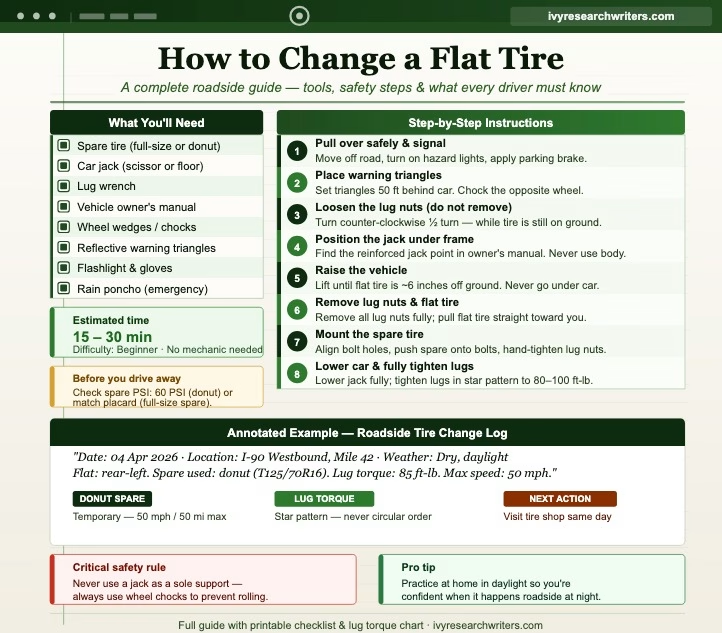
Understanding how to change a tire is an essential life skill that combines practical knowledge with structured procedural thinking—similar to writing a well-organized academic paper. At IvyResearchWriters.com, we emphasize clarity, sequence, and precision, whether you’re handling vehicle maintenance or crafting a research assignment.
This guide to changing a tire presents a comprehensive, step-by-step guide to changing a flat tire, complete with definitions, examples, and safety insights.
🚗 Tire: Understanding the Basics Before You Change a Tire
A tire is the rubber component mounted on a wheel that supports your vehicle, absorbs shock, and ensures traction.
- Definition: A tire is designed to provide grip and stability while driving.
- Example: A worn-out tire with low tread is more likely to result in a flat tire, especially on rough roads.
Before attempting a tire change, always check the tire for visible damage such as punctures, cuts, or deflation.
🔧 Change a Tire: Why Every Driver Should Know How
Knowing how to change a tire can save time, money, and stress—especially when stranded without roadside assistance.
- It reduces dependency on external help
- It enhances confidence in handling emergencies
- It reinforces proactive vehicle maintenance
💡 Example: Imagine being stuck far away from traffic with a flat tire—having this skill allows you to resolve the issue quickly and safely.
⚠️ Flat Tire: Identifying the Problem Early
A flat tire occurs when air pressure is lost due to damage or a leak.
Signs include:
- Difficulty steering
- A pulling sensation
- A visibly deflated tire
Before proceeding to change a flat tire, ensure you are in a safe location.
🛠️ Change a Flat Tire: Preparation and Safety Measures
Safety is the first priority.
Key preparation steps:
- Turn on your hazard lights immediately
- Move to a safe place or away from traffic as possible
- Apply the parking brake to prevent rolling
- Place a brick, wedge, or use wheel wedges to chock the rear wheels
Check your trunk for tools:
- Spare tire
- Jack
- Lug wrench
Always refer to your owner’s manual or manual to find the correct jacking points and tool locations.
📘 Step-by-Step: The Core Process of Changing a Tire
This section provides a clear step-by-step guide to changing a tire.
Step 1: Locate and Prepare
- Locate the damaged tire
- Remove the wheel cover if present
- Identify the lug nuts or lug bolts
Step 2: Loosen the Lug Nuts
- Use a lug wrench to loosen the lug nuts
- Turn counterclockwise (or turn counterclockwise)
- Do not fully remove them yet—just break the resistance
Step 3: Place the Jack and Lift the Vehicle
- Place the jack under the designated lift point
- Slowly lift the car using the jack
- Raise it until the tire is a few inches off the ground
Step 4: Remove the Lug Nuts and Tire
- Fully remove the lug nuts (or unscrew the wheel nuts)
- Carefully perform the removal of the flat tire from the hub
Step 5: Install the Spare Tire
- Align the spare tire with the hub
- Slide it into position and begin replacing the lug nuts
Step 6: Tighten and Lower
- Tighten the lug nuts by hand until snug
- Slowly lower the vehicle
- Use a torque wrench to fully tighten in a star pattern
🧠 Step-by-Step Guide to Changing A Tire: Why Sequence Matters
The step-by-step guide to changing a tire is crucial because:
- It ensures safety
- Prevents damage to the vehicle
- Guarantees proper installation
Just like academic writing, skipping steps can lead to failure—whether it’s a loose tire or a weak argument.
⏱️ Takes to Change a Flat: Time and Efficiency
How long it takes to change a flat depends on experience and conditions.
- Beginners: 20–30 minutes
- Experienced drivers: 10–15 minutes
Factors include:
- Availability of tools
- Weather conditions
- Familiarity with the instruction in the owner’s manual
📍 Vehicle Positioning: Choosing a Safe Location
Always prioritize safety:
- Park in a safe location
- Stay away from traffic or as far away from traffic as possible
- Ensure the ground is stable before you lift the car
🛞 Tire Step by Step: Practical Example
Let’s consider a real-world scenario:
You notice a flat tire while driving. You:
- Pull over into a safe place
- Turn on your hazard lights
- Apply the parking brake
- Use a jack to lift the car
- Replace the tire following the step-by-step process
This demonstrates how structured actions lead to successful outcomes.
🔩 Lug Nuts, Bolts, and Tools: Key Components Explained
- Lug nuts / wheel nuts / lug bolts: Secure the tire to the wheel hub
- Wrench / lug wrench: Used to loosen and tighten fasteners
- Torque wrench: Ensures proper tightening force
Always:
- Turn counterclockwise to loosen
- Tighten evenly in a star pattern
🔍 Repair or Replacement: What to Do After
After installing the replacement tire:
- Check the valve for leaks
- Decide whether the damaged tire needs repair or replacement
- Visit a mechanic to inflate and inspect the tire properly
🆘 Roadside Assistance: When to Seek Help
Sometimes, calling roadside assistance is the best option.
Consider this if:
- You lack tools
- The environment is unsafe
- You’re unsure how to proceed
Even then, knowing the basics of a tire change helps you communicate effectively with professionals.
🎓 Learn How to Change: A Skill Beyond Driving
Learning how to change a flat tire is not just about cars—it’s about problem-solving.
At IvyResearchWriters.com, we draw parallels between:
- Structured processes like this
- Academic writing and research methodology
Both require:
- Clear steps
- Logical order
- Attention to detail
Related Assignments
If you’re studying topics like how to change a tire, there are several academic assignments that naturally align with this kind of procedural and technical knowledge. At IvyResearchWriters.com, we help students turn practical skills into well-structured, high-quality academic work.
Here are some relevant assignment types:
🚗 1. Process Essay (Step-by-Step Writing)
This is the most direct academic equivalent of learning how to change a tire.
- Example topic: “A Step-by-Step Guide to Changing a Flat Tire Safely”
- Focus:
- Clear sequencing of steps
- Use of transition words (first, next, finally)
- Explaining tools and actions logically
This type of assignment mirrors real-life procedures and is common in composition and technical writing courses.
🛠️ 2. Technical Writing Assignment
Technical writing requires clarity, precision, and audience awareness.
- Example topic: “Instruction Manual for Tire Replacement in Passenger Vehicles”
- Key elements:
- Use of diagrams or labeled parts (jack, lug nuts, wheel hub)
- Safety instructions
- Concise, directive language
At IvyResearchWriters.com, we specialize in helping students structure technical documents professionally.
📊 3. Comparative Analysis Essay
Students may compare different approaches or tools used in tire maintenance.
- Example topic: “Manual Tire Change vs Roadside Assistance: Efficiency and Safety Comparison”
- Discussion points:
- Time required
- Cost implications
- Risk factors
This helps develop analytical and critical thinking skills.
🔍 4. Case Study Assignment
A case study examines real-life scenarios involving tire issues.
- Example topic: “Impact of Delayed Tire Replacement on Road Safety”
- Focus:
- Causes of tire failure
- Emergency response (e.g., roadside assistance)
- Preventive strategies
🧪 5. Automotive Engineering Report
For students in engineering or automotive programs:
- Example topic: “Mechanical Principles Behind Tire Installation and Wheel Stability”
- Key areas:
- Role of torque in tightening lug nuts
- Wheel alignment and balance
- Safety implications of improper installation
🧾 6. Instructional Design Project
This involves creating user-friendly guides or tutorials.
- Example:
- Designing a visual step-by-step guide to changing a tire
- Creating infographics or video scripts
🎓 Why These Assignments Matter
Assignments like these develop:
- Logical structuring skills
- Clarity in explanation
- Practical application of theory
These are the same skills required for high-quality research writing.
✍️ Need Help With Similar Assignments?
At IvyResearchWriters.com, we provide expert assistance with:
- Process essays and technical writing
- Engineering and automotive research papers
- Case studies and analytical essays
Whether you’re explaining how to change a tire or tackling a complex research topic, we help you produce clear, well-organized, and academically sound work.
🚘 Conclusion: Mastering the Guide on How to Change a Tire
This guide on how to change a tire provides a complete framework—from identifying a flat tire to safely installing a spare tire.
Whether you’re dealing with a roadside emergency or studying procedural writing, mastering this process ensures confidence, safety, and efficiency.
👉 Need help turning technical processes into high-quality academic papers? IvyResearchWriters.com is your trusted partner for expert writing, research, and structured content development.
Frequently Asked Questions (FAQs)
How do you change a tire step by step?
Changing a tire is a structured, logical process—very similar to writing a well-organized research paper. Each step builds on the previous one, ensuring accuracy and safety.
Here’s a clear blend of step-by-step points and explanation:
- Find a safe location and move your car away from traffic. Turn on your hazard lights and apply the parking brake.
- Retrieve tools (spare tire, jack, wrench) from the trunk.
- Loosen the lug nuts slightly before lifting the car.
- Use the jack to raise the vehicle until the tire is off the ground.
- Remove the lug nuts completely and take off the damaged tire.
- Mount the spare tire onto the hub and hand-tighten the lug nuts.
- Lower the car and fully tighten the lug nuts in a star pattern.
In essence, this is procedural writing in action—clear, sequential, and precise. At IvyResearchWriters.com, we help students present such processes in a structured, academically sound format, whether for technical essays or research papers.
Does the Kia Forte have a spare tire?
The answer depends on the model year and trim level:
- Many Kia Forte models do include a spare tire, typically a compact or “donut” spare located in the trunk.
- However, some newer trims may come with a tire mobility kit instead of a spare to reduce weight and improve fuel efficiency.
👉 Always check your owner’s manual to confirm what your specific vehicle includes.
From an academic perspective, this highlights the importance of verifying sources—just as you would confirm data when writing a research paper. IvyResearchWriters.com emphasizes accuracy and evidence-based writing in every assignment.
What is the #1 tire brand?
There is no single universally agreed-upon “#1 tire brand,” but several brands consistently rank at the top based on performance, durability, and customer satisfaction:
- Michelin
- Bridgestone
- Goodyear
- Continental
The “best” brand often depends on:
- Driving conditions
- Budget
- Vehicle type
This is similar to evaluating scholarly sources—what works best depends on context. At IvyResearchWriters.com, we guide students in comparing sources critically to determine the most reliable options.
Which side of a donut tire faces out?
A donut (compact spare tire) must be installed correctly to function safely.
- The side with the visible writing or label typically faces outward
- The flat mounting surface aligns with the wheel hub
- Ensure the tire sits evenly before tightening the lug nuts
💡 Example: Installing the tire backward can lead to improper alignment and unsafe driving conditions.
This detail reinforces a key lesson: small errors in execution can lead to significant consequences—whether in vehicle maintenance or academic writing. At IvyResearchWriters.com, we help ensure your work is accurate, properly structured, and free from critical mistakes.

