

Art Forms Examples: Definitions, Types, and Creative Expression Across Cultures
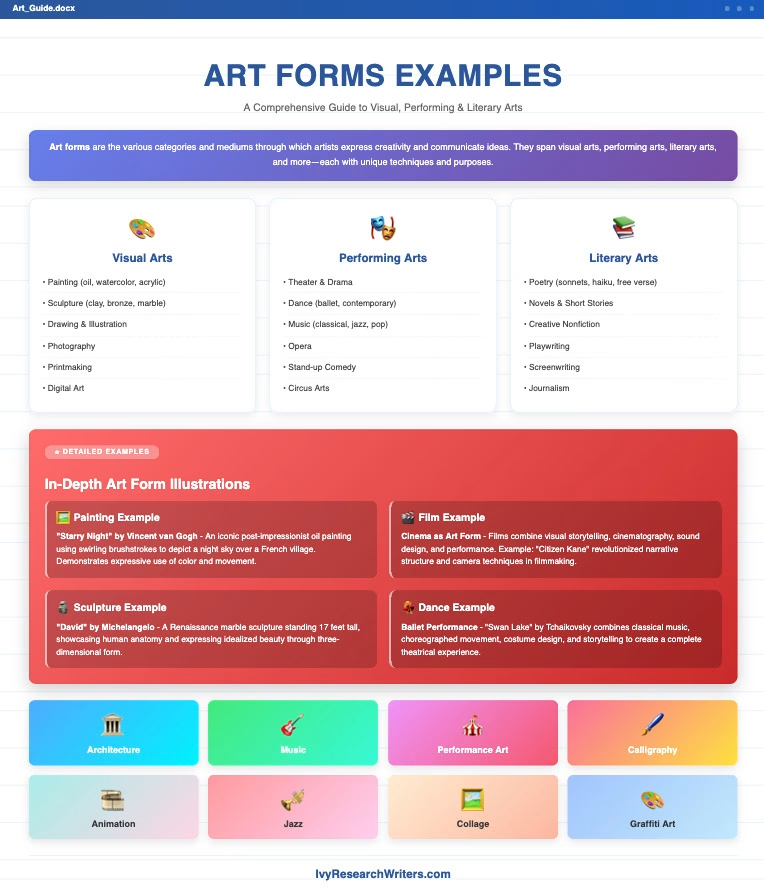
Art is one of the most powerful reflections of human creativity. From cave paintings to digital installations, art allows people to communicate ideas, challenge norms, and express emotion. But what exactly qualifies as an art form? And what are some clear art forms examples you can use in essays or class discussions?
In this comprehensive guide, we explore the definition of art, the major categories of art, and real-world examples across cultures and time periods.
Visual Art: The Most Recognized Art Form
Visual art refers to art that is primarily experienced through sight. It includes some of the most well-known kinds of art.
Examples of Visual Art
- Painting
- Sculpture
- Printmaking
- Ceramics
- Textile art
- Installation art
- Digital art
Visual art can be two-dimensional (like a painting) or three-dimensional, such as sculpture.
Sculpture as a Form of Art
Sculpture is a three-dimensional art form created by carving, molding, casting, or even welding materials together. A sculptor may work in stone, metal, wood, or clay.
From classical marble statues to contemporary sculptural installations, sculpture transforms the built environment into expressive space.
Performing Arts: Art in Motion
The performing arts involve live performance and often combine multiple different mediums.
Examples Include:
- Theatre
- Dance
- Music
- Opera
- Performance art
- Spoken word
Performance art blends visual art, theatre, and conceptual elements. It often gives precedence over traditional aesthetic and material concerns, focusing instead on the process of creating and audience interaction.
Spoken word poetry, for example, is a powerful form of expression that combines literary and performance elements.
Need Help With an Art History or Humanities Essay?
Order your custom art essay today and submit with confidence.
Literary Arts: The Written and Spoken Word
The literary arts focus on storytelling, poetry, essays, and other written works.
Examples include:
- Novels
- Poetry
- Drama
- Creative nonfiction
In the broader context of the liberal arts, literary arts encourage critical thinking and artistic expression.
Definition of Art: What Makes Something an Art Form?
The definition of art is often debated in the art world.
At its core, art may be defined as:
A form of creative expression that communicates meaning, emotion, or aesthetic experience through various mediums.
Art often serves as:
- A reflection of culture
- A critique of society
- A vehicle for self-expression
- A record of historical experience
Whether in ancient Pompeii frescoes or contemporary gallery exhibitions, art objects tell stories about their time.
Abstract Art and Abstraction
Abstract art moves away from realistic representation. Instead, it focuses on color, shape, line, and texture.
Characteristics of Abstract Art
- Non-representational
- Expressive use of color
- Emphasis on abstraction
Abstract art is often associated with modern art movements that challenged traditional approaches.
Modern Art and Art Movements
Modern art refers to artistic movements that broke away from traditional aesthetic standards in the late 19th and early 20th centuries.
Impressionism
Impressionism was an art movement that emphasized light and color over precise detail. An impressionist painter aimed to capture fleeting moments.
Cubism
Cubism, pioneered by artists like Picasso, introduced fragmented forms and geometric abstraction. A cubist artwork often shows multiple perspectives at once.
Surrealism
Surrealism explored dreamlike imagery and subconscious themes.
Minimalism
Minimalism rejected complexity and embraced simplicity, often giving precedence over traditional aesthetic and material concerns.
The 7 Major Art Forms
1️⃣ Painting (Visual Art)
Painting is a foundational visual art that uses pigment applied to a surface (canvas, wood, wall) to create an image.
Examples include:
- Renaissance frescoes
- Impressionist paintings
- Abstract art
It emphasizes color, composition, and aesthetics.
2️⃣ Sculpture
Sculpture is a three-dimensional art form created by carving, modeling, casting, or assembling materials such as stone, metal, clay, or wood.
Examples:
- Classical Greek statues
- Modern abstract sculptures
- Contemporary installation-based sculptural works
3️⃣ Architecture
Architecture is often described as the art of designing buildings and structures. It combines aesthetics with functionality and shapes the built environment.
Examples:
- Gothic cathedrals
- Islamic mosques
- Modern skyscrapers
4️⃣ Literature
Literature belongs to the literary arts and uses language as its medium.
Forms include:
- Poetry
- Novels
- Drama
- Essays
It is a powerful form of creative expression and storytelling.
5️⃣ Music
Music is a performing art based on sound, rhythm, melody, and harmony.
Examples:
- Classical symphonies
- Jazz
- Hip-hop
- Traditional folk music
Music reflects cultural identity across societies.
6️⃣ Theatre (Performing Arts)
Theatre combines literature, performance, and visual design.
It includes:
- Drama
- Live stage productions
- Performance art
Theatre engages audiences through embodied storytelling.
7️⃣ Cinema (Film)
Film is often called the “seventh art.” It blends visual art, music, literature, and performance into a unified medium.
Examples:
- Feature films
- Documentaries
- Experimental cinema
Summary of the 7 Major Art Forms
- Painting
- Sculpture
- Architecture
- Literature
- Music
- Theatre
- Cinema
These seven categories represent traditional classifications, though modern and contemporary art practices often blur their boundaries.
Traditional Art Across Cultures
Traditional art reflects long-standing cultural practices.
Examples Across Cultures
- Islamic art featuring intricate calligraphy and geometric patterns
- Asian art traditions emphasizing harmony and symbolism
- Māori carving and textile art
- Mandala designs in Buddhist and Hindu traditions
These forms show how art is shaped across cultures.
Traditional art often relies on artisan craftsmanship and established techniques.
Architecture Is the Art of the Built Environment
Architecture is the art of designing buildings and structures.
From ancient temples to modern skyscrapers, architecture shapes the built environment and reflects cultural values.
It is both fine art and applied art, blending aesthetics with functionality.
Applied Art and Craftsmanship
Applied art includes design-based works such as:
- Ceramics
- Textile art
- Furniture
- Industrial design
Unlike high art, applied art often focuses on function alongside aesthetics.
An artisan may create handcrafted art objects that serve practical purposes while maintaining artistic vision.
Installation Art and Conceptual Art
Installation art transforms entire spaces into immersive experiences.
Conceptual art prioritizes ideas over visual appeal. In conceptual art, the concept may take precedence over traditional aesthetic and material concerns.
These contemporary art issue debates challenge viewers to reconsider what art is.
Digital Art and New Art Forms
Digital art is one of the newest forms of artistic expression.
Artists use:
- Software
- Animation
- Virtual reality
- AI tools
Digital art represents the intersection of art and technology.
New art forms continue to evolve as mediums expand.
APA 7th edition–formatted comparative essay
Traditional and Modern Art Forms: A Comparative Analysis
Your Name
University Name
Department
Course
Instructor
Date
Abstract
The classification of major art forms has historically structured artistic production and aesthetic theory. Traditionally, seven major art forms—painting, sculpture, architecture, literature, music, theatre, and cinema—have defined the core categories of artistic expression. However, the emergence of modern and contemporary practices such as digital art, conceptual art, installation art, and performance art has challenged traditional taxonomies. This paper compares traditional and modern art forms, examining differences in medium specificity, aesthetic philosophy, institutional validation, and cultural function. Drawing on art historical and philosophical scholarship, the analysis demonstrates that modern art forms do not replace traditional categories but expand and redefine them. The evolution of artistic classification reflects broader transformations in technology, globalization, and cultural discourse.
Introduction
Art history has long relied on categorical distinctions to define and organize artistic production. The traditional “seven arts” model—painting, sculpture, architecture, literature, music, theatre, and cinema—emerged from European aesthetic traditions that emphasized medium specificity and craftsmanship (Gombrich, 1995). These forms were institutionalized within academies, museums, and cultural hierarchies, shaping what was recognized as fine art.
In the 20th and 21st centuries, however, technological innovation and philosophical shifts disrupted these classifications. Modern and contemporary art movements introduced abstraction, conceptual frameworks, and multimedia experimentation. The development of digital art, installation art, and performance art blurred boundaries between categories. This paper offers a comparative analysis of traditional and modern art forms, arguing that contemporary practices expand rather than negate classical definitions.
Traditional Art Forms and Medium Specificity
Traditional art forms are largely defined by their reliance on distinct materials and techniques. Painting employs pigment and surface, sculpture occupies three-dimensional space, and architecture merges aesthetics with structural engineering. Literature uses language as its medium, while music relies on sound and rhythm. Theatre and cinema integrate narrative, visual imagery, and performance.
Modernist critics emphasized medium specificity, arguing that each art form should foreground its unique formal properties (Greenberg, 1960). Painting, for example, was expected to emphasize flatness and color; sculpture to engage physical volume and space. This emphasis reinforced the autonomy of each art form within aesthetic discourse.
Furthermore, traditional art forms were closely associated with institutional validation. Museums, galleries, concert halls, and theatres functioned as gatekeepers, defining high art and distinguishing it from applied or decorative practices (Shiner, 2001).
Modern Art Forms and Conceptual Expansion
The emergence of modern art in the late 19th and early 20th centuries destabilized traditional approaches. Movements such as impressionism and cubism challenged realistic representation, while abstract art rejected mimetic function entirely. These developments marked a philosophical shift from imitation to expressive autonomy.
The rise of conceptual art in the mid-20th century further redefined artistic boundaries. Conceptual art prioritized ideas over material form, asserting that the concept itself could constitute the artwork (Danto, 1981). In doing so, it questioned traditional aesthetic and material concerns that had previously defined artistic legitimacy.
Similarly, installation art transformed entire spaces into immersive environments, merging sculpture, architecture, and performance. Performance art emphasized temporality and the artist’s body as medium, blurring distinctions between theatre and visual art.
Digital art represents one of the most significant contemporary expansions. By employing software, virtual reality, and algorithmic processes, digital art detaches artistic production from fixed physical materials. It exemplifies how technological innovation reshapes artistic categories.
Institutional and Cultural Implications
The comparison between traditional and modern art forms reveals not only aesthetic differences but also institutional transformations. Traditional forms emerged within hierarchical systems that distinguished fine art from craft. Contemporary art increasingly challenges these hierarchies, integrating textile art, ceramics, and digital media into mainstream artistic discourse.
Globalization further complicates classification. Cross-cultural exchange introduces diverse artistic traditions that resist Western taxonomies. For example, Islamic calligraphy, Asian ceramics, and Indigenous carving practices demonstrate alternative aesthetic frameworks. As cultural diffusion accelerates, artistic forms become hybridized, blending traditional techniques with digital innovation.
Continuity and Transformation
Despite significant differences, modern art forms remain connected to traditional foundations. Cinema evolved from theatre and photography; digital art builds upon visual design principles; performance art incorporates dramatic and sculptural elements. Rather than representing rupture, contemporary art reflects an ongoing evolution of creative expression.
Philosophically, both traditional and modern forms grapple with fundamental questions concerning aesthetics, representation, and meaning. While traditional art emphasized craftsmanship and material permanence, modern art emphasizes process, concept, and interactivity. Together, they demonstrate the adaptive capacity of human creativity.
Conclusion
The distinction between traditional and modern art forms reveals a dynamic continuum rather than a rigid division. Traditional art forms emphasize medium specificity, institutional recognition, and craftsmanship. Modern and contemporary forms expand artistic practice through conceptual innovation, technological integration, and interdisciplinary experimentation.
Ultimately, major art forms are not fixed categories but evolving constructs shaped by cultural, technological, and philosophical change. Understanding this evolution enriches our comprehension of artistic production and highlights the enduring adaptability of art in a rapidly changing world.
References
Danto, A. C. (1981). The transfiguration of the commonplace. Harvard University Press.
Gombrich, E. H. (1995). The story of art (16th ed.). Phaidon Press.
Greenberg, C. (1960). Modernist painting. Arts Yearbook, 4, 103–108.
Shiner, L. (2001). The invention of art: A cultural history. University of Chicago Press.
The Seven Forms of Art
Traditionally, scholars identify seven forms of art:
- Painting
- Sculpture
- Architecture
- Literature
- Music
- Theatre
- Cinema
Today, different forms continue to emerge as artistic expression evolves.
Aesthetics and Artistic Vision
Aesthetics refers to the study of beauty and artistic taste.
An artist’s artistic vision guides their choice of medium, style, and message.
Whether expressive or minimal, art reflects a unique perspective.
Art as Creative Expression and Self-Expression
At its core, art is about creative expression.
People create art to:
- Express identity
- Reflect social issues
- Challenge norms
- Explore imagination
Artistic expression can be personal or political.
From the genre of music that originated in marginalized communities to contemporary art installations addressing global issues, art remains a vital form of self-expression.
Final Thoughts
Art forms examples range from visual art and sculpture to performing arts and literary arts. Each art form uses a specific medium to communicate meaning.
From impressionism to cubism, from traditional art to digital art, art continues to evolve.
Art may take many different forms, but at its heart, it remains a reflection of human creativity.
Need Help Writing an Art History or Humanities Essay?
If you’re writing about:
- Art movements
- Definition of art
- Abstract art and modern art
- Visual art and performing arts
- Cultural art traditions
IvyResearchWriters.com offers:
✔ Expert art history writers
✔ Clear explanations and structured analysis
✔ APA, MLA, Chicago formatting
✔ Undergraduate to PhD-level assistance
Order your custom art essay today at IvyResearchWriters.com and submit with confidence.
Frequently Asked Questions
What are the 7 forms of art?
Traditionally, scholars identify seven forms of art that represent foundational categories of artistic expression across cultures.
The 7 Forms of Art:
- Painting – A major branch of visual art involving color and composition.
- Sculpture – A three-dimensional art form created by a sculptor using materials like stone, clay, or metal.
- Architecture – Often described as architecture is the art of designing buildings and structures within the built environment.
- Literature – Part of the literary arts, including poetry, novels, and drama.
- Music – A performing art rooted in rhythm, sound, and composition.
- Theatre – A form of performing arts combining performance art and storytelling.
- Cinema (Film) – A modern art form blending visual art, performance, and literary elements.
These seven forms represent core categories in both fine art and the liberal arts tradition. They span different mediums and demonstrate the range of human creativity and artistic expression across cultures.
If you need a structured academic explanation of the seven forms for an essay, IvyResearchWriters.com can craft a polished, well-researched version tailored to your course requirements.
What are the 5 examples of art forms?
There are many different forms of art, but here are five clear examples:
1️⃣ Visual Art
Includes painting, printmaking, digital art, and installation art. These art objects are typically displayed in a gallery or museum.
2️⃣ Sculpture
A three-dimensional form of art that may be sculptural, abstract, or realistic.
3️⃣ Performing Arts
Includes theatre, dance, music, and spoken word. Performance art often challenges traditional aesthetic and material concerns.
4️⃣ Literary Arts
Includes poetry, novels, and other written works that reflect artistic vision and self-expression.
5️⃣ Applied Art
Includes ceramics, textile art, and design-based artwork created by an artisan.
Each art form uses different mediums but shares a common foundation in creative expression.
What are the 9 art forms?
Some expanded classifications recognize nine art forms to account for new art and contemporary art issues.
Beyond the traditional seven forms, modern categories often include:
- Digital Art – A contemporary art form using technology as a medium.
- Conceptual Art – An art movement in which the idea takes precedence over traditional aesthetic and material concerns.
The expansion reflects how the art world continues to evolve. As new art movements like minimalism, surrealism, cubism, and abstract art emerged, the boundaries of what qualifies as art expanded.
For example:
- Cubism introduced abstraction and non-representational approaches.
- Impressionism challenged traditional approaches to realism.
- Installation art transformed physical space into immersive experience.
Across cultures—from Islamic art to Asian art to Māori carving—artistic expression continually adapts and evolves.
What are the 8 forms of art?
An eight-form model often includes architecture while grouping some performing arts differently.
A common 8-form list includes:
- Painting
- Sculpture
- Architecture
- Literature
- Music
- Theatre
- Film
- Dance
This structure reflects the intersection of art across different mediums.
Art often overlaps categories. For example:
- A cubist painter may work in visual art.
- A sculptor may weld metal into expressive sculptural forms.
- Hip-hop music, a genre of music that originated in urban communities, combines performing arts and literary arts.
- West African music, characterized by a style known as call-and-response and composed in a two-phrase pattern, influenced modern musical traditions through cultural diffusion.
Art may take many forms, but all are rooted in human creativity and the process of creating meaning.
Why Understanding Art Forms Matters
Knowing the different kinds of art helps students:
- Analyze art movements like impressionism and surrealism
- Understand abstraction and aesthetics
- Recognize cultural landscapes shaped by artistic traditions
- Compare traditional art and modern art
Whether studying Pompeii frescoes, mandala designs, textile art, ceramics, or contemporary digital art, each reflects unique artistic vision.

