

Core Beliefs Examples: How Deep Beliefs Shape Your Thoughts, Emotions, and Life
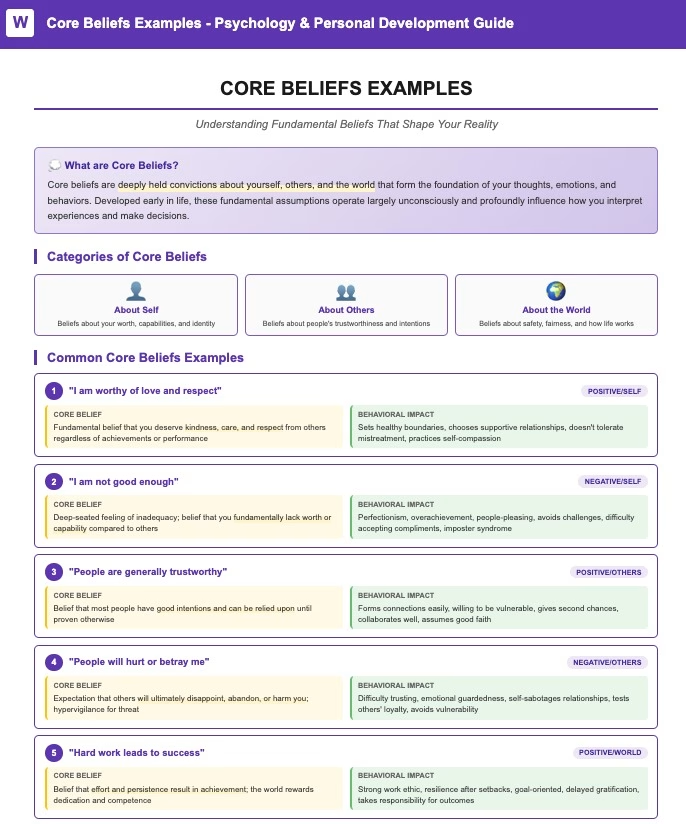
We all carry deeply held assumptions about ourselves, others, and the world around us. These are called core beliefs — and they quietly influence our thoughts, feelings, behaviors, and overall approach to life.
In this guide, we’ll explore:
- What a core belief is
- Examples of core beliefs
- How core beliefs develop
- How to identify and challenge harmful core beliefs
- Practical CBT tools like the downward arrow technique and worksheets
Whether you’re studying psychology, exploring personal growth, or working in psychotherapy, understanding core beliefs is essential.
Core Belief
A core belief is a deep belief about yourself, other people, or the world. Core beliefs are deeply held assumptions that shape your worldview and belief system.
Core beliefs are central to how we:
- See the world
- Interpret events
- Make sense of right and wrong
- Respond to difficult emotions
- Influence our daily thoughts and feelings
Core beliefs are beliefs that feel absolute and unquestionable. Because they are deeply held, they often operate beneath conscious awareness.
For example:
- “I am unlovable.”
- “People are untrustworthy.”
- “The world is full of danger.”
- “I am destined to fail.”
These beliefs shape thought patterns and can affect life satisfaction, relationships, and self-esteem.
Examples of Core Beliefs
There are both positive core beliefs and negative core beliefs. Beliefs may be helpful or harmful depending on how they influence your life.
Common Examples of Core Beliefs
Negative core beliefs:
- I am unlovable.
- I am worthless.
- I am helpless.
- The world is a bad place.
- People cannot be trusted.
- I will always fail.
These harmful core beliefs can lead to negative thinking and automatic negative thoughts.
Positive core beliefs:
- I am capable.
- I am worthy of love.
- The world works in predictable ways.
- I can learn from mistakes.
Core beliefs shape perceptions of others, influence our daily behavior, and guide how we interpret challenges.
Identify Core Beliefs
Learning to identify core beliefs is a key goal in psychotherapy and cognitive-behavioral therapy (CBT).
Core beliefs are often revealed through patterns of:
- Automatic thoughts
- Negative emotions
- Irrational beliefs
- Repeated relationship struggles
Because core beliefs are deeply embedded, they may feel like “facts” rather than interpretations.
To help identify core beliefs, therapists often encourage clients to:
- Notice recurring negative views
- Pay attention to automatic negative thoughts
- Reflect on emotional triggers
- Examine unhelpful thinking patterns
Beliefs come from repeated experiences, especially those formed early in life. Identifying and shifting these beliefs requires awareness and structured reflection.
CBT
CBT (Cognitive Behavioral Therapy) is a structured form of psychotherapy developed in part by Aaron Beck. Beck proposed that underlying core beliefs influence cognitive distortions and emotional distress.
Cognitive-behavioral therapy focuses on:
- Identifying automatic thoughts
- Recognizing cognitive distortions
- Challenging unhelpful beliefs
- Reframing thought patterns
CBT works on the understanding that:
Core beliefs shape thoughts and feelings, which influence behavior.
When clients identify and challenge unhelpful core beliefs, they can reduce negative emotions and harmful thinking patterns.
Change Your Core Beliefs
Changing core beliefs is possible — but it takes intentional work.
Core beliefs develop over time, often beginning in early childhood. They form as we try to make sense of the world around us.
Because core beliefs are deeply held, changing core beliefs requires:
- Identifying the ones that are unhelpful
- Challenging negative thinking
- Cognitive restructuring
- Reframing negative thoughts
- Practicing new interpretations
For example:
Old belief: “I am destined to fail.”
Reframed belief: “I have faced setbacks before, but I can learn and grow.”
Changing core beliefs does not mean ignoring reality — it means challenging unhelpful interpretations and replacing them with balanced perspectives.
Positive Psychology
While CBT focuses on identifying and challenging negative core beliefs, positive psychology emphasizes strengthening positive core beliefs.
Positive psychology helps individuals:
- Increase life satisfaction
- Build resilience
- Focus on strengths
- Develop optimism
Positive core beliefs such as “I can handle challenges” help us live with greater confidence and emotional stability.
Beliefs help us make decisions and guide our approach to life. Strengthening positive core beliefs improves mental health outcomes and overall well-being.
Negative Core Belief
A negative core belief is a harmful, deeply held assumption about oneself or the world.
Common negative core beliefs include:
- Worthlessness
- Helplessness
- Unlovable
- The world is full of danger
- People are untrustworthy
These unhelpful core beliefs often trigger automatic negative thoughts such as:
- “I always mess things up.”
- “Nobody cares about me.”
- “Something bad will happen.”
Negative core beliefs can lead to cognitive distortions such as:
- Catastrophizing
- Overgeneralization
- Black-and-white thinking
Over time, harmful beliefs can shape negative thinking and reinforce emotional distress.
Cognitive
Core beliefs operate at the cognitive level — meaning they influence how we process information.
Our cognitive system filters experiences based on what we already believe. If someone holds a deep belief that they are unlovable, they may interpret neutral events as rejection.
Cognitive distortions arise when automatic thoughts are influenced by unhelpful core beliefs.
For example:
Belief: “I am worthless.”
Automatic thought: “I made a mistake, so I’m a failure.”
Cognitive restructuring helps individuals challenge and reframe these distortions.
Common Core Beliefs
Common core beliefs tend to fall into categories related to:
- Self-worth
- Safety
- Trust
- Control
- Competence
Common examples include:
- I am inadequate.
- I cannot trust others.
- The world is a bad place.
- I must be perfect to be accepted.
Core beliefs may be positive or negative, but when they are unhelpful, they can restrict growth.
Automatic Thought
An automatic thought is a quick, reflexive thought that arises in response to a situation.
Automatic thoughts often stem from underlying core beliefs.
For example:
Situation: A friend does not reply to a text.
Automatic thought: “They don’t like me.”
Underlying core belief: “I am unlovable.”
Automatic negative thoughts are clues that help uncover deeper harmful core beliefs.
Worksheet
Therapists frequently use a worksheet to help clients track automatic thoughts and identify core beliefs.
A worksheet may include:
- Situation
- Automatic thought
- Emotion
- Evidence for/against
- Alternative thought
This structured format helps clients to identify and challenge distorted thinking.
Unhelpful
Unhelpful beliefs are those that cause distress, limit growth, or contribute to negative emotions.
Unhelpful core beliefs often:
- Trigger negative thinking
- Reinforce helplessness
- Increase anxiety
- Create relationship conflict
Beliefs feel real because they were formed early in life, but that does not mean they are accurate.
Core Beliefs Worksheet
A core beliefs worksheet helps uncover core beliefs using structured questioning.
It may guide individuals to:
- Identify recurring automatic thoughts
- Apply the downward arrow technique
- Explore underlying core beliefs
- Challenge and reframe harmful beliefs
These tools are widely used in cognitive-behavioral therapy.
Downward Arrow
The downward arrow is a technique used to uncover deeper core beliefs by repeatedly asking:
“If that’s true, what does it mean about me?”
This process continues until a deep belief emerges.
Uncover
To uncover core beliefs, therapists encourage clients to examine patterns in thoughts and emotions.
Because core beliefs are deeply held, they often require guided exploration in psychotherapy.
Unhelpful Beliefs
Unhelpful beliefs can shape how we see the world and influence our daily behavior.
For example:
Belief: “The world is full of danger.”
Result: Constant anxiety and avoidance.
Need Help with Your Psychology Research Paper?
IvyResearchWriters.com provides expert academic support tailored to your assignment.
👉 Order your custom paper today and submit with confidence.
Core Beliefs Develop
Core beliefs develop in early childhood as we try to make sense of experiences.
They are often formed early in life based on family, culture, trauma, or repeated messages.
Core Beliefs Can Lead
Core beliefs can lead to:
- Cognitive distortions
- Negative emotions
- Harmful beliefs
- Chronic stress
- Low self-esteem
If unexamined, they reinforce negative thinking.
Cognitive Distortions
Cognitive distortions are biased thought patterns influenced by core beliefs.
Examples include:
- All-or-nothing thinking
- Mind reading
- Catastrophizing
CBT helps identify and challenge these distortions.
Downward Arrow Technique
The downward arrow technique is a CBT method used to uncover underlying core beliefs.
A therapist may ask:
“What does that say about you?”
This process helps uncover deep beliefs that shape thoughts and feelings.
Core Beliefs Are Formed
Core beliefs are formed early in life and often persist into adulthood.
They help us make sense of experiences, but they may also become rigid and unhelpful.
Identify and Challenge
The key to emotional growth is to identify and challenge harmful beliefs.
Steps include:
- Identify the ones that are unhelpful
- Examine evidence
- Challenge and reframe
- Let them go
- Practice new ways of thinking
Identifying and shifting core beliefs allows individuals to reshape their worldview and improve life satisfaction.
Final Thoughts
Core beliefs are deeply held assumptions that shape our thoughts, emotions, and behaviors. They influence how we see the world, how we interpret experiences, and how we approach life.
Some core beliefs are positive and empowering. Others are harmful and create unnecessary suffering.
Through CBT, positive psychology, cognitive restructuring, and structured tools like the downward arrow technique and worksheets, individuals can uncover and transform unhelpful core beliefs.
If you want to change your core beliefs, the first step is awareness.
Need Help With Your Psychology Paper?
If you’re writing about CBT, core beliefs, cognitive distortions, or psychotherapy:
IvyResearchWriters.com offers:
✔ Expert psychology writers
✔ APA-formatted academic papers
✔ Plagiarism-free content
✔ On-time delivery
✔ Graduate and PhD-level research
Order your custom psychology paper today at IvyResearchWriters.com and submit with confidence.
Frequently Asked Questions
What are common core beliefs?
Common core beliefs are deeply held assumptions about ourselves, other people, and the world. These beliefs shape how we think, feel, and behave — often without us realizing it.
Examples of Common Core Beliefs
Some frequently observed beliefs include:
- “I am not good enough.”
- “I am unlovable.”
- “People cannot be trusted.”
- “The world is unsafe.”
- “I am destined to fail.”
These types of beliefs often develop early in life. In fact, core beliefs start in childhood as we try to make sense of our experiences. Over time, core beliefs form through repeated messages, relationships, and significant events.
Because core beliefs take root gradually, they can feel like unquestionable truths. However, they are interpretations — not facts.
When students are writing psychology essays or reflection papers, simply listing beliefs is not enough. Professors expect explanation, depth, and analysis. At IvyResearchWriters.com, we help you move beyond definitions to produce structured, high-quality academic responses.
What are the top 10 core values?
Core values differ from core beliefs. While beliefs shape how we interpret the world, values guide how we choose to live and act.
Here are 10 widely recognized core values:
- Integrity
- Honesty
- Responsibility
- Compassion
- Respect
- Courage
- Accountability
- Loyalty
- Fairness
- Growth
Core values help us live with purpose. They influence decisions, relationships, and long-term goals.
By paying more attention to our values, we can align our behavior with what truly matters. In academic writing, clearly distinguishing between beliefs and values is essential — something many students confuse. If you need clarity and well-structured explanations, IvyResearchWriters.com ensures your paper reflects strong conceptual understanding.
What are the three core beliefs?
In psychology, especially cognitive frameworks, three broad categories of core beliefs are commonly discussed:
1. Beliefs About the Self
- “I am capable.”
- “I am worthless.”
- “I am destined to fail.”
2. Beliefs About Others
- “People are trustworthy.”
- “Others will hurt me.”
3. Beliefs About the World
- “The world is full of opportunity.”
- “Life is unfair.”
These three categories explain how individuals see themselves, how they see others, and how they see the world.
Core beliefs take shape early and influence emotions, motivation, and behavior. When harmful beliefs develop — such as believing one is destined to fail — they can affect confidence and life satisfaction.
Understanding these categories is essential for psychology essays, research discussions, and case study analyses. At IvyResearchWriters.com, we help students present these frameworks with clarity and academic precision.
What are 20 core values?
Core values are principles that guide behavior and decision-making. Below is a comprehensive list of 20 core values often discussed in psychology, ethics, and leadership studies:
- Integrity
- Honesty
- Compassion
- Accountability
- Courage
- Discipline
- Empathy
- Fairness
- Loyalty
- Respect
- Responsibility
- Perseverance
- Gratitude
- Kindness
- Patience
- Wisdom
- Self-control
- Trustworthiness
- Generosity
- Growth
These values help us live meaningfully and influence how we respond to challenges.

