

Inclusion and Exclusion Criteria Examples: A Complete Guide for Research Students
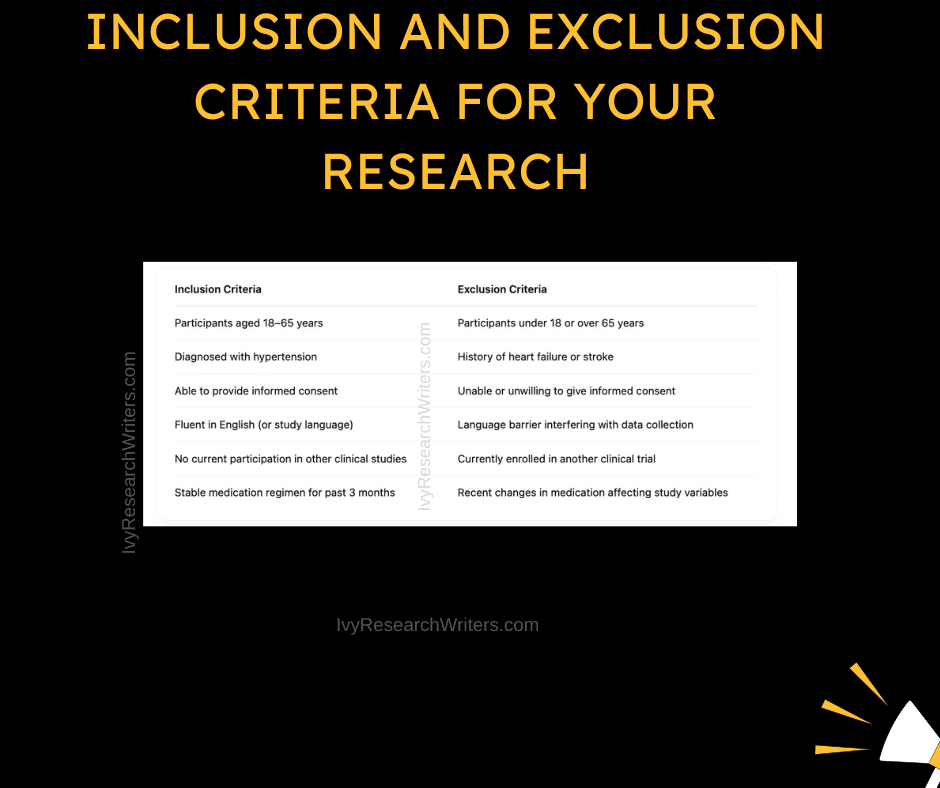
When designing a research study, especially in clinical trials or systematic reviews, one of the most important steps is defining inclusion and exclusion criteria. These criteria help determine who is eligible or ineligible to participate in the study. Having clear and well-defined criteria improves the quality, reliability, and applicability of your research findings. In this blog post, we’ll explore what inclusion and exclusion criteria are, why they matter, and offer practical inclusion and exclusion criteria examples you can apply in your own research.
What Are Inclusion and Exclusion Criteria?
Inclusion and exclusion criteria are the rules researchers use to decide who can or cannot take part in a study.
- Inclusion criteria are the characteristics that participants must have to be part of the study.
- Exclusion criteria are the characteristics that disqualify someone from participating in the study.
Together, these criteria help researchers focus their studies on the right population and reduce variability that could affect results.
Importance of Inclusion and Exclusion Criteria in Research
Clear criteria are critical for several reasons:
- Improved Accuracy: By selecting a well-defined group, researchers can better observe the effects of interventions or variables.
- Safety: Exclusion criteria help prevent individuals from being harmed due to pre-existing conditions or risk factors.
- Reproducibility: Future researchers can repeat the study using the same criteria, ensuring consistency in findings.
- Generalizability: The results apply more accurately to the intended population if the criteria are carefully chosen.
Key Components of Inclusion and Exclusion Criteria
Before listing inclusion and exclusion criteria examples, it’s helpful to understand the main types of characteristics used in creating them:
- Demographic factors: Age, gender, ethnicity, socioeconomic status.
- Clinical factors: Diagnoses, symptoms, medical history, treatment history.
- Behavioral factors: Smoking, alcohol use, exercise.
- Geographical factors: Location, access to treatment facilities.
- Time-related factors: Disease duration, time since diagnosis, prior treatments.
Inclusion and Exclusion Criteria Examples
Here are sample inclusion and exclusion criteria examples for different types of studies to give you a clear idea of how these are used:
Example 1: Clinical Trial on Hypertension Medication
Inclusion Criteria:
- Adults aged 40–65 years.
- Diagnosed with Stage 1 or Stage 2 hypertension.
- Not currently on any antihypertensive drugs.
- Willing to provide informed consent.
Exclusion Criteria:
- History of heart disease or stroke.
- Pregnant or breastfeeding.
- Allergy to study medication.
- Diagnosed with severe kidney disease.
Example 2: Mental Health Survey Among University Students
Inclusion Criteria:
- Enrolled full-time undergraduate or graduate students.
- Aged between 18 and 30.
- Able to complete an online questionnaire.
Exclusion Criteria:
- Currently receiving inpatient psychiatric treatment.
- History of diagnosed learning disability affecting comprehension.
- Non-consent to participate.
Example 3: Systematic Review on Diet and Diabetes
Inclusion Criteria:
- Studies published between 2010 and 2024.
- Research on adults aged 18+ with Type 2 diabetes.
- Articles published in English.
- Peer-reviewed randomized controlled trials (RCTs).
Exclusion Criteria:
- Animal studies.
- Studies on Type 1 diabetes.
- Non-English publications.
- Observational studies or case reports.
Example 4: Public Health Study on COVID-19 Vaccine Uptake
Inclusion Criteria:
- Individuals aged 18 and above.
- Received at least one COVID-19 vaccine dose.
- Residents of urban areas.
Exclusion Criteria:
- Non-residents or temporary visitors.
- Refused to disclose vaccine status.
- Medical contraindication to vaccination.
How to Write Effective Inclusion and Exclusion Criteria
To write strong and ethical criteria:
- Be specific: Avoid vague terms like “young people” or “healthy adults”; provide exact age ranges or health parameters.
- Align with study goals: Your criteria should reflect the core research questions.
- Avoid bias: Criteria should not unfairly exclude groups unless scientifically justified.
- Use measurable variables: Rely on lab values, diagnosis records, or standardized assessments where possible.
Ethical and Scientific Considerations for Defining Eligibility Criteria
When defining exclusion and inclusion criteria in research, researchers must consider both scientific integrity and ethical responsibility. The main goal is to ensure that the study population accurately reflects the group the research is meant to help, while protecting individuals who might face unnecessary risks if they participate.
For example, including individuals with certain pre-existing conditions might increase the chance of side effects or complications during a clinical trial. That’s why researchers use inclusion or exclusion criteria to protect participant safety and uphold research standards.
Another important consideration is equity. Criteria should not unfairly exclude groups unless it is scientifically justified. Ethical research ensures diversity and avoids discrimination. When you apply inclusion exclusion criteria in research, always document your reasoning clearly and ensure it aligns with your study’s objectives.
Also, eligibility criteria help with reproducibility, allowing other researchers to replicate your work. Whether you’re designing a study involving medication trials or behavioral interventions, establishing exclusion inclusion criteria based on sound science and ethics is essential.
Need Expert Help Defining Inclusion and Exclusion Criteria for Your Research?
Whether you’re working on a thesis, clinical trial protocol, or academic paper, our professional writers and subject matter experts are here to assist you.
✅ Get precise, ethically sound eligibility criteria
✅ Improve the clarity and credibility of your research
✅ Ensure your methodology meets academic and institutional standards
What are some examples of inclusion and exclusion criteria in clinical research?
In clinical research, inclusion and exclusion criteria play a vital role in selecting participants who are suitable for the study. Below are some inclusion and exclusion criteria sample groups for common clinical settings:
Example: Diabetes Medication Study
Inclusion Criteria:
- Adults aged 30–60 years.
- Diagnosed with Type 2 diabetes for at least 1 year.
- Hemoglobin A1c levels between 7.0% and 10.0%.
- Stable medication use for 3 months prior to study.
Exclusion Criteria:
- Diagnosed with Type 1 diabetes.
- Pregnant or breastfeeding women.
- History of severe liver disease.
- Participation in another clinical trial within the past 30 days.
This inclusion and exclusion criteria sample shows how specific and measurable conditions ensure that only participants who meet the target profile are included. It also demonstrates what is exclusion criteria — factors that make someone ineligible, like medical conditions or life circumstances that pose a risk.
Using well-defined inclusion and exclusion criteria definition helps researchers avoid unnecessary bias and ensure the study population is appropriate for the intervention being tested. In practice, this also means deciding whether criteria are inclusion or exclusion criteria, depending on whether they allow someone into the study or rule them out.
What are inclusion criteria?
Inclusion criteria in research define the specific characteristics that participants must possess to be included in a study. Understanding inclusion and exclusion criteria is vital for selecting articles in a journal, ensuring a prospective sample accurately represents the target population. Conversely, exclusion criteria outline restrictions that eliminate individuals who do not meet the study’s requirements.
For example, a sample may require certain demographic factors while excluding others. Thus, what is inclusion criteria and exclusion criteria is crucial for maintaining the integrity of research findings. The clear definition of inclusion and exclusion criteria in sampling helps researchers delineate their study’s scope and enhances the reliability of results.
Overall, understanding what is inclusion criteria in research allows for effective participant selection, while research exclusion criteria ensures that data remains focused and relevant. By carefully establishing inclusion exclusion criteria, researchers can achieve a more precise analysis of intermediate outcomes.
Evolving oncology clinical research
In evolving oncology clinical research, defining inclusion and exclusion criteria is crucial for ensuring that the target population accurately represents the condition being studied. Inclusion criteria and exclusion criteria are used to screen participants, helping to identify relevant subjects while excluding those with chronic conditions or other additional characteristics that may skew results.
Understanding what is inclusion and exclusion criteria in research is vital, as these criteria help to maintain the integrity of the study. For instance, exclusion criteria are defined to restrict participants based on factors like geographic location or health status. This ensures that the results of the study are both reliable and generalizable to the broader population.
Researchers often use inclusion/exclusion criteria examples to guide their sampling processes. By implementing clear inclusion criteria in research, teams can effectively collect data that is both relevant and applicable to their objectives. Ultimately, a well-structured approach to exclusion criteria research enhances the overall quality of oncology studies.
Impact of the inclusion and exclusion criteria on the external validity of the study
The inclusion and exclusion criteria in research play a crucial role in determining the external validity of a study. When designing clinical trials, researchers must define exclusion criteria to restrict participation based on factors like previous treatment history or type and stage of disease. This can impact the diversity of the cohort, potentially limiting the generalizability of the results.
In inclusion/exclusion criteria sampling, a carefully selected sample can enhance the precision of the findings. However, overly stringent exclusion criteria can interfere with the success of the study by excluding individuals who might otherwise meet the inclusion criteria. Thus, balancing inclusion vs exclusion criteria is essential for retrieving meaningful data.
You may also read about research methods and research bias
In research, establishing inclusion and exclusion criteria is crucial for selecting study participants. Inclusion criteria may specify characteristics that must be present, while exclusion criteria must define conditions that disqualify individuals, such as comorbidity or being pregnant women. Examples of inclusion and exclusion criteria help to clarify the criteria for inclusion and exclusion in a research study design.
To effectively address exclusion criteria meaning, researchers should specify the exclusion criteria that will be used. This may include factors like age and health status. When conducting a literature review, understanding how to write inclusion and exclusion criteria in literature review ensures accurate data interpretation and enhances the validity of the study results.
Inclusion and exclusion criteria for research not only guide investigators but also ensure a robust follow-up study. By clearly defining the appropriate inclusion and exclusion criteria, the research team may ensure that only those who meet the criteria related to the study objectives are included in a study, thus improving the overall quality of the findings.
Final Thoughts
Understanding and applying inclusion and exclusion criteria examples is vital to designing rigorous and ethical research. These criteria not only shape your study population but also ensure that your findings are meaningful, safe, and applicable. Whether you’re conducting a clinical trial, systematic review, or public health survey, defining clear boundaries around who can and cannot participate is one of the first and most essential steps in the research process.
If you need help designing your study criteria or writing your research paper, our expert writers at ivyresearchwriters.com are ready to assist you with high-quality, custom academic support.
FAQs about Inclusion and Exclusion Criteria Examples: Systematic Review
What are inclusion and exclusion criteria in a systematic review?
Inclusion and exclusion criteria are essential components of a systematic review that help in defining the scope of the research. Inclusion criteria refer to the characteristics that study participants must have to be included in the research, while exclusion criteria specify the characteristics that disqualify potential participants from being part of the study. Establishing these criteria ensures that the research focuses on a specific population and enhances the external validity of the findings.
Why are inclusion and exclusion criteria important in research?
Inclusion and exclusion criteria are critical in research as they help in maintaining the integrity and relevance of the study. By clearly defining who can participate in the study, researchers can ensure that the results are applicable to the desired population. This is essential for achieving accurate and reliable study results. Moreover, these criteria facilitate the replication of the study by other researchers and help in evaluating the external validity of the findings.
How do I define exclusion criteria for my research?
To define exclusion criteria, start by identifying characteristics that may confound the results or are irrelevant to the research question. Common factors to consider include age, gender, medical history, and current therapy regimens. It is crucial that the exclusion criteria must be well-justified and aligned with the overall goals of the study. This ensures that the research focuses on a specific group of participants who meet the necessary inclusion criteria.
Can you provide examples of exclusion criteria?
Yes, examples of exclusion criteria may include: individuals with a history of severe comorbidities that could affect the study outcomes, participants currently undergoing a specific therapy, or those who do not meet the age requirement for the study. For instance, if a clinical trial is studying a new drug for adults, individuals under the age of 18 would be excluded. Such exclusion criteria are vital to ensure the safety of participants and the reliability of study results.

