

What To Know
- At the end of an essay, the transition words for conclusion paragraph are vital in summing up the entire argument and providing a final statement.
- They help the writer restate the thesis in a more concise way, summarizing the most important points and leaving a lasting impression on the reader.
Transition Words for Conclusion
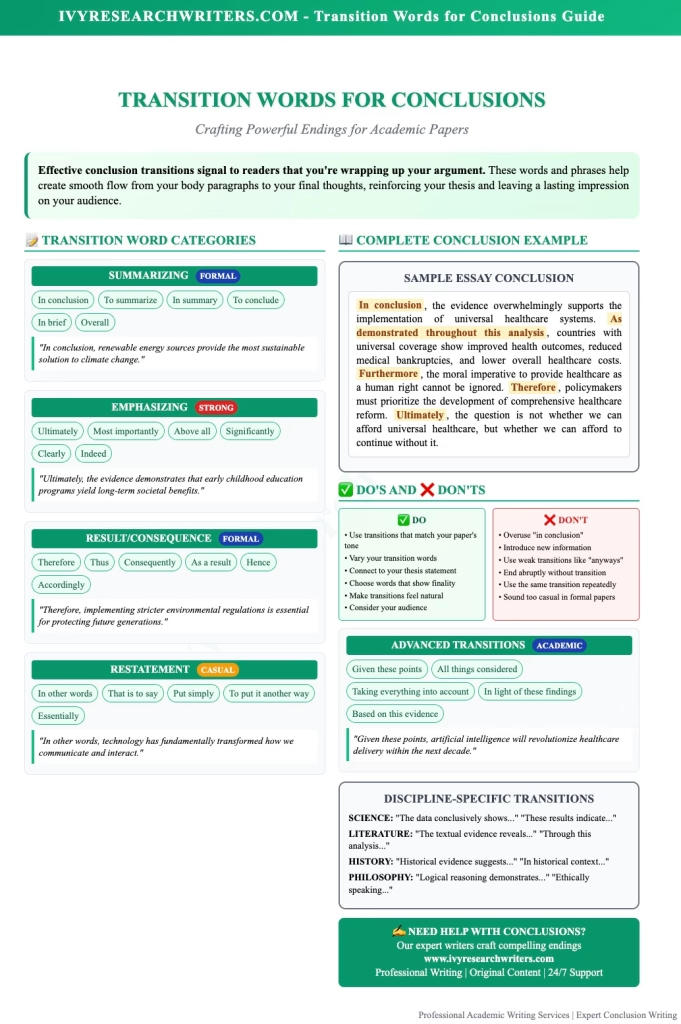
In academic writing, transition words are essential to ensure the smooth flow of ideas from one section to the next. Specifically, transition words for conclusions are critical in helping readers understand the final thoughts and summaries of your essay. They give your writing a sense of closure, indicating that the discussion is wrapping up. This post will explore various types of transition words, focusing on how to use them effectively in your conclusion paragraph.
Transitional Word: Definition and Importance
Transition words are words or phrases that link different ideas within a piece of writing. They are crucial for maintaining coherence and improving readability by guiding the reader through the text. In essays, transition words help move from one paragraph to the next and one idea to another, providing structure and flow to the writing.
Examples of Transitional Words for Essays:
- First Body Paragraph Transition Words: “Firstly,” “To begin with,” “Initially”
- Conclusion Paragraph Transition Words: “In conclusion,” “To sum up,” “Therefore”
These words help the reader understand the relationship between ideas and keep the writing connected.
Types of Transition Words
Transition words and phrases vary depending on the type of relationship they indicate. The most common types of transitions include:
- Additive Transitions: These words link ideas that are similar or build upon one another.
- Example: “Moreover,” “Additionally,” “Furthermore.”
- Cause and Effect Transitions: These transitions show the cause or reason behind an event or statement.
- Example: “Therefore,” “As a result,” “Consequently.”
- Contrast Transitions: These words demonstrate the contrast between two ideas.
- Example: “However,” “On the other hand,” “Nevertheless.”
- Concluding Transitions: These are typically used at the end of a paragraph or essay to indicate a summary or final thought.
- Example: “In conclusion,” “To summarize,” “Finally.”
Conclusion Transitional Phrases
When it comes to concluding an essay or paragraph, transition phrases for conclusions are especially important. They guide the reader to the final general statement, signaling that the discussion is over.
Common Conclusion Transition Phrases:
- “In conclusion”
- “To conclude”
- “Therefore”
- “In summary”
- “Ultimately”
- “Finally”
- “In closing”
These phrases are especially useful in formal essays to indicate that the writer is summarizing the main points or offering a final thought.
Paragraph Transition Phrases for Essays
Paragraph transition phrases are necessary for creating a smooth transition from one paragraph to another. They ensure the essay flows logically, maintaining the reader’s engagement throughout the piece.
Examples of Transition Words for Starting Paragraphs:
- “Firstly,” “To begin with,” “In the first place”
- “Next,” “Additionally,” “Secondly”
These words and phrases help to start a paragraph by clearly indicating the direction of the argument or discussion. Here is an extensive list of transition words that you can use for various purposes in your writing. These words help improve the flow and clarity of your ideas and ensure your writing is well-organized:
Transition Words for Conclusion Paragraph
At the end of an essay, the transition words for conclusion paragraph are vital in summing up the entire argument and providing a final statement. They help the writer restate the thesis in a more concise way, summarizing the most important points and leaving a lasting impression on the reader.
Example Conclusion Transition Words:
- “In conclusion”
- “Therefore”
- “To summarize”
- “Finally”
- “Overall”
- “In the final analysis”
Using these transition words for essays will make your conclusion more structured and clear, ensuring that your readers fully grasp the significance of your argument.
Using Transitional Words and Phrases to Add Variety
When writing essays, adding variety to your writing is essential. Instead of repeating the same transition words, use synonyms or different phrases to maintain the flow and keep the writing interesting. For example:
- Instead of always using “In conclusion,” you might try:
- “To summarize”
- “In closing”
- “Ultimately”
This helps keep the writing engaging, especially when discussing complex ideas in academic writing.
Transition Words for Conclusion
Looking to enhance your writing with seamless transitions and clear flow?
Contact IvyResearchWriters.com for expert writing assistance and guidance on using transition words effectively in your essays and papers! Let us help you craft well-structured, polished pieces today!
Phrases for Conclusions
In academic writing, phrases for conclusions are essential for clearly signaling the end of your argument or essay. These transition words and phrases for essays provide clarity and guide the reader through the final thoughts, ensuring the essay ends smoothly and concisely. Transition words for the conclusion paragraph help wrap up ideas by summarizing the key points or offering a final statement.
Common Phrases for Conclusions:
- “In conclusion”
- “Therefore”
- “In summary”
- “To conclude”
- “Finally”
- “In closing”
- “Ultimately”
These transition words for conclusion, especially when placed at the beginning of a sentence, can help denote that the essay is coming to a close and that the reader should focus on the final message.
Transition Words in Essays
Transition words in essays serve as the glue that holds ideas together. They help guide the reader from one paragraph to the next and ensure that the flow of the argument is logical. When used effectively, transition words make writing more fluid and easier to understand.
Types of Transition Words:
- Coordinating Conjunctions: These connect words, phrases, or clauses of equal importance. Examples include “and,” “but,” and “or.”
- Connecting Words: These words link ideas or sections of writing. Examples include “because,” “however,” and “meanwhile.”
- Conjunctive Adverbs: These are used to connect ideas and show relationships between sentences or clauses. Examples include “therefore,” “thus,” and “moreover.”
Transition Words for First Body Paragraph
In the introduction and the first body paragraph, transition words for the first body paragraph are important for starting the flow of ideas and guiding the reader smoothly from the introduction to the core argument. Transition words to start paragraphs provide a clear roadmap for the reader, letting them know what to expect in each section of the essay.
Example Transition Words for the First Body Paragraph:
- “Firstly”
- “To begin with”
- “Initially”
- “In the first place”
These transitions introduce the first body paragraph and signal that the writer is starting to explore the main points.
Transition Words to Start Paragraphs
Transition words to start paragraphs are vital in helping your writing move seamlessly from one idea to the next. These transition words and phrases create a structured flow in your essay, providing a smooth reading experience.
Examples of Starting Transition Words:
- “Firstly”
- “Next”
- “To begin with”
- “In addition”
- “Moreover”
By using these transition words strategically, you can guide the reader through each section without abrupt changes in thought, keeping the essay cohesive and well-organized.
Words Like “Therefore” and “Moreover”
Words like “therefore” and “moreover” are commonly used to show a cause and effect relationship, where one idea leads to another, or to add additional information. These transition words in essays help to build logical connections between ideas and paragraphs, making your essay more persuasive and clear.
Examples:
- “Therefore”: Used to indicate a result or consequence. Example: “The study showed positive results. Therefore, the hypothesis was confirmed.”
- “Moreover”: Adds information or elaborates on a point. Example: “The policy will benefit the economy. Moreover, it will create job opportunities.”
Transition Words Like “Also” and “Finally”
Transition words like “also” and “finally” are useful in connecting related ideas or marking the end of a sequence of thoughts.
- “Also”: Used to add information or expand on a previous point. Example: “The research highlights significant findings. Also, it points to further areas of study.”
- “Finally”: Marks the last point in a series of ideas or arguments. Example: “Finally, we must consider the potential impacts on future generations.”
Using Ordinal Numbers for Transition
Ordinal numbers (first, second, third) are helpful when you need to organize your ideas or present a list in a clear, logical order. These are transition words that help the reader follow the sequence of your argument or explanation.
Examples of Ordinal Numbers:
- “First”
- “Second”
- “Third”
- “Finally”
Using ordinal numbers ensures that your ideas are presented in a concise and well-structured manner, making it easier for the reader to follow your logic.
Transitional Phrases for Conclusion
In academic writing, transitional phrases for conclusions are a key element in providing a clear and final summary of the essay. These phrases help to summarize the key points and restate the main argument without introducing new information.
Examples:
- “In conclusion”
- “Therefore”
- “In closing”
- “To conclude”
These phrases help the writer summarize the previous statement and ensure that the essay ends with a clear, final thought, providing closure to the reader.
Transition Words for Essays: Adding Variety

To avoid redundancy in your writing, it’s important to use a variety of transition words for essays. Repeating the same words or phrases can make your writing feel monotonous, so incorporating a group of words and phrases like “moreover,” “ultimately,” or “in conclusion” can help add variety to your essay. This variety keeps the writing engaging while maintaining the logical flow between ideas.
Examples of Variety in Transition Words:
- “Moreover”
- “Furthermore”
- “In addition”
- “Ultimately”
By using these words and phrases strategically, you can enhance your essay’s overall clarity and impact, ensuring a smooth progression of ideas throughout your work.
These transition words are powerful tools in academic writing, helping to ensure that your essay is coherent and logically structured. They provide clarity and ensure that ideas are well-connected, leading to a concise conclusion that leaves a lasting impact on the reader.
Cause and Effect, Transitional Word Examples
Using cause and effect transitional words is especially important when you want to show the relationship between two ideas. These transitions help clarify why something happened or what the result of an action might be.
Cause and Effect Transition Words:
- “As a result”
- “Consequently”
- “Therefore”
- “Thus”
These words make it clear that one idea leads to another and help readers understand the reasoning behind your argument.
Examples of Transition Words for Conclusion in Essays
When concluding your essay, ensure that your final general statement is clearly connected to the rest of your argument. The transition phrases for conclusions are crucial in academic writing, as they provide a smooth segue from your analysis to your final thoughts.
Examples Include:
- “To conclude”
- “In summary”
- “Ultimately”
- “Therefore”
- “In the final analysis”
Using these transition phrases will help you restate the main points and summarize your essay effectively.
Conclusion
Mastering transition words for conclusion and knowing when and how to use them in essays is an essential writing skill. Whether you’re working on formal essays, academic papers, or even casual writing, using transition phrases correctly will help ensure that your ideas are connected, your argument flows, and your conclusion is concise and impactful. Don’t hesitate to use transitional words like “in conclusion” or “therefore” to mark the end of your essay and leave a lasting impression on your reader.
For more tips and guidance on writing, visit IvyResearchWriters.com. Our experts can help you craft well-structured essays and improve your academic writing skills!
FAQs: Transition Words for Conclusion: Transition Words and Phrases
What is a good transition word for conclusion?
- “In conclusion”
- “Therefore”
- “To summarize”
- “Finally”
- “In summary”
- “Overall”
- “To conclude”
What is a closing transition?
- Closing transitions are phrases used to signal the end of an argument or essay.
- Examples include: “In conclusion,” “To conclude,” “Finally,” “Therefore,” “In summary.”
- These transition words help denote the conclusion and summarize the previous statement or argument.
Which transition signals a conclusion?
- “In conclusion”
- “Therefore”
- “To summarize”
- “Finally”
- “In closing”
- “In summary”
- “To conclude”
What is a good transition word for last?
- “Finally”
- “Last but not least”
- “In the end”
- “Ultimately”
- “To conclude”
- “As a final point”

