

Social Norms Examples: Definitions, Types, and Real-Life Scenarios That Shape Everyday Behavior
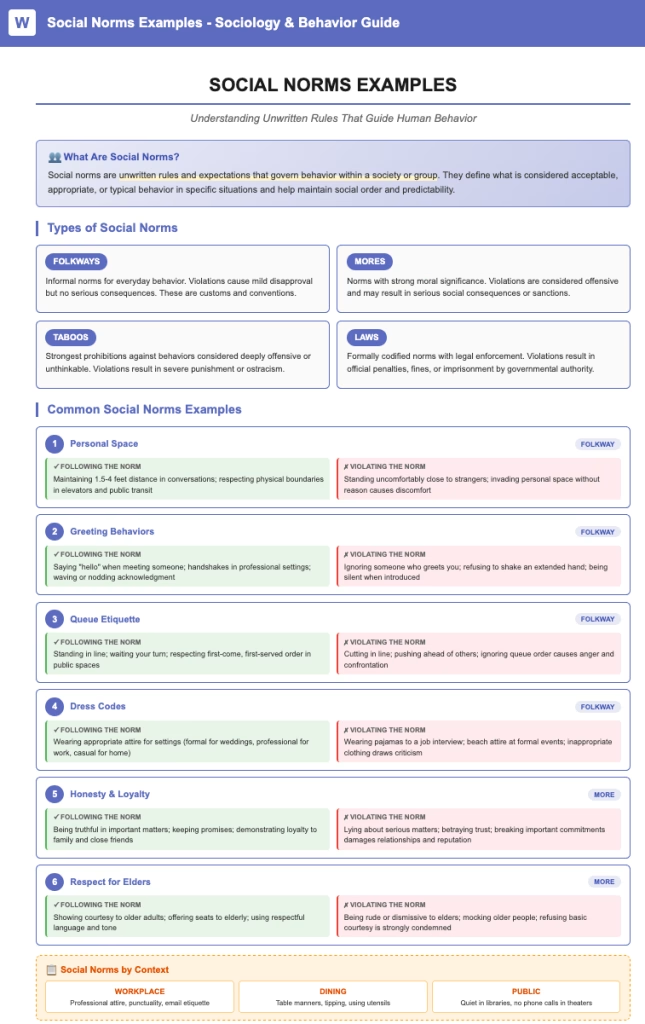
If you searched social norms examples, you are likely trying to do one of three things: (1) understand why people behave the way they do in groups, (2) find clear examples to use in an essay or report, or (3) explain how norms shift over time through norm change. This guide covers all three—using simple definitions, research-ready terminology, and practical examples from school, workplaces, families, online spaces, and public life.
Social norms are defined as unwritten rules that guide appropriate behavior in a society or group
Social norms are defined as shared standards that tell people what is considered appropriate behavior in a group or society. In plain terms, social norms are the unwritten expectations that shape everyday interactions—how to dress, speak, queue, greet others, use phones, and even how to disagree politely. Many texts say it this way: norms are the unwritten rules; norms are unwritten rules that act as rules of behavior without needing to be written down. Put another way, social norms are unwritten rules that keep social life predictable.
Because norms exist at the group level, they are “shared norms.” They are reinforced through social pressure, the desire for social acceptance, and sometimes the fear of consequences. When someone breaks a norm, it may result in social sanctions such as criticism, exclusion, ridicule, or loss of trust.
Why this matters: norms support social order by coordinating behavior and reducing uncertainty. The role of norms is not only about etiquette; norms also shape health behavior, learning environments, workplace culture, and public cooperation.
Social rules and social expectations: how societal norms shape social roles and social structure
Not all norms feel the same. Some are gentle and informal. Others are strong and tied to morality, identity, or power. In most settings, social expectations form quickly—especially in a new class, workplace, or social group.
Norms work through:
- Social roles (for example, teacher-student, manager-employee, parent-child).
- Social structure (hierarchies and institutions that reinforce expected behavior).
- Maintaining social coordination (helping people predict what others will do).
In practice, norms dictate what is “normal” or “acceptable” in a setting, and people often follow social norms to avoid conflict, gain approval, or fit into a group.
Examples of social norms in daily life: common social norms you see every day
Here are clear examples of social norms you can use in essays, projects, or blog writing. Each example shows how social norms include everyday expectations that regulate behavior.
Everyday public behavior (unwritten rules)
- Standing in line instead of pushing ahead (queueing).
- Lowering your voice in libraries or places of worship.
- Saying “please” and “thank you” in service interactions.
- Holding the door for someone close behind you (in some places).
- Not staring at strangers for too long.
These examples show how norms help smooth social interactions and promote predictability.
School and campus norms
- Raising a hand before speaking.
- Not interrupting presentations.
- Avoiding plagiarism and citing sources (a strong academic norm).
- Dressing within an expected range for formal events.
Workplace norms
- Responding to emails within an expected time.
- Attending meetings on time.
- Using respectful tone even in disagreement.
- Following professional dress codes.
These are often group norms that vary by workplace. Norms can vary widely across industries.
Online and social media norms
- Using emojis or “likes” to signal support.
- Avoiding “all caps” because it reads as shouting.
- Expecting quick replies in group chats.
- Cancel culture dynamics—how communities enforce strong social rules through social sanction.
Online norms can be powerful because they are enforced publicly and quickly, often intensifying conformity.
Cultural norms and gender norms: why norms vary from culture to culture
Cultural norms refer to shared expectations that develop within a particular culture. They vary across communities, generations, and contexts. Norms can vary and they vary from culture to culture—sometimes dramatically.
Examples of cultural variation:
- Eye contact: respectful in some cultures, confrontational in others.
- Greetings: handshakes, bows, cheek kisses, or no physical contact.
- Food etiquette: what is polite to eat with hands vs utensils.
Gender norms are social expectations about “appropriate” behavior for men, women, or gender-diverse individuals. Gender norms can influence clothing, career choices, emotional expression, and household roles. Some gender norms are changing rapidly, while others remain deeply embedded.
A key point for academic writing: although some norms support cooperation, others can become restrictive or discriminatory, contributing to harmful norms that limit freedom, wellbeing, and opportunity.
Types of social norms: descriptive norms, injunctive norms, and more
Understanding types of social norms helps you explain behavior with clarity. Most frameworks focus on two primary categories:
Descriptive norms (what people do)
Descriptive norms describe what most people actually do in a context.
- Example: “Most students submit assignments close to the deadline.”
Injunctive norms (what people approve of)
Injunctive norms describe what people believe should be done—what is socially approved.
- Example: “Students should submit work early and plan ahead.”
Many behaviors are shaped by a combination of descriptive and injunctive norms. This is crucial because a person may publicly agree with the “should,” but privately follow what most people do.
Other useful categories in essays:
- Prescriptive norms (what you should do).
- Proscriptive norms (what you should not do).
- Informal norms (unwritten rules enforced socially).
- Legal norms (rules enforced formally by law).
- Moral norms (rules tied to beliefs about right and wrong).
Together, these represent types of norms that shape social life.
Social norms theory and conformity: why norms influence social behavior
Social norms theory helps explain how people’s perceptions of “normal behavior” shape their choices. People often misjudge what others believe or do—especially in college drinking, risky behavior, or online misinformation. This is where “norms influence” becomes central: if someone believes a behavior is common, they may adopt it to fit in.
This produces:
- Conformity: adjusting behavior to match group expectations.
- Social pressure: direct or indirect influence from peers and institutions.
- Desire for social acceptance and fear of sanctions.
In many contexts, norms play a crucial role because they reduce uncertainty. Norms play a crucial role in creating predictable social worlds. Even small signals—laughter, silence, praise, eye-rolls—can communicate what is expected.
Norm change and how social norms change: why certain norms become “the new norm”
Norm change is the process through which social norms change over time. When enough people shift behavior or attitudes, norms become different, and a new norm emerges.
Norms change through:
- Leadership and role modeling (visible behavior shifts).
- Policy and institutional change (school/workplace codes).
- Media and cultural narratives.
- Social movements and collective action.
- Generational replacement (young people adopt different expectations).
- Technology (new platforms create new social practices).
Examples of norm change:
- Smoking: shifting from socially accepted to restricted in many public spaces.
- Workplace communication: increasing acceptance of remote meetings.
- Gender norms: broader acceptance of women in leadership in many contexts.
- Parenting norms: growing emphasis on child emotional validation.
Norm change can be slow or rapid depending on how strong the norm is and how connected it is to identity or power.
Positive norms vs harmful norms: how norms can help or damage social welfare
Not all norms are equal. Some are positive norms that support wellbeing, cooperation, and social welfare. Others are harmful.
Positive social norms (examples)
- Wearing seatbelts.
- Helping elders in the community.
- Encouraging mental health support-seeking.
- Inclusive language norms that reduce stigma.
These show how social norms can help improve outcomes. In these cases, norms can also function like informal public health tools.
Harmful norms (examples)
- Bullying as “normal” in certain groups.
- Stigma against mental health treatment.
- Norms around silence in abuse situations.
- Gender norms that discourage boys and men from expressing emotion.
In these cases, social norms may protect harmful systems and discourage help-seeking. The key analytical point: norms are not automatically good; they are tools of coordination that can produce either positive or negative effects.
You will get:
A ready-to-paste section answering the exact prompt
Strong examples + norm-change analysis matched to your topic
Clean structure and formatting support (APA, Harvard, or your required style)
Identifying social norms in research: how to write about specific social and particular social norms
If you are writing academically, you will often need to describe specific social or particular social norms in a defined population.
A strong method is to ask:
- Which members of a society enforce the norm?
- What behaviors are expected (norms expected) and why?
- What happens when someone breaks it (result in social sanctions)?
- How do norms operate within a setting: family, school, workplace, community?
- Do norms differ across groups (culture to culture)?
You can also compare:
- Existing norms vs emerging ones
- Society or group differences
- Culture or society differences across regions or time
This structure improves clarity and makes your analysis stronger.
Social norms also shape social order: why norms are established and maintained
In most societies, norms are established through repeated social interaction and reinforcement. People learn norms through families, schools, workplaces, media, and religion. Over time, many norms become “obvious” even though they were learned.
Why norms persist:
- They simplify decision-making.
- They help avoid conflict.
- They signal belonging and identity.
- They stabilize social roles and institutions.
That is why norms are often invisible until someone violates them.
Final takeaway: social norms examples are everywhere—and they can change
To summarize:
- Social norms are unwritten rules that guide appropriate behavior.
- They operate through social pressure, conformity, and sanctions.
- Types include descriptive norms and injunctive norms, plus prescriptive and proscriptive norms.
- Norms vary from culture to culture and across groups.
- Social norms change over time through leadership, policy, movements, and technology.
- Norms can help social welfare, but harmful norms can restrict freedom and wellbeing.
Need an A-grade essay or research-backed write-up?
If you are working on an essay, discussion post, or research proposal and need strong, evidence-based writing with clear examples and structure, IvyResearchWriters.com can help.
Visit IvyResearchWriters.com and message: “SOCIAL NORMS HELP.”
You will get a topic-focused outline, strong social norms examples tailored to your course, and a polished draft you can paste directly into your document.
Frequently Asked Questions
1) What are some examples of social norms?
Shared norms are the everyday expectations that help people coordinate behavior in a group. Social norms are often informal, but they still shape what feels “normal.” Because social norms influence how people act in public, school, work, and online spaces, you see them everywhere.
Examples (mix of common settings):
- Public spaces: lining up (queuing), giving personal space, lowering your voice in libraries.
- Communication: saying “please/thank you,” not interrupting, avoiding shouting in professional settings.
- School: arriving on time, following classroom etiquette, citing sources and avoiding plagiarism.
- Workplace: responding to emails within an expected timeframe, dressing within a professional range, showing respect in meetings.
- Online: not spamming, using tone cues (emojis, punctuation), respecting group rules.
These are a form of social coordination. Social norms play a big role in keeping interactions predictable, which is why members of society often follow them without thinking.
2) What are some social norms to break?
Some norms are harmless manners, but some are unhelpful or outdated. The key is: break norms that reduce harm, increase fairness, or improve wellbeing—without putting yourself or others at risk.
Examples of norms worth challenging (carefully):
- Stigma norms: “Do not talk about mental health.” Challenging this can improve help-seeking.
- Gender stereotypes: rigid expectations about who should lead, earn, or express emotion.
- Toxic workplace norms: “Always be available” or “overwork proves commitment.”
- Silence norms: “Do not report bullying or harassment.”
Why these matter: norms often reflect power and tradition, not what is best. Also, norms can change when enough people challenge harmful expectations and model healthier alternatives.
3) What are the four types of social norms?
A clean way to present the “four types” is to combine the most widely taught categories used in sociology and psychology. This helps you explain different social expectations with clear labels.
Four types of social norms (high-utility for essays):
- Descriptive norms – what most people actually do.
- Injunctive norms – what people approve/disapprove of (what “should” be done).
- Prescriptive norms – rules about what you are expected to do (often tied to roles).
- Proscriptive norms – rules about what you must not do (taboos and strong “do not” rules).
Together, these show how social norms are also about approval, expectation, and boundaries—not just behavior.
4) What are the social norms everyone follows?
Not everyone follows every norm the same way, but many norms are nearly universal because they protect cooperation and safety. Social norms often become invisible because they feel automatic—especially when learned early.
Common norms most members of society follow:
- Basic respect: do not insult strangers; use polite language in public.
- Turn-taking: in conversation and in lines (queueing).
- Personal space: avoid unwanted physical contact.
- Non-violence norms: do not threaten people; de-escalate conflict.
- Public order norms: follow basic rules in shared spaces (noise, cleanliness, courtesy).
These norms exist within communities because social norms are often how groups maintain trust. Still, social norms influence behavior differently depending on culture, age, and setting, so “universal” usually means “widely shared,” not absolute.

