

Research Philosophy: A Comprehensive Guide for Academic Research
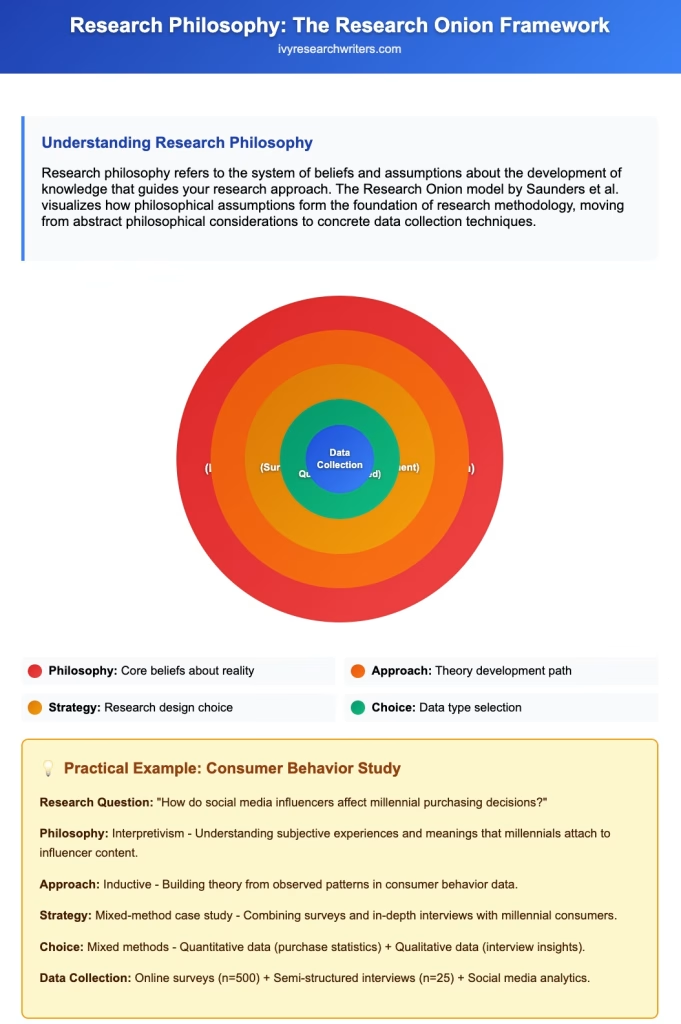
Understanding research philosophy is crucial for anyone undertaking a dissertation or research project, as it serves as the foundation for the research design, methodology, and approach. Research philosophy encompasses the theoretical perspectives and assumptions underlying the research process, helping to guide how knowledge is constructed, collected, and analyzed. In this blog post, we will delve into the concept of research philosophy, exploring key paradigms such as positivism, interpretivism, and pragmatism, as well as their role in shaping qualitative research and quantitative research.
What is Research Philosophy?
Research philosophy refers to the fundamental beliefs and assumptions about how knowledge is constructed and how we come to know what we know. It guides research design and determines the research methods and data collection methods employed in a study. There are several philosophical paradigms in research philosophy, each with its own set of beliefs about reality, knowledge, and how best to investigate the world around us. These paradigms shape the methodology in a dissertation and the analysis methods used to answer the research question.
The Philosophical Paradigms in Research Philosophy
The major philosophical paradigms in research philosophy are positivism, interpretivism, pragmatism, and critical realism. Each of these paradigms offers a unique perspective on the research process and influences the way data collection and data analysis are approached. Let’s dive deeper into some of these key philosophies.
Interpretivism Research Philosophy
Interpretivism research philosophy is commonly associated with qualitative research methods. Interpretivists argue that reality is socially constructed and subjective, meaning it can only be understood through people’s interpretations of their experiences. Researchers operating within this paradigm focus on understanding complex social phenomena and the meanings that individuals or groups attach to them.
Example of Interpretivist Research:
An example of interpretivist research could involve studying how employees in a company perceive organizational change. The data collection methods might include interviews and qualitative analysis, with the researcher looking for patterns in how individuals interpret their experiences of change. Here, the research findings would focus on individual perspectives rather than objective measures of the organizational change itself.
Positivism Research Philosophy
On the other hand, positivism research philosophy is rooted in the belief that reality is objective and can be measured through quantitative methods. Positivists believe that social phenomena can be studied just like natural sciences, using data collection methods such as surveys, experiments, and statistical analysis. This philosophy is typically associated with quantitative research, where the aim is to observe, measure, and explain objective reality.
Example of Positivist Research:
In a positivist research philosophy, a researcher might study the impact of a training program on employee productivity using statistical methods. The research would focus on quantitative data, such as performance metrics before and after the program, and the findings would be objective and measurable.
Pragmatism: A Mixed-Method Approach
Pragmatism in research is often viewed as a bridge between the two dominant philosophies: positivism and interpretivism. Pragmatists argue that the choice of research methodology should be based on the research question rather than a specific philosophical stance. This approach is highly flexible and advocates for the use of both quantitative and qualitative methods, depending on what is most effective for answering the research question.
Example of Pragmatist Research:
A pragmatist approach to research might involve investigating the effects of an educational intervention by using qualitative methods, such as focus groups to explore participant experiences, alongside quantitative methods, like surveys, to measure academic performance. This mixed-method approach allows the researcher to gain a fuller understanding of the research problem.
Delving Deeper into Research Philosophy: Expanding on Key Paradigms and Approaches
When conducting academic research, particularly within fields such as the social sciences, understanding your research philosophy is vital for determining the overall research strategy and guiding the analysis methods you choose. The philosophy of research influences the stage of the research, shaping your methodology, data collection methods, and ultimately the research findings. In this continuation, we will explore the implications of philosophy research, focusing on qualitative analysis, epistemology, and axiology, and examine the role of postmodernism and ontology within research and philosophy.
Postmodernism and Its Influence on Research Philosophy
Postmodernism, as a research philosophy, challenges the conventional understanding of objective reality and knowledge. This philosophy also argues that reality is constructed through social processes, language, and power dynamics, which directly affects how researchers approach data and interpretation. In postmodernism research, reality and knowledge are not seen as fixed or universal; instead, they are viewed as subjective and dependent on the interpretations that people make within specific cultural and historical contexts.
Postmodernism often includes a discussion on how social norms, ideologies, and power structures shape our understanding of knowledge. Researchers using a postmodern philosophy aim to challenge the idea of a singular objective reality, seeking to uncover the diverse ways in which individuals and groups construct their understanding of the world.
The Role of the Research Onion in Shaping Methodology
A key tool in understanding how philosophy research shapes your approach is the research onion, a model developed by Saunders to help researchers understand the layers of their study. The research onion outlines the different stages of research and how each layer interacts with your research philosophy. It includes:
- Research Philosophy: At the outermost layer, the philosophical underpinnings guide your choices regarding epistemology, ontology, and axiology (the study of values and ethics).
- Research Approach: This stage considers whether you will take a deductive (quantitative) or inductive (qualitative) approach.
- Research Strategy: Here, you decide whether your approach will be exploratory, descriptive, or explanatory.
- Data Collection and Analysis: The innermost layers of the onion are where you choose specific data collection methods and analysis methods that align with your research philosophy.
For instance, a positivist philosophy would lean toward quantitative methods and objective data analysis (such as statistical analysis), while an interpretivist philosophy would prefer qualitative studies with an emphasis on subjectivity in qualitative research and inductive reasoning.
Master Your Research Philosophy with Expert Guidance!
Understanding and choosing the right research philosophy is essential to the success of your academic project. Whether you’re working with positivism, interpretivism, or exploring pragmatism, getting the philosophy right ensures your research design, data collection, and analysis methods align seamlessly with your goals. At IvyResearchWriters, we’re here to help you navigate the complexities of research philosophy and align it perfectly with your dissertation or thesis. Contact us today for personalized advice and support, and let us help you shape your research strategy for success!
Qualitative Analysis in the Context of Research Philosophy
Qualitative analysis is particularly suited to research grounded in interpretivism and postmodernism. Researchers who choose qualitative methods aim to explore the nature of knowledge and reality by focusing on how individuals construct reality through their lived experiences. Qualitative studies often involve data collection methods such as interviews, focus groups, or ethnographies, which allow for a deep exploration of participants’ interpretations and meanings.
This type of qualitative analysis recognizes the subjectivity in qualitative research and embraces the idea that each person’s reality is influenced by their unique assumptions and beliefs. The researcher’s role is to understand the context and nuances of these interpretations without imposing their own biases, ensuring that the research remains reflective of participants’ experiences.
Epistemology and Axiology: Defining Knowledge and Values in Research
In understanding philosophy research, it is crucial to explore epistemology and axiology, two key concepts in research philosophy.
- Epistemology deals with the nature and scope of knowledge. It asks how we know what we know and the limits of our knowledge. For example, a positivist would emphasize objective knowledge obtained through observable data, while an interpretivist would argue that knowledge is subjective and constructed through human experiences.
- Axiology, the study of values, relates to how values and ethics impact the research process. Researchers must understand how their values may shape their study design, the choice of methods, and how they interpret the data. For example, postmodernism challenges traditional assumptions and values in research, often deconstructing power dynamics and questioning established norms.
Together, epistemology and axiology guide the researcher’s methodology, including how they approach data collection methods and analysis. A researcher grounded in interpretivism, for instance, would approach ontology and epistemology with the belief that reality is subjective and constructed through language and social interactions.
The Influence of Research Paradigms on Research Methods
Your research paradigm defines how you approach the research process, the nature of knowledge, and the data analysis methods you employ. Main research paradigms include positivism, interpretivism, and pragmatism, each of which guides the use of specific analysis methods. Qualitative research and quantitative research both have distinct philosophical underpinnings, and the choice of research philosophy influences the research strategy, design, and data analysis.
- Positivist research philosophy aligns with quantitative research methods, using tools such as statistical analysis to test hypotheses and measure objective reality.
- Interpretivist research philosophy, on the other hand, uses qualitative analysis to examine social phenomena, focusing on the subjectivity of human experiences and perceptions.
Aligning Research Philosophy with Research Strategy
In conclusion, research philosophy shapes every aspect of your research process, from the choice of research methodology to the methods of data collection and analysis methods. Understanding the philosophical assumptions and beliefs behind your study will help you design a coherent and robust research project that aligns with your research question and research strategy.
Whether your approach is positivist, interpretivist, or pragmatist, each research philosophy provides valuable insights into how we understand knowledge, reality, and the nature of the research process. By thoughtfully considering ontology, epistemology, and axiology, you can ensure that your research is grounded in a strong philosophical framework, leading to more insightful and credible findings.
If you need further assistance in aligning your research philosophy with your study design, contact IvyResearchWriters for expert support and guidance tailored to your research needs!
Epistemology and Ontology in Research Philosophy

Understanding epistemology and ontology is essential when exploring research philosophy.
- Epistemology deals with the nature of knowledge—what we can know and how we can know it. In the context of research, epistemology questions whether knowledge is gained through observable, measurable data (positivism) or subjective interpretation (interpretivism).
- Ontology concerns the nature of reality itself—whether reality is objective, external to the individual, or subjective, constructed by human experiences and interactions. Interpretivists view reality as subjective, while positivists see it as objective.
These two components form the philosophical assumptions that shape the research approach, affecting the research methods and data analysis methods used throughout the research process.
Qualitative and Quantitative Research: The Philosophical Divide
Qualitative research and quantitative research differ in their philosophical underpinnings and data collection methods.
- Qualitative research typically aligns with interpretivism and focuses on understanding the meanings and experiences of individuals. It involves data collection methods like interviews, focus groups, and participant observation, and uses qualitative analysis to interpret the data.
- Quantitative research, often associated with positivism, seeks to measure and analyze variables using statistical techniques. It focuses on objective reality and is used to test hypotheses or theories.
Choosing between qualitative and quantitative research depends on your research question and research philosophy. A well-defined research philosophy will guide the appropriate research methods and analysis methods.
Reflexivity in Qualitative Research
Reflexivity is an important consideration in qualitative research, particularly within interpretivist research. It refers to the process by which researchers critically examine their own influence on the research process. This can involve acknowledging biases, perspectives, and assumptions that might affect the data collection and data analysis. Reflexivity helps ensure the research findings are grounded in a transparent and self-aware approach.
Research Methodology in Dissertation: Defining Your Research Philosophy
When writing a dissertation, the methodology chapter outlines your research philosophy, including the epistemological and ontological assumptions behind your study. You will also define the research design and data collection methods, explaining why these choices are aligned with your philosophical position.
For example, in a qualitative dissertation, you might choose an interpretivist philosophy, employing interviews and thematic analysis to explore socially constructed realities. In contrast, a quantitative dissertation might be grounded in positivism, using surveys and statistical analysis to gather objective data.
Conclusion: Aligning Research Philosophy with Research Methodology
In conclusion, your research philosophy is the backbone of your dissertation methodology. Understanding the different philosophical paradigms, such as positivism, interpretivism, and pragmatism, and knowing how they influence data collection and analysis methods is essential to designing a robust research project. Whether you are conducting qualitative research, quantitative research, or using a mixed-method approach, choosing the right research philosophy helps ensure that your research design aligns with your research question and leads to meaningful research findings.
Understanding philosophy in research and how it relates to your study will guide you through the entire research process, from the data collection phase to analyzing your qualitative or quantitative data.
FAQs: Research Philosophy | Research Philosophies in Methodology
1. What are the 4 Types of Research Philosophy?
There are four main types of research philosophy that guide the approach to data collection and analysis. These are:
- Positivism: Based on the belief that reality is objective and can be measured using quantitative methods. Positivist research focuses on observable facts and aims to explain phenomena through scientific and empirical data. This philosophy and research approach emphasizes objectivity and empirical evidence.
- Interpretivism: In contrast to positivism, interpretivism research philosophy suggests that reality is subjective and socially constructed. Researchers who adopt this philosophy focus on understanding qualitative data through in-depth methods such as interviews or focus groups. The goal is to explore human behavior in its social context and to understand the meanings that individuals attach to their experiences.
- Pragmatism: This research paradigm is grounded in pragmatism research, which emphasizes the practical application of research findings. Researchers using this philosophy are flexible, combining both qualitative and quantitative methods depending on the research problem. The choice of research methods is driven by the research question, making this approach adaptable.
- Critical Realism: Critical realism argues that reality exists independently of our perceptions but acknowledges that our understanding of it is influenced by social, cultural, and historical contexts. It integrates ontology and epistemology to study the underlying causes of phenomena, while critical realism challenges positivism by allowing for a more nuanced understanding of complex social issues.
Each of these types of research influences the research strategy, methods of data collection, and analysis methods employed in social science research.
2. What is a Research Philosophy Statement Example?
A research philosophy statement explains your beliefs about knowledge and how it influences your research process. Here’s an example of how to craft a research philosophy statement:
“My research is guided by pragmatism, which emphasizes practical solutions over theoretical concerns. I believe that both qualitative and quantitative methods are valuable and should be used depending on the nature of the research question. I aim to bridge the gap between positivist philosophy and interpretivism, seeking to provide a comprehensive understanding of social phenomena by examining them from multiple perspectives. By combining qualitative methodology with quantitative techniques, my research will explore how individuals’ experiences are shaped by the context and the real-world impact of these experiences.”
This research philosophy acknowledges the choice of research philosophy and integrates the flexibility of research pragmatism with the depth of qualitative analysis.
3. Is Research Philosophy the Same as Research Design?
No, research philosophy is not the same as research design, although they are closely related. Research philosophy refers to the underlying beliefs about the nature of reality, knowledge, and how research should be conducted. It provides a framework for how the researcher understands the world and interprets data. On the other hand, research design is the structure and plan of the study, including the methods of data collection, research strategy, and data analysis methods.
In simple terms:
- Research philosophy shapes how you think about and approach the research.
- Research design defines how you carry out your research based on those beliefs.
For example, a positivist philosophy would typically lead to a quantitative research design, using statistical analysis to examine the data. A researcher adopting an interpretivist approach might choose a qualitative methodology, using interviews or case studies to gain deeper insights into subjective experiences.
4. What is Realistic Research Philosophy?
Realistic research philosophy falls under the broader category of critical realism. This philosophy acknowledges that while reality exists independent of human perception, our understanding of it is always mediated by our interpretations. Researchers working within this paradigm believe that it is important to examine the underlying mechanisms or causes that influence social phenomena.
In practice, a realistic research philosophy aims to uncover both observable and unobservable elements that contribute to the understanding of a phenomenon. It combines the best aspects of qualitative research (such as grounded theory or qualitative analysis) and quantitative research, ensuring a comprehensive exploration of complex social issues.
Example:
In a business research project using a realistic philosophy, a researcher might explore how managerial decisions affect employee performance. Instead of just gathering quantitative data (e.g., performance metrics), they would also conduct qualitative research (e.g., interviews) to uncover the underlying psychological and social factors influencing those decisions.

