

Research Ethics Examples: Practical Cases, Core Principles, and Ethical Considerations in Research
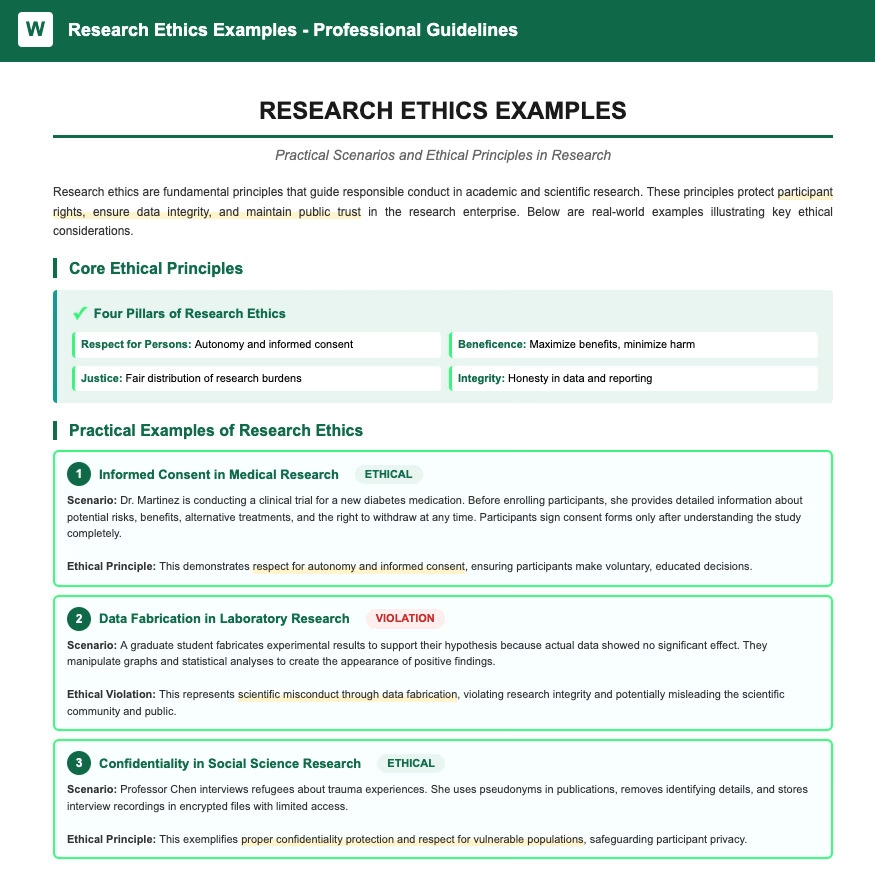
Research ethics are not “extra paperwork.” They are the rules and responsibilities that protect people (and animals), preserve public trust, and strengthen the credibility and validity of the research. Whether you are writing a research proposal, running a qualitative research interview study, or analyzing data in public health, you will face ethical questions about consent, harm, privacy, power, bias, and transparency. That is why research ethics are a set of standards that guide the conduct of research—especially research involving human subjects.
This guide explains research ethics in simple terms, lists the three basic ethical principles from the Belmont Report, shows research ethics examples you can cite or adapt, and clarifies how ethical approval, institutional review, and review boards work in practice.
What research ethics are and why ethical research matters
Research ethics are a set of principles, policies, and ethical standards that guide how research is planned, conducted, and reported. Ethical research is research that aims to produce knowledge while respecting human dignity, minimizing harm, and ensuring fairness.
Why research ethics matter:
- Research participants must be protected from avoidable harm and exploitation.
- Ethical conduct supports the credibility of your research and the validity of the research findings.
- Ethical standards reduce research misconduct (fabrication, falsification, plagiarism, data manipulation).
- Ethical research improves the benefits of research by ensuring results are trustworthy and usable.
Since research often involves people’s personal data and sensitive experiences, ethics principles are essential from the first idea to the final results.
Research basics: when your project counts as research involving humans
A common student question is: “Does my project constitute research?”
In general, if your research involves:
- collecting data from research participants (interviews, surveys, observations)
- using private identifiable information
- testing interventions
- recruiting vulnerable populations (for example, research with children)
…then it likely counts as research involving human subjects, also called human subjects research or human research.
If you are unsure, the safest approach is to consult your ethics committee or institutional review board (IRB). Many institutions require formal review even for low-risk projects, especially when the project is intended to be published or presented.
The Belmont Report and the three basic ethical principles
The Belmont Report is a foundational document for ethical research involving human subjects. It is closely linked to the U.S. National Research Act and modern ethics review systems.
The Belmont Report outlines three basic ethical principles:
- Respect for persons
- People should choose freely whether to participate in research.
- This requires informed consent and special protections for people with limited autonomy.
- Beneficence
- Researchers must maximize potential benefits and minimize potential harms.
- Risky research requires strong justification and safeguards.
- Justice
- The burdens and benefits of research should be fairly distributed.
- Do not target vulnerable groups simply because they are easy to recruit.
These principles in research shape modern ethical guidelines and ethics review procedures across research institutions.
Ethical approval, institutional review, and who the review board is
Before you begin data collection in most universities and healthcare settings, you typically need ethical approval.
Key terms:
- Institutional review board (IRB) / ethics review board: a review board that evaluates research involving humans to ensure ethical standards are met.
- Ethics committee: a committee that provides ethics review and approves or rejects a study.
- Ethics review / institutional review: the process of evaluating whether a study meets ethical standards.
- Consent form: a document explaining the study purpose, risks, benefits, confidentiality, and the right to withdraw.
Ethical approval is especially important in public health, medical research, and research on human participants where privacy and harm risks are higher.
Examples of ethical considerations in research: The core checklist
Most ethical considerations in research fall into a practical checklist:
1) Informed consent
- Participants must understand what the research involves.
- Consent must be voluntary and free from pressure.
- The consent form should be clear, honest, and readable.
2) Risk and harm minimization
- Identify potential harm (psychological distress, stigma, legal risk, physical risk).
- Use safeguards: referrals, stopping rules, safety monitoring, debriefing.
3) Privacy and confidentiality
- Protect identifying information.
- Limit access to data (research team only).
- Use secure storage and anonymization when possible.
4) Fair recruitment and justice
- Avoid exploitative recruitment practices.
- Ensure inclusion/exclusion criteria are justified.
5) Data integrity and research misconduct prevention
- Avoid fabrication or selective reporting.
- Document research activities clearly.
- Report methods and limitations honestly.
6) Conflicts of interest
- Conflicts of interest in research can bias decisions and reporting.
- Disclose funding, sponsorships, or personal relationships.
7) Research bias and credibility
- Research bias threatens validity of the research.
- Use reflexivity in qualitative research and pre-defined analysis plans in quantitative work.
Turn ethics concepts into a complete, submission-ready section.
Let IvyResearchWriters.com support your research objectives, research methods, and ethical safeguards—so your proposal or dissertation is credible, clear, and compliant.
Research ethics examples: real-world scenarios you can use in your paper
Below are practical research ethics examples that illustrate common ethical issues, ethical dilemmas, and ethical challenges across various research contexts. You can use these as examples of ethical considerations in research and discuss what should be done to meet ethical standards.
Example 1: Consent that is not truly informed (ethical issue)
A research team conducts interviews in a clinic waiting room and gives participants a consent form filled with technical language. Participants sign quickly without understanding risks or data use.
Why it is an ethical problem: consent is not meaningfully informed, and the setting may create pressure.
Ethical fix: simplify the consent form, provide time for questions, ensure privacy, and emphasize the right to decline.
Example 2: Undue influence in research with human participants (ethical dilemma)
A professor offers extra course credit to students who participate in research studies, and there is no alternative way to earn credit.
Why it is serious ethical concern: students may feel forced to participate.
Ethical fix: provide an equivalent alternative assignment and ensure participation is voluntary.
Example 3: Confidentiality risk in qualitative research (common ethical challenge)
A qualitative research study explores workplace bullying in a small organization. Even if names are removed, details can identify individuals.
Why it matters: research participants must be protected from retaliation and stigma.
Ethical fix: remove identifying details, combine categories, use pseudonyms, and limit direct quotes that reveal identity.
Example 4: Research involving children (important ethical considerations)
A researcher studies mental health outcomes among minors. The study collects sensitive data on family conflict.
Ethical issue: minors are a protected group.
Ethical fix: obtain parental permission and child assent, minimize risk, provide support resources, and follow ethics committee requirements.
Example 5: Data collection that increases harm (risky research)
A public health project collects immigration status and location data for a study on healthcare access. If leaked, it could endanger participants.
Ethical problem: privacy risk may outweigh benefits of research.
Ethical fix: collect only necessary data, reduce identifiability, encrypt data, restrict access, and justify the data elements in ethics review.
Example 6: Conflicts of interest in research (ethical challenge)
A researcher evaluates a new health app while also being paid as a consultant by the company.
Why it threatens credibility: conflicts may bias research design and reporting.
Ethical fix: disclose conflicts, separate roles, use independent analysis, and follow research ethics policies.
Example 7: Research misconduct and selective reporting (ethical issue)
A team runs multiple analyses but reports only the significant results, ignoring null findings.
Why it is misconduct-adjacent: it misrepresents the state of evidence and harms validity.
Ethical fix: report outcomes transparently, pre-register when possible, and include limitations.
Example 8: Human experimentation in medical research (broader ethical context)
Historically, unethical human experimentation has led to strict rules for medical research today.
Ethical lesson: informed consent, risk minimization, and justice are non-negotiable—especially when power differences exist between researchers and participants.
Ethical research in public health: special considerations
Public health research often involves communities, surveillance data, and interventions. Ethical challenges may include:
- community consent and trust
- balancing population benefits with individual risks
- privacy when using administrative datasets
- stigma risks in sensitive topics (substance use, infectious disease, mental health)
Ethical perspective matters here: researchers must be careful that research results do not unintentionally harm communities through labeling or misinterpretation.
Animal research, biological research, and stem cell research: ethical aspects beyond human subjects
Ethics is not only for research involving humans. Many ethical challenges appear in:
- animal research (minimizing pain, necessity, humane endpoints)
- biological research (biosafety, dual-use risks)
- stem cell research (consent for biological materials, moral concerns, regulatory compliance)
These areas often require additional ethical approval and strict ethical guidelines.
How to meet ethical standards in your research proposal and dissertation
If you are writing a dissertation or research proposal, show ethics clearly in the method section:
Include:
- Who your research subjects are and how you will recruit them fairly
- Consent form process (what participants will be told and how withdrawal works)
- Data collection plan (what data, why, storage, access, retention)
- Risk assessment (psychological, legal, social risks)
- Safeguards (anonymity, referrals, debriefing, safety protocols)
- Ethics review plan (institutional review board submission timeline)
This strengthens credibility of your research and signals to reviewers that you adhere to ethical standards.
Common ethical mistakes students make (and how to avoid them)
- Collecting extra data “just in case” → increases harm and privacy risk.
- Using coercive recruitment → violates respect for persons.
- Weak confidentiality planning → risks participant harm and undermines trust.
- Ignoring conflicts of interest → damages credibility and transparency.
- Overlooking vulnerable groups → creates serious ethical and compliance risks.
- Treating ethics as a formality → ethics must guide the entire course of research, not only the beginning.
Why IvyResearchWriters.com is useful for research ethics sections
Students often struggle to translate ethics principles into a clear, rubric-friendly section of a paper. IvyResearchWriters.com can help you:
- write a strong ethics section aligned to Belmont principles and ethics committee expectations
- draft clear consent form language and risk mitigation steps
- identify key ethical considerations for qualitative research, public health studies, and research with children
- strengthen your research design so it meets ethical standards and improves validity
If you share your research topic and participant group, Ivy Research Writers can also generate a tailored ethics section (in academic tone) with realistic safeguards and wording you can paste into your proposal or dissertation.
Frequently Asked Questions
What are the 5 ethics of research?
Different institutions use slightly different lists, but a widely accepted “5 ethics” set (that works for almost any research project) is:
- Informed consent (especially in research with human subjects)
- Confidentiality and privacy (secure handling of data across the research process)
- Beneficence / nonmaleficence (maximize benefits, minimize harm—your research may create risk if poorly designed)
- Integrity and honesty (no fabrication, falsification, or plagiarism in the conduct of research)
- Justice / fairness (fair recruitment, fair distribution of burdens and benefits)
What are the 7 ethical principles in research?
A strong “7 principles” list (useful for proposals and dissertations) includes:
- Respect for persons (voluntary participation; autonomy)
- Informed consent (clear understanding of what participation involves)
- Beneficence (maximize benefit)
- Nonmaleficence (minimize harm)
- Justice (equitable recruitment and treatment)
- Confidentiality / privacy (protect participant data)
- Scientific integrity (sound research methods, transparent reporting, and accountability)
These principles guide conducting research so your work is ethical and rigorous—because weak design can become a problem in research when it increases risk or produces misleading results. Research ethics help you avoid that by aligning the design with participant protection and valid conclusions.
What are the 5 main ethical issues in research?
Here are five high-frequency ethical issues that show up across almost every kind of research:
- Consent issues: participants are not fully informed or feel pressured (common in student studies)
- Privacy and confidentiality failures: poor data storage, identifiable quotes, insecure devices
- Risk of harm: emotional distress, stigma, retaliation, legal or social risk—your research may unintentionally increase harm
- Conflict of interest and bias: funding or personal interests distort the conduct of research
- Research misconduct: plagiarism, data manipulation, selective reporting—damages trust and validity
In practice, these issues often arise when researchers use research tools (surveys, interviews, observation) without planning safeguards. A big red flag is research without a clear consent process and data protection plan—especially in research with human subjects.
What are the four ethics of research?
“Four ethics” is often taught as a simplified set for quick study and classroom use. A clean version is:
- Respect / informed consent
- Do no harm (minimize risk)
- Confidentiality (protect data)
- Integrity (honest, transparent reporting)

