

Mythology Stories: Timeless Narratives of Gods, Heroes, and Sacred Worlds
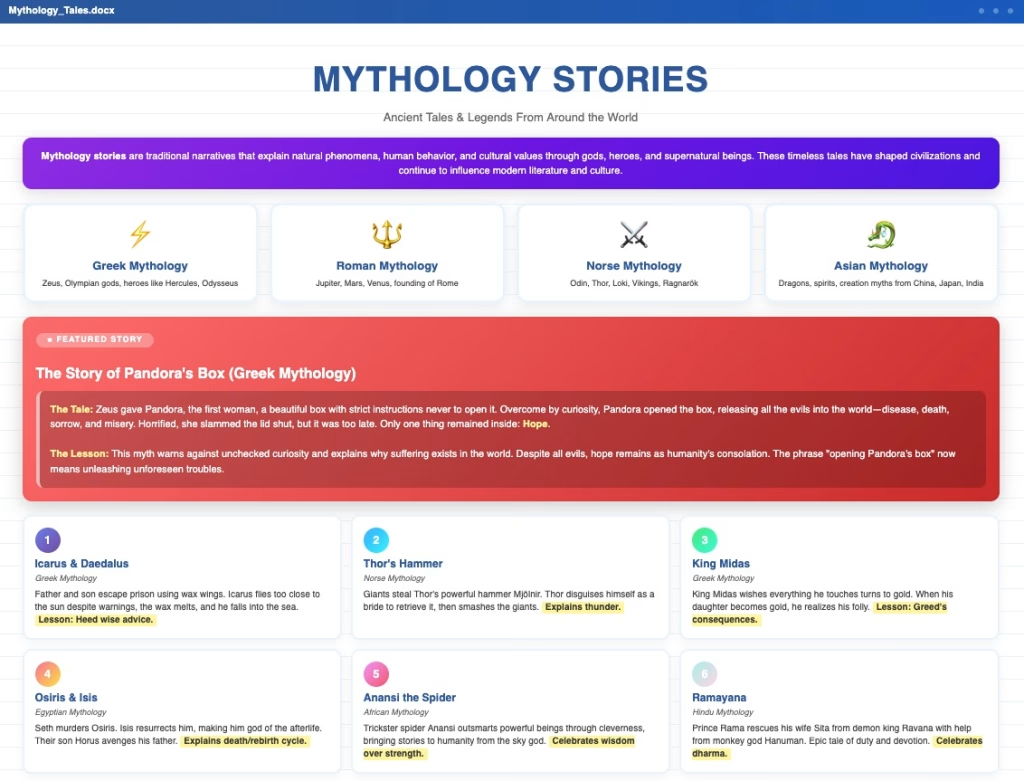
Across civilizations, mythology stories have shaped how societies understand creation, destiny, morality, and the divine. From Greek mythology to Norse, Chinese, Welsh, and Irish folklore, these narratives are far more than entertaining tales. Each myth carries cultural memory, symbolic meaning, and philosophical depth.
In this comprehensive guide, IvyResearchWriters.com explores the origins, themes, and enduring relevance of mythology stories, offering definitions and examples that illuminate their importance in both ancient and modern contexts.
What Is Mythology? Understanding Myth, Story, and Sacred Narrative
At its core, mythology refers to a body of traditional stories that explain natural phenomena, cultural practices, and the origins of mankind. A myth is a sacred or symbolic narrative involving a god, goddess, hero, or supernatural creature. These stories were often transmitted orally before being written down in poetic or epic form.
Unlike ordinary fiction, mythology stories functioned as sacred explanations of the world. They addressed themes such as:
- Creation of the universe
- The relationship between humanity and the divine
- The consequences of hubris, revenge, or disobedience
- The cycle of life, death, and rebirth
- Moral lessons about piety, kindness, and sacrifice
Myths often involve a pantheon—a structured family of deities governing aspects of nature, war, love, the sea, or the underworld.
Need Help With a Mythology Assignment?
👉 Order your custom mythology paper today and bring ancient stories to life with scholarly precision.
Greek Mythology: Gods, Heroes, and Tragic Destiny
Among the most studied traditions is Greek mythology, rooted in ancient Greece. The Greeks developed an elaborate pantheon of gods living on Mount Olympus.
The Greek Pantheon
- Zeus – King of the gods, associated with thunder and justice
- Apollo – God of prophecy, music, and light
- Circe – A powerful enchantress known for transforming men into beasts
- Prometheus – The Titan who gave fire as a gift to mankind
- Theseus – A heroic figure who defeated the Minotaur monster
- Oedipus – A tragic hero bound by prophecy
Greek myths frequently explore tragedy, prophecy, and divine punishment. For example:
Prometheus: A Myth of Sacrificial Gift and Punishment
Prometheus defied Zeus by giving fire to humanity. As punishment, Zeus bound him to a rock where an eagle devoured his liver daily—a cycle of suffering symbolizing both divine justice and rebellion.
Themes present:
- Divine authority
- Sacrificial gift
- Punish and revenge
- The tension between gods and mankind
Greek and Roman Mythology: Cultural Adaptation Across Rome
When Rome rose to power, it adopted and adapted Greek myths. In Greek and Roman mythology, many gods retained their attributes but received Latin names.
For example:
- Zeus became Jupiter
- Ares became Mars
- Aphrodite became Venus
Roman mythology often emphasized civic virtue, piety, and loyalty to Rome. Temples dedicated to Jupiter and other deities became sacred centers of worship.
The Trojan War, central to Greek epic poetry, also influenced Roman identity. The Roman poet Virgil connected Rome’s founding to Trojan ancestry in a divine narrative of destiny and empire.
Norse Mythology: Prophecy, Destruction, and the End Cycle
In Norse mythology, the gods inhabit a cosmos defined by fate and prophecy. Unlike Greek myths, Norse stories emphasize inevitable destruction, particularly the apocalyptic event known as Ragnarök.
Key elements include:
- A powerful pantheon led by Odin
- Dragons and mythical creatures
- A cosmic flood and destruction theme
- A cyclical understanding of time
Norse myths often portray gods as heroic yet doomed figures, highlighting courage in the face of destiny.
Chinese Mythology: Creation, Dragons, and Divine Order
Chinese mythology presents a rich tapestry of gods, spirits, and legendary heroes.
A foundational creation myth tells of Pangu, who separated heaven and earth. Chinese narratives frequently include:
- The dragon as a sacred creature
- River deities controlling floods
- Themes of harmony between heaven, earth, and mankind
In Chinese folklore, the flood myth symbolizes destruction and renewal. Unlike Greek tragedy, Chinese mythology often emphasizes balance and restoration rather than irreversible fate.
Welsh and Irish Mythology: Fairy Tales and Heroic Quest
The Welsh and Irish traditions are deeply intertwined with folklore, fairy tales, and poetic storytelling.
Common elements include:
- Fairies and mystical spirits
- Sacred rivers and enchanted landscapes
- Legendary heroes on epic quests
- Curses and tragic destiny
Irish myths often describe warrior heroes like Cú Chulainn, whose tragic death reflects loyalty and sacrifice. Welsh legends emphasize magical realms, sacred kingship, and prophecy.
These narratives blur the line between myth and legend, preserving cultural identity through oral tradition.
Common Themes Across Mythology Stories
Despite cultural differences, mythology stories share recurring themes:
1. Creation
How did the world begin? Many myths describe a divine act separating chaos into order.
2. Divine Justice
Gods reward piety and kindness while punishing arrogance or impiety.
3. The Hero’s Quest
A hero embarks on a dangerous journey involving monsters, dragons, or divine tests.
4. Tragic Fate
Prophecy often determines outcomes, as seen in Oedipus and Norse Ragnarök.
5. Sacred Spaces
Temples, rivers, and mountains serve as divine meeting points.
Mythology and Folklore: Narrative Threads Through Time
While myths focus on gods and creation, folklore often centers on everyday moral lessons and local legends. Fairy tales, for instance, evolve from mythic structures but emphasize moral instruction over divine cosmology.
The narrative thread connecting all mythology traditions is humanity’s attempt to explain:
- Natural disasters like floods
- The sea and storms
- The existence of death
- The meaning of suffering
- The nature of divine authority
Why Mythology Stories Still Matter Today
Modern literature, cinema, and psychology continue to draw inspiration from mythology.
Examples:
- Superhero stories echo ancient hero archetypes
- Fantasy novels adapt dragon and prophecy motifs
- Psychological theory uses myth as symbolic framework
Myths provide cultural insight, literary richness, and philosophical depth. They remain essential to understanding ancient civilizations such as Greece and Rome while also illuminating universal human concerns.
Conclusion: The Divine Power of Myth
From the sacred temples of Greece to the poetic landscapes of Ireland, mythology stories reveal the divine imagination of ancient cultures. Whether tragic or triumphant, these narratives offer timeless reflections on heroism, fate, sacrifice, and the relationship between gods and mankind.
At IvyResearchWriters.com, we understand the complexity and academic value of mythology studies. Whether you need a research paper on Greek mythology, comparative folklore analysis, or a dissertation on mythological themes, our expert writers can help craft a scholarly, original, and well-researched project tailored to your academic goals.
Need Help With a Mythology Assignment?
✔ Custom mythology research papers
✔ Comparative mythology essays
✔ Literary analysis of Greek myths
✔ Annotated bibliographies
✔ APA, MLA, Chicago formatting
✔ Thesis and dissertation support
👉 Order your expertly written mythology paper today at IvyResearchWriters.com and bring your academic work to life with precision and depth.
Frequently Asked Questions
What are the top 5 mythologies?
Across history, several mythology traditions have had a profound cultural and literary impact. While rankings may vary, the top five most studied and influential mythologies typically include:
- Greek mythology
- Roman mythology
- Norse mythology
- Chinese mythology
- Celtic mythology (including Welsh and Irish traditions)
These mythological systems share certain elements:
- A structured pantheon of gods and goddesses
- Powerful heroes and legendary figures
- Sacred narratives explaining creation, destruction, and divine justice
- Symbolic creatures like dragons or sea monsters
- Themes of prophecy, revenge, curse, and sacrifice
For example, Greek myths feature figures like Zeus, Apollo, Prometheus, and Oedipus. In Norse tradition, gods face eventual destruction in Ragnarök. Chinese mythology includes dragons and flood narratives, while Welsh and Irish folklore emphasizes fairy spirits and heroic quests.
At IvyResearchWriters.com, we help students analyze and compare these mythologies in academic essays, research papers, and literature reviews.
What is the best mythological story?
The “best” mythological story often depends on personal interest and thematic preference. However, several stories stand out for their dramatic depth and symbolic power:
- Prometheus and the Gift of Fire (Greek mythology)
- The Trojan War (Greek and Roman tradition)
- Oedipus and the Prophecy (Greek tragedy)
- Ragnarök (Norse mythology)
- The Great Flood (Chinese mythology)
For example, the myth of Prometheus is widely admired because it explores sacrifice, rebellion, and divine punishment. Prometheus defied Zeus by giving fire as a gift to mankind and was punished eternally—a powerful theme of tragic heroism.
Similarly, Oedipus represents the inevitability of prophecy and tragic fate, while Norse mythology’s Ragnarök portrays a cosmic cycle of destruction and rebirth.
Each story carries:
- A strong narrative arc
- Moral or philosophical themes
- A sacred or divine dimension
IvyResearchWriters.com can help you craft a compelling literary analysis exploring why a particular mythological story stands out.
What is the most popular mythology?
The most popular mythology globally is arguably Greek mythology.
Reasons include:
- Extensive documentation from ancient Greece
- Influence on Roman culture and Latin literature
- Adaptations in modern books, films, and media
- Recognizable gods like Zeus and Apollo
- Legendary heroes like Theseus
Greek mythology’s influence extends into modern storytelling, psychology, philosophy, and poetry. The pantheon structure, divine drama, tragic themes, and mythical creatures make it widely studied in literature courses.
However, Norse mythology has gained popularity in recent years due to modern media, while Chinese mythology remains deeply embedded in East Asian culture.
At IvyResearchWriters.com, we help students explore the enduring cultural impact of these traditions in research-based essays.
What is an example of a mythological story?
A classic example of a mythological story is Theseus and the Minotaur from Greek mythology.
Summary:
- King Minos kept a monster—the Minotaur—inside a labyrinth.
- Theseus, a heroic prince, undertook a dangerous quest to defeat the creature.
- With the help of Princess Ariadne, he navigated the maze and killed the monster.
This myth contains core mythological elements:
- A hero on a quest
- A dangerous monster
- A symbolic test of courage
- Divine or royal intervention
Other examples include:
- The flood story in Chinese mythology
- The tragic fate of Oedipus
- Prometheus stealing fire
- Norse gods facing prophecy and destruction
Each myth blends divine action, moral conflict, and cultural symbolism.

