

What To Know
- A map of Michigan offers more than just directions—it reveals the geography, culture, and natural beauty of one of the most unique states in the Midwest region of the United States.
- This guide explores the layout of Michigan, including its peninsulas, major cities, highways, and natural landmarks, helping you understand how to read and interpret a map of Michigan effectively.
Map of Michigan: A Complete Guide to Geography, Regions, and Major Cities
Introduction
A map of Michigan offers more than just directions—it reveals the geography, culture, and natural beauty of one of the most unique states in the Midwest region of the United States. Known as both the Great Lakes State and the Wolverine State, Michigan is surrounded by vast freshwater and shaped by glacial history.
This guide explores the layout of Michigan, including its peninsulas, major cities, highways, and natural landmarks, helping you understand how to read and interpret a map of Michigan effectively.
Michigan
The state of Michigan is located in the east north central region of the U.S. and is part of the broader region of the United States known as the Midwest.
- It borders Indiana and Ohio to the south
- Shares water boundaries with the Canadian province of Ontario
- Is surrounded by four of the five Great Lakes: Lake Michigan, Lake Huron, Lake Erie, and Lake Superior
Michigan’s geography is defined by water, making it one of the most distinctive states in the country.
Map
A map helps visualize Michigan’s layout, including:
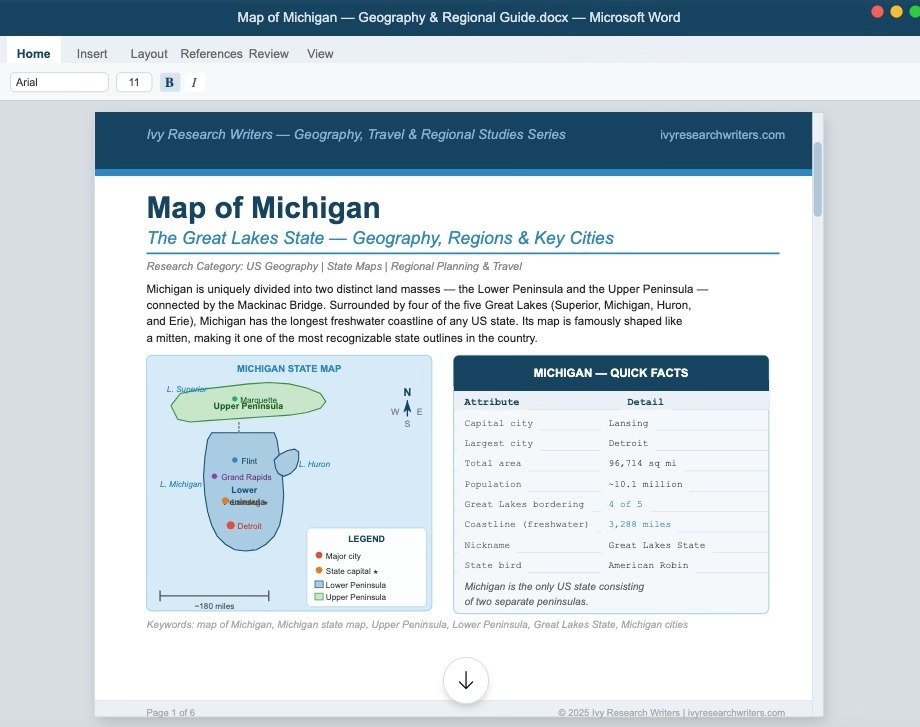
- Its two separate land masses: the Upper Peninsula and Lower Peninsula
- Major transportation routes such as interstate highways
- Key cities, rivers, and natural landmarks
Maps produced by organizations like MDOT (Michigan Department of Transportation) provide detailed information about roads, terrain, and travel routes.
Map of Michigan
A detailed map of Michigan highlights its defining features:
Two Peninsulas
- Lower Peninsula: Often called the Mitten State due to its shape
- Upper Peninsula (Michigan’s upper): A more rugged, forested region rich in natural resources
These two land areas are connected by the Mackinac Bridge, a major landmark spanning the straits between Lake Michigan and Lake Huron.
Surrounding Water
Michigan is bordered by:
- Lake Superior (north)
- Lake Michigan (west)
- Lake Huron (east)
- Lake Erie (southeast)
This makes Michigan the only state that touches four Great Lakes.
Natural Features
Maps also show:
- Beaches and dunes along Lake Michigan
- Tahquamenon Falls in the eastern section of the Upper Peninsula
- Terrain shaped by glacial activity, including rolling hills and hilly moraines deposited by a glacier
Interstate
Michigan’s interstate and highway system connects major cities and regions.
Key routes include:
- I-75 (running north–south through Detroit and into the Upper Peninsula)
- I-94 (connecting Port Huron, Detroit, Ann Arbor, and Kalamazoo)
- I-96 (linking Detroit to Grand Rapids and Muskegon)
These roads are essential for travel, trade, and tourism across the state.
Geography and Regions
Michigan is divided into distinct geographic areas:
Lower Peninsula
- Includes cities like Lansing (capital), Detroit, Flint, and Grand Rapids
- Features lowland plains and rolling hills
- Contains Saginaw Bay, part of Lake Huron
Upper Peninsula
- Includes Marquette, Escanaba, and Sault Ste. Marie
- Known for forests, mining, and rugged landscapes
- Borders Lake Superior and includes scenic areas like Ontonagon and Houghton
Major Cities in Michigan
A map of Michigan highlights numerous major cities, including:
- Detroit: Largest city, located along the Detroit River
- Lansing: State capital
- Grand Rapids: Major economic center
- Ann Arbor: Known for education and research
- Flint, Sterling Heights, Dearborn, and Livonia
Other important cities include:
- Kalamazoo, Battle Creek, Pontiac, Portage, and Midland
- Coastal cities like Muskegon, Benton Harbor, and Saint Joseph
Regional Cities and Towns
Smaller but significant locations shown on a map include:
- Traverse City and Manistee along Lake Michigan
- Alpena and Cheboygan along Lake Huron
- Bay City, Saginaw, and Owosso in central Michigan
- Mount Pleasant, Cadillac, and Big Rapids inland
- Border cities like Monroe, Adrian, and Niles
In the Upper Peninsula:
- Escanaba, Menominee, Marquette, and Sault Ste. Marie
Natural Attractions on the Map
Michigan’s map is filled with natural attractions:
- Dune systems along Lake Michigan
- Forests and rivers shaped by glacial history
- Waterways connecting the Great Lakes
These features make Michigan a top destination for outdoor activities.
Borders and Neighboring Regions
Michigan’s border includes:
- Land borders with Indiana and Ohio
- Water borders with states like Minnesota and Illinois
- International border with Ontario, Canada
The state’s position makes it a key hub for trade and transportation.
Why Maps of Michigan Matter
Maps are essential for:
- Navigation and travel planning
- Understanding geography and regional differences
- Identifying economic and cultural centers
They also help illustrate how Michigan’s unique shape and water boundaries influence its identity.
Common Assignments Related to Map of Michigan
Students studying geography, U.S. regions, or cartography often encounter assignments based on the map of Michigan. These tasks help develop spatial awareness, research skills, and regional understanding.
1. Map Labeling Assignments
- Identify and label major cities such as Detroit, Lansing, and Grand Rapids
- Mark regions like the Upper Peninsula and Lower Peninsula
- Include smaller cities such as Norton Shores, Ionia, and Clare
2. Geography Essays
- Describe Michigan’s location in the Midwest region of the United States
- Explain its borders with Indiana and Ohio and the Canadian province of Ontario
- Discuss features like the Great Lakes and glacial landforms
3. Case Study Projects
- Analyze specific regions such as the eastern lower peninsula
- Examine economic, cultural, or environmental characteristics
4. Map Analysis Assignments
- Interpret a map of Michigan to identify transportation routes like interstate highways
- Evaluate how geography influences population distribution
5. Research Papers
- Explore Michigan’s history, natural resources, or major cities
- Discuss the role of cities like Detroit and emerging areas like Kentwood
6. Presentation Assignments
- Create presentations on Michigan’s geography, cities, or attractions
- Highlight key features such as lakes, rivers, and urban centers
7. Comparative Geography Essays
- Compare Michigan with other states in the region of the United States
- Analyze differences between the Upper and Lower Peninsulas
8. Fieldwork or Virtual Exploration
- Use digital maps to explore cities and regions
- Study landforms such as dunes, rivers, and glacial features
9. Quiz or Test Questions
- Identify cities, lakes, and regions on a blank map
- Answer questions about Michigan’s geography and economy
10. Dissertation or Advanced Research Topics
- Urban development in Michigan cities
- Environmental impact of the Great Lakes
- Transportation networks and regional growth
Struggling with geography assignments, essays, or map analysis?
IvyResearchWriters.com provides expert academic writing support across all subjects.
Example Geography Essay: The Physical and Human Geography of Michigan
Introduction
The state of Michigan is one of the most geographically unique states in the United States. Located in the Midwest region of the United States, it is the only state divided into two distinct landforms: the Upper Peninsula and the Lower Peninsula. Surrounded by four of the five Great Lakes—Lake Michigan, Lake Huron, Lake Erie, and Lake Superior—Michigan’s geography plays a crucial role in shaping its economy, culture, and settlement patterns.
This essay explores Michigan’s physical geography, including its glacial landforms and freshwater systems, as well as its human geography, focusing on cities, transportation, and regional development.
Physical Geography of Michigan
Michigan’s landscape is largely shaped by glacial activity. During the last Ice Age, glaciers carved out the Great Lakes and left behind features such as rolling hills, lowland plains, and hilly moraines deposited by a glacier.
The Lower Peninsula, often called the Mitten State, is characterized by fertile land, forests, and extensive agricultural areas. In contrast, the Upper Peninsula (Michigan’s upper) is more rugged, with forests, rocky terrain, and proximity to Lake Superior.
The presence of the Great Lakes gives Michigan the longest freshwater coastline in the United States. Coastal features such as beaches and dunes along Lake Michigan and natural attractions like Tahquamenon Falls highlight the state’s environmental diversity.
Human Geography and Major Cities
Michigan’s population is concentrated mainly in the Lower Peninsula. Major urban centers include:
- Detroit, located along the Detroit River, is the largest city and a major industrial hub
- Lansing, the state capital, serves as a political center
- Grand Rapids, a key economic and cultural city
- Flint and Ann Arbor, known for industry and education
Other cities such as Kalamazoo, Battle Creek, and Midland contribute to regional development, while smaller communities like Ionia, Clare, and Kentwood reflect the diversity of Michigan’s settlement patterns.
Coastal and regional cities such as Norton Shores, Muskegon, and Traverse City are important for tourism and recreation, especially along Lake Michigan.
Transportation and Infrastructure
Michigan’s transportation network is essential for connecting its regions. The interstate and highway system, managed by MDOT, links major cities and supports economic activity.
Key routes include:
- I-75, which runs from Detroit through the Lower Peninsula and into the Upper Peninsula
- I-94, connecting Detroit to cities like Ann Arbor and Kalamazoo
- I-96, linking Detroit to Grand Rapids and Muskegon
These routes facilitate trade, travel, and access to natural attractions across the state.
Regional Differences
The division between the Upper and Lower Peninsulas creates distinct regional identities.
- The Lower Peninsula has a higher population density and more urban development
- The Upper Peninsula is more rural, with a focus on natural resources and tourism
The eastern lower region includes industrial and agricultural zones, while northern areas are known for forests and lakes.
Conclusion
Michigan’s geography is defined by its unique peninsulas, extensive freshwater resources, and diverse landscapes shaped by glacial history. Its major cities, transportation systems, and regional differences illustrate the interaction between physical and human geography.
Understanding the geography of Michigan provides insight into how natural features influence settlement, economy, and culture. As a result, the map of Michigan serves as an essential tool for studying both the physical environment and human development within the state.
References
Michigan Department of Transportation (MDOT). (Year). Michigan highway and transportation maps.
United States Geological Survey (USGS). (Year). Geography of Michigan and the Great Lakes region.
National Geographic Society. (Year). Great Lakes and regional geography of North America.
Encyclopaedia Britannica. (Year). Michigan: Geography, history, and economy.
Michigan.gov. (Year). Official state information and geographic data.
Conclusion
A map of Michigan is more than a visual tool—it’s a gateway to understanding the state’s geography, cities, and natural beauty. From the Upper Peninsula to the Lower Peninsula, and from Detroit to Traverse City, Michigan offers a rich and diverse landscape shaped by water, history, and culture.
Whether you are studying geography, planning travel, or conducting research, understanding Michigan’s map provides valuable insight into this remarkable state.
What gem is only found in Michigan?
The only gemstone uniquely associated with Michigan is Petoskey stone, a fossilized coral found primarily along the shores of Lake Michigan.
- It forms from ancient coral reefs and is polished by the Great Lakes
- Commonly found along beaches in the eastern lower and northern coastal areas
In prose: Petoskey stones are more than just rocks—they are a symbol of Michigan’s natural history and a popular souvenir that reflects the state’s identity.
What is the prettiest place in Michigan?
Beauty in Michigan varies by region, but several locations stand out.
- Tahquamenon Falls in the Upper Peninsula is a major attraction
- Traverse City offers scenic coastlines and vineyards
- Coastal areas near Norton Shores and Lake Michigan feature stunning sunsets and dunes
In prose: From waterfalls to beaches, Michigan’s landscapes—especially in both the Upper Peninsula and the eastern lower regions—make it one of the most visually diverse states in the U.S.
What is the only state that touches four Great Lakes?
Michigan is the only U.S. state that borders four of the five Great Lakes:
- Lake Michigan
- Lake Huron
- Lake Erie
- Lake Superior
In prose: This unique geography defines Michigan’s identity as the Great Lakes State, giving it the longest freshwater coastline in the country.
What are the top 5 cities in Michigan?
Michigan has many important cities, but five of the most prominent include:
- Detroit – the largest city and economic hub
- Grand Rapids – known for business and culture
- Lansing – the state capital
- Ann Arbor – a major academic center
- Flint – historically significant industrial city
Additional growing or notable cities include:
- Kentwood and Ionia in western Michigan
- Smaller communities like Clare that contribute to regional identity

