

What To Know
- Sleep is not a luxury—it is a necessity for cognitive function, emotional balance, and academic success.
- Yet, many students and professionals struggle with insomnia, a common sleep disorder that interferes with the ability to fall asleep, stay asleep, or achieve a restorative night’s sleep.
Insomnia Tips: A Comprehensive, Student-Focused Guide to Better Sleep, Academic Performance, and Well-Being
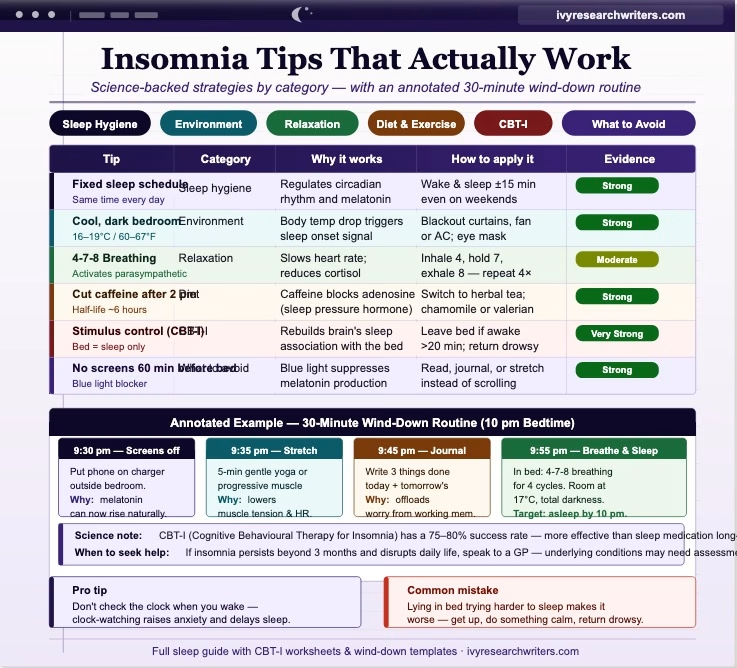
Sleep is not a luxury—it is a necessity for cognitive function, emotional balance, and academic success. Yet, many students and professionals struggle with insomnia, a common sleep disorder that interferes with the ability to fall asleep, stay asleep, or achieve a restorative night’s sleep.
At IvyResearchWriters.com, we understand that poor sleep directly affects concentration, productivity, and the ability to complete assignments effectively. This in-depth guide provides insomnia tips grounded in research and practical strategies—helping you improve your sleep while supporting your academic journey.
🌙 Insomnia: Understanding the Condition and Its Impact
Insomnia is a sleep disorder that affects both the quantity and quality of sleep. It can be short-term (acute) or long-term (chronic insomnia).
What happens with insomnia?
- Difficulty to fall asleep
- Trouble to stay asleep
- Frequent awakenings (waking up in the middle)
- Inability to get back to sleep
💡 Sometimes insomnia is triggered by stress or lifestyle changes, while long-term insomnia may require professional intervention.
Academic impact:
Students who experience insomnia often report:
- Reduced focus
- Lower productivity
- Increased anxiety
⚠️ Symptoms of Insomnia: Identifying the Warning Signs
Recognizing the symptoms of insomnia is the first step toward improvement.
Common signs include:
- Trouble falling asleep or feeling like you can’t fall asleep
- Waking up during the night (wake up during the night)
- Feeling tired despite spending hours in bed
- Experiencing fragmented sleep
💡 If insomnia that lasts for weeks persists, it may indicate a deeper issue that requires attention.
🔍 Causes Insomnia: Why Sleep Problems Occur
Understanding what causes insomnia is essential for finding the right solution.
Key causes:
- Poor sleep habits and inconsistent routines
- High stress levels, especially during exams
- Excess caffeine, particularly hours before bedtime
- Exposure to blue light from screens
- Underlying health condition such as sleep apnea
- Lifestyle disruptions like jet lag
💡 These factors can disrupt your sleep, affect your sleep cycle, and reduce your ability to fall or stay asleep.
🛌 Sleep Habits: The Foundation of Quality Sleep
Your daily sleep habits significantly influence your ability to sleep.
Healthy sleep habits include:
- Going to bed and waking up at the same time every day
- Avoiding stimulating activities close to bedtime
- Creating a calming bedtime routine
💡 Consistency helps regulate your body clock and improves your chances of a good night’s sleep.
🧠 Cognitive Behavioral Therapy for Insomnia (CBT-I): The Gold Standard
Cognitive behavioral therapy for insomnia (CBT-I) is widely recognized as the most effective treatment for insomnia.
Why CBT-I works:
- It addresses thoughts and behaviors that interfere with sleep
- It helps restructure negative sleep patterns
- It improves long-term outcomes without reliance on medication
Techniques include:
- Sleep restriction therapy
- Cognitive restructuring
- Relaxation training
💡 According to the Academy of Sleep Medicine, CBT-I is the first-line treatment for chronic insomnia.
😴 Nap: Helpful Tool or Hidden Disruptor?
A nap can be beneficial, but misuse can worsen insomnia.
Guidelines:
- Keep naps short (20–30 minutes)
- Avoid napping late in the day
💡 Long naps can disrupt your sleep and make it harder to fall asleep at night.
💊 Treat Insomnia: Evidence-Based Strategies
To effectively treat insomnia, combine behavioral changes with relaxation techniques.
Practical strategies:
- Avoid caffeine in the evening
- Practice muscle relaxation
- Take a warm bath or hot bath
- Drink a cup of caffeine-free tea
💡 These strategies may help you sleep better and reduce reliance on sleep aids or sleep medicine.
🛠️ CBT-I Techniques You Can Apply Daily
Even without formal therapy, you can apply CBT-I methods:
- Sleep restriction to improve efficiency
- Avoid using your bed for non-sleep activities
- If you can’t sleep within 20 minutes, get up and go do something relaxing
🌿 Healthy Sleep Habits: Building a Sustainable Routine
Developing healthy sleep habits is essential for long-term improvement.
Key habits:
- Get regular physical activity
- Limit exposure to bright light at night
- Maintain a consistent sleep schedule
💡 These habits help you achieve the sleep you need and improve overall well-being.
📱 Blue Light: The Silent Sleep Disruptor
Blue light from screens can:
- Delay melatonin production
- Reduce your ability to fall asleep faster
- Disrupt circadian rhythms
💡 Avoid screens hours before bedtime to improve sleep quality.
💤 Sleep You Need: Understanding Your Requirements
Most adults need 7–9 hours of sleep.
Getting the sleep you need helps:
- Improve memory and learning
- Boost mood and energy
- Enhance productivity
🚶 Get Up and Go: Resetting Your Sleep Cycle
If you’re lying awake:
- Don’t stay in bed frustrated
- Get up and go to another room
- Return when you feel sleepy
💡 This helps retrain your brain to associate bed with sleep.
🛌 Make Your Bedroom a Sleep Sanctuary
To make your bedroom sleep-friendly:
- Keep it dark, quiet, and cool
- Remove distractions
- Invest in comfortable bedding
Ways to make your bedroom better:
- Use blackout curtains
- Reduce noise
- Avoid electronics
🌙 Relaxation Techniques: Preparing for Rest
Relaxation is key to falling asleep.
Techniques include:
- Deep breathing
- Meditation
- Muscle relaxation
💡 These methods help you relax and prepare your body for rest.
⚠️ Effects of Insomnia: Why It Shouldn’t Be Ignored
The effects of insomnia go beyond fatigue:
- Reduced focus and concentration
- Mood instability
- Lower academic performance
💡 Over time, insomnia can negatively affect your overall health and success.
👩⚕️ When to Seek Professional Help
If insomnia persists:
- Talk to your doctor
- Consult a sleep specialist
- Develop a personalized treatment plan
💡 Always talk to your healthcare provider before using melatonin or medications.
🎓 How IvyResearchWriters.com Helps Students Manage Sleep and Success
At IvyResearchWriters.com, we understand that academic pressure often contributes to insomnia.
We support students by:
- Helping manage workload to reduce stress
- Assisting with assignments so you can maintain balance
- Providing structured academic support
💡 When your workload is manageable, it becomes easier to sleep better and perform at your best.
Turn Your Insomnia Research Into a High-Quality Academic Paper
Writing a research paper on insomnia requires more than just basic knowledge—it demands critical analysis, credible sources, and a clear, structured argument. From understanding how poor sleep hygiene can affect sleep to analyzing treatments that help you fall or stay asleep, the process can quickly become overwhelming.
Related Assignments
If you’re studying insomnia tips, sleep disorders, or health-related topics, there are several academic assignments that connect directly to this subject. At IvyResearchWriters.com, we help students transform these topics into clear, well-structured, and high-quality academic work.
🧠 1. Research Paper on Sleep Disorders
A common assignment in psychology or health sciences.
- Focus:
- Causes and effects of insomnia
- How poor sleep hygiene can affect sleep
- Include:
- Case studies
- Evidence-based solutions
💡 You can explore why insomnia usually develops and how it impacts daily functioning.
📊 2. Case Study on Insomnia and Lifestyle
Students analyze real-life scenarios.
- Task:
- Identify factors causing trouble sleeping
- Suggest solutions to help you fall or stay asleep
- Outcome:
- Develop practical recommendations
🧾 3. Health and Wellness Essay
A theoretical assignment on improving sleep quality.
- Example topic: “The Role of Sleep Hygiene in Preventing Insomnia”
- Discuss:
- How habits influence sleep
- Why routines that help you fall asleep matter
📈 4. Behavioral Therapy Assignment
Focuses on treatment approaches like CBT-I.
- Analyze:
- Techniques that help people go to sleep and wake consistently
- Strategies to improve sleep patterns
🧪 5. Sleep Improvement Plan Project
A practical assignment.
- Task:
- Create a plan to improve sleep
- Include habits that help someone get a better night’s rest
💡 You can include strategies like relaxation, reducing screen time, and using consistent routines.
🧠 6. Stress and Academic Performance Essay
Explores the connection between sleep and productivity.
- Focus:
- How stress leads to insomnia
- Why students may sleep less during exams
- Discuss:
- Ways to reduce the risk of insomnia
📘 7. Reflective Journal on Sleep Habits
A personal assignment.
- Record:
- Daily sleep patterns
- Factors that affect sleep
- Reflect:
- Changes that improve rest
🎯 Why These Assignments Matter
These assignments help students:
- Understand the science behind sleep
- Analyze real-life health challenges
- Develop critical thinking and research skills
They also show how insomnia impacts both health and academic performance.
✍️ Need Help With Sleep or Health Assignments?
At IvyResearchWriters.com, we provide expert assistance with:
- Research papers and essays on insomnia
- Case studies and health analysis
- Personalized academic support
👉 Whether you’re exploring why insomnia happens or developing strategies to overcome it, we help you create professional, insightful, and high-quality work.
Final Thought
Overcoming insomnia requires consistency, awareness, and the right strategies.
- Build strong sleep hygiene
- Reduce stress triggers
- Follow structured routines
👉 With support from IvyResearchWriters.com, you can manage academic pressure, reduce trouble sleeping, and create habits that help you get a better night’s sleep—leading to improved performance and well-being.
🚀 Conclusion: Sleep Better, Achieve More
Insomnia may feel overwhelming, but it is manageable with the right approach.
- Improve your sleep habits
- Use proven methods like CBT-I
- Create a consistent routine
👉 By applying these insomnia tips, you can get a better night’s sleep, improve your health, and enhance your academic performance.
Better sleep leads to better results—start tonight.
Frequently Asked Questions (FAQs)
How to get rid of insomnia fast?
Getting immediate relief from insomnia focuses on calming the mind and improving sleep hygiene.
Quick strategies:
- Avoid screens and anything that may affect sleep before bedtime
- Take a hot bath to relax your body
- Practice breathing or relaxation techniques that help you fall asleep faster
- Keep your room cool, dark, and quiet
Prose insight:
While there is no instant cure, improving your environment and habits can quickly reduce trouble sleeping. Insomnia usually improves when you create routines that help you fall or stay asleep naturally.
👉 At IvyResearchWriters.com, we help students manage academic stress—one of the biggest triggers of insomnia—so they can rest better at night and perform well.
What is the 15-minute rule for insomnia?
The 15-minute rule is a behavioral strategy used in insomnia treatment.
How it works:
- If you can’t sleep after about 15–20 minutes, don’t go to bed frustrated
- Get out of bed and do a calm activity
- Return only when you feel sleepy
Prose insight:
This method prevents your brain from associating your bed with stress. Over time, it trains your mind to link bed with sleep, helping you get a better night’s rest.
What is the 10-3-2-1-0 rule for sleep?
This rule is a structured guideline to improve sleep habits:
- 10 hours before bed – No caffeine
- 3 hours before bed – No heavy meals or alcohol
- 2 hours before bed – Stop working or stressful tasks
- 1 hour before bed – Avoid screens
- 0 – No hitting snooze in the morning
Prose insight:
Following this rule supports strong sleep hygiene, helping you go to sleep and wake at consistent times. It reduces disruptions and improves your ability to rest properly—even if you previously sleep less than needed.
What are the causes of insomnia?
Understanding what causes insomnia is essential for long-term improvement.
Common causes:
- Stress and anxiety (especially academic pressure)
- Poor sleep routines
- Lifestyle habits that affect sleep (like caffeine or screen use)
- Medical conditions
- Irregular schedules
Prose insight:
Insomnia happens when your body and mind are out of sync. It insomnia also develops from repeated poor habits or stress. Left unmanaged, these factors increase the risk of insomnia becoming chronic.
💡 If symptoms persist, it’s important to talk to your provider for proper guidance.

