

What To Know
- A data collection method is a structured approach used to gather information relevant to a research objective.
- The effectiveness of research depends on selecting the right data collection method based on the data required and research goals.
Data Collection Methods: An In-Depth Guide to Collecting Accurate, Reliable, and High-Quality Data
Introduction
In both academic and professional research, the ability to collect data effectively determines the success of a study. Whether you are conducting scientific research, analyzing customer data, or working on a university assignment, the choice of data collection methods directly influences the accuracy, reliability, and relevance of your findings.
Data collection refers to the systematic process of gathering data from various data sources to answer a specific research question. This process is not simply about gathering information—it involves selecting the most appropriate tools, ensuring data quality, and avoiding inaccurate data or bias.
This comprehensive guide explores the variety of data collection methods available, including qualitative, quantitative, primary, and secondary approaches, along with examples and best practices for ensuring accurate data collection.
Data Collection Method
A data collection method is a structured approach used to gather information relevant to a research objective.
- It defines how data is collected and organized
- It ensures consistency in the collection of data
- It supports the broader collection and analysis process
Each data collection method that involves systematic procedures helps researchers obtain relevant data needed to answer specific questions. The effectiveness of research depends on selecting the right data collection method based on the data required and research goals.
Collection Method
A collection method refers to the specific technique or strategy used during the data gathering process.
- Includes surveys, interviews, experiments, and observations
- Different collection methods allow researchers to capture different dimensions of data
- The choice of data collection affects reliability, accuracy, and usability
For example, observational methods are ideal for behavioral data, while surveys are effective for collecting large volumes of numerical data.
Collect Data
To collect data is to systematically gather information from individuals, systems, or environments.
- Data may come from data online, physical environments, or databases
- Researchers aim to gather accurate data and avoid incomplete data
- The goal is to obtain high-quality data that supports valid conclusions
Effective data collection ensures that the data collected aligns with the research objectives and is suitable for further data analysis.
Secondary Data
Secondary data refers to existing data that has already been collected and recorded by other researchers or organizations.
- Includes census data, government reports, and academic studies
- Derived from credible sources of secondary data
- Useful for identifying trends and background information
Advantages:
- Saves time and cost
- Provides access to large datasets
Limitations:
- May contain inaccurate data
- May not fully match the current research needs
Qualitative Data
Qualitative data is descriptive and focuses on understanding experiences, meanings, and perceptions.
- Includes interviews, open-ended responses, and observations
- Provides context and depth
- Helps explain the nature of the data
This type of data is particularly useful when researchers need to explore why and how something occurs.
Primary Data
Primary data is data collected directly by the researcher through firsthand methods.
- Collected through surveys, interviews, or experiments
- Ensures relevance and specificity
- Allows control over the data collection process
Collecting primary data is essential when existing data is insufficient or outdated.
Quantitative Data
Quantitative data is numerical and measurable.
- Includes counts, percentages, and statistical values
- Used for statistical methods and modeling
- Helps identify patterns and relationships
This type of data is ideal for analyzing large populations and producing generalizable results.
Qualitative Data Collection
Qualitative data collection focuses on gathering descriptive insights.
- Emphasizes depth over quantity
- Uses flexible and open-ended approaches
- Helps in understanding human behavior
Secondary Data Collection
Secondary data collection involves analyzing already available data.
- Includes reviewing journals, reports, and databases
- Useful for literature reviews and background studies
- Relies on existing data
Quantitative Data Collection
Quantitative data collection focuses on structured numerical data.
- Uses tools like surveys and experiments
- Enables researchers to collect quantitative data from large populations
- Produces measurable and comparable results
Qualitative Data Collection Methods
Common qualitative data collection methods include:
- Interviews
- Focus groups
- Observational methods
Examples of qualitative data collection:
- Interviewing participants to explore opinions
- Observing behavior in natural settings
These methods are ideal for gathering qualitative data and understanding complex phenomena.
Quantitative Data Collection Methods
Common quantitative data collection methods include:
- Surveys and questionnaires
- Experiments
- Structured observations
Examples of quantitative data collection:
- Collecting survey data from a large population
- Measuring performance metrics
These methods allow researchers to gather numerical data efficiently.
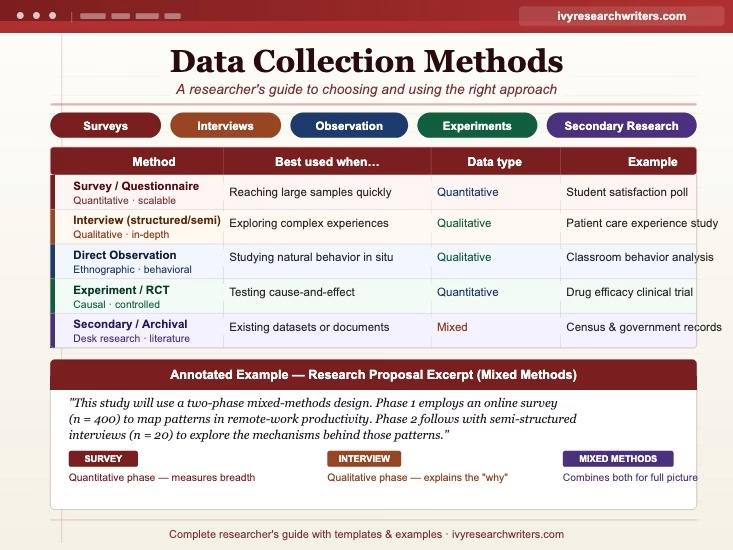
Methods of Data Collection
The methods of data collection include:
- Surveys
- Interviews
- Observations
- Experiments
- Secondary research
These methods include both traditional and modern techniques such as mobile data collection.
Primary Data Collection
Primary data collection methods involve firsthand data gathering.
- Provide accurate data collection
- Allow customization to research needs
- Ensure relevance and reliability
Type of Data
The type of data determines the appropriate method.
- Qualitative methods for descriptive data
- Quantitative methods for numerical data
Understanding the kind of data needed is critical for effective research design.
Data Collection Tool
A data collection tool is an instrument used to gather data.
- Surveys, questionnaires, and digital tools
- Software for mobile data collection
- Tools must ensure data protection and reliability
Sampling Method
A sampling method is used to select participants.
- Helps gather data from a subset of a population
- Ensures representation
- Reduces time and cost
Secondary Data Collection Methods
Secondary data collection methods involve analyzing pre-existing data sources.
- Academic journals
- Government databases
- Online repositories
Methods of Collecting
Different methods of collecting data include:
- Surveys
- Interviews
- Observations
- Digital tracking
These methods may vary depending on research objectives.
Types of Data Collection
There are several types of data collection:
- Primary vs secondary
- Qualitative vs quantitative
Each type serves a different purpose in research.
Methods Used
The methods used in research depend on:
- The research question
- The data needed
- The available resources
Data Collection Methods Use
Data collection methods use varies across fields:
- Academic research
- Business analytics
- Healthcare studies
Organizations use these methods to leverage data and make informed decisions.
Advanced Considerations in Data Collection
Data Quality and Accuracy
- Ensuring accurate data collection is essential
- Poor methods lead to inaccurate data
Data Privacy and Protection
- Researchers must ensure data privacy
- Protect sensitive data about users
Data Volume and Management
- Managing large amount of data requires proper systems
- Data must be cleaned and organized
Best Practices for Effective Data Collection
To ensure effective methods of data collection:
- Clearly define the research question
- Choose the right data collection method
- Use reliable tools
- Validate data for accuracy
- Ensure ethical standards
Related Assignments on Data Collection Methods
Students in research, business, social sciences, and IT programs often complete assignments focused on data collection and research to understand how to gather, analyze, and interpret information effectively.
1. Data Collection Methods Analysis Assignment
- Identify and explain common methods used in research
- Compare qualitative vs quantitative approaches
- Evaluate which method is best for specific data related scenarios
2. Research Design Project
- Develop a research plan showing how data collection happens
- Select appropriate data collection techniques
- Justify your choice based on the data you need
3. Survey Design Assignment
- Create a questionnaire to collect raw data
- Test reliability and validity
- Analyze how the method captures different data types
4. Case Study on Data Collection
- Analyze a real-world study
- Identify methods used to gather data
- Evaluate effectiveness and limitations
5. Secondary Data Review Assignment
- Use existing datasets
- Compare findings with primary research
- Discuss risks of relying on data without proper context
6. Data Organization and Analysis Project
- Collect data using selected methods
- Focus on organizing data effectively
- Prepare it for analysis and interpretation
7. Comparative Research Methods Essay
- Compare at least two data collection techniques
- Discuss strengths, weaknesses, and applications
- Evaluate how each method contributes to data collection in research
8. Field Research Assignment
- Conduct real-world data collection (e.g., interviews or observations)
- Document how data collection happens in practice
- Reflect on challenges encountered
9. Experimental Research Assignment
- Design an experiment
- Collect and analyze raw data
- Draw conclusions based on findings
10. Reflection on Data Collection Process
- Reflect on your experience in collecting data
- Discuss what worked and what didn’t
- Evaluate how well you gathered the data you need
Struggling with data collection methods, research design, or analysis projects?
IvyResearchWriters.com provides expert academic writing and data support you can trust.
Research Design Project Example: Data Collection Methods in Research
Title
Evaluating Student Study Habits and Academic Performance Using Mixed Data Collection Methods
Introduction
This research design project explores the relationship between student study habits and academic performance. Effective data collection in research is essential to ensure accurate findings and meaningful conclusions. The purpose of this study is to identify how different study patterns influence academic success by using appropriate data collection techniques.
The study focuses on selecting the most suitable methods to gather raw data, ensuring that the data you need is reliable, relevant, and comprehensive.
Research Question
- How do study habits affect academic performance among university students?
Objectives
- To identify common study habits among students
- To analyze the relationship between study habits and grades
- To apply appropriate data collection and research methods
- To ensure accurate and effective organizing data for analysis
Research Design
This study uses a mixed-method approach, combining qualitative and quantitative techniques to capture different data types.
- Quantitative data: numerical data on study hours and grades
- Qualitative data: student perspectives and experiences
This approach ensures a comprehensive understanding of the research problem.
Data Collection Methods
The study uses several common methods of collecting data:
1. Surveys (Quantitative)
- Structured questionnaires distributed to students
- Collect raw data on study hours, GPA, and habits
- Allows data collection from a large population
2. Interviews (Qualitative)
- Semi-structured interviews with selected participants
- Provides deeper insight into study behaviors
- Helps understand data related to motivation and challenges
3. Secondary Data Review
- Analysis of academic performance records
- Provides additional context and validation
- Prevents reliance on data without supporting evidence
These data collection techniques ensure a well-rounded dataset.
Sampling Method
- Target population: University students
- Sampling technique: Random sampling
- Sample size: 100 students
This ensures representativeness and reduces bias in how data collection happens.
Data Collection Process
The data collection process includes:
- Designing survey questionnaires
- Distributing surveys online
- Conducting interviews
- Gathering academic records
This structured approach ensures consistency in how data collection happens and improves reliability.
Data Organization and Analysis
Once data is collected:
- Data is categorized and cleaned
- Focus is placed on organizing data effectively
- Quantitative data is analyzed using statistical tools
- Qualitative data is analyzed through thematic analysis
This ensures that insights are derived from accurate and structured information.
Ethical Considerations
- Ensure participant consent
- Maintain confidentiality
- Protect sensitive information
- Follow data privacy guidelines
Ethical practices are essential in data collection and research.
Limitations
- Possible incomplete responses (incomplete data)
- Bias in self-reported answers
- Limited sample size
These factors may affect the accuracy of findings.
Expected Outcomes
- Identification of effective study habits
- Insights into factors influencing academic performance
- Recommendations for improving student outcomes
Conclusion
This research design demonstrates how proper data collection methods contribute to successful research outcomes. By using multiple data collection techniques, researchers can gather comprehensive and reliable information.
Understanding how data collection happens and selecting appropriate methods ensures that the data you need is accurate, relevant, and useful for analysis. Ultimately, effective research depends on careful planning, proper execution, and systematic organizing data.
Conclusion
Understanding and applying the correct data collection methods is fundamental to successful research. Whether using qualitative data collection methods, quantitative data collection methods, or secondary data collection methods, the goal remains the same: to gather high-quality data that supports accurate and meaningful conclusions.
By selecting the right approach, ensuring data quality, and following best practices, researchers can produce reliable and impactful results.
FAQs: Data Collection Methods and Research Techniques
What are the five methods of collecting data?
- Surveys and questionnaires
- Interviews
- Observations
- Experiments
- Secondary research (existing sources)
In explanation: These are considered the most common methods used in data collection in research. Each method allows researchers to gather different data depending on the research objective. For instance, surveys help collect structured raw data, while observations capture real-world behavior. Choosing the right method ensures you collect the data you need and avoid relying on data without proper context.
What are the 4 types of data collection?
- Primary data collection
- Secondary data collection
- Qualitative data collection
- Quantitative data collection
In context: These four categories form the foundation of data collection and research. They define how data collection happens and how researchers approach the process of gathering data. For example, qualitative methods explore meanings, while quantitative methods focus on measurable results. Understanding these types helps in organizing data effectively and selecting the most appropriate approach.
What are the 10 methods of collecting data?
- Surveys
- Interviews
- Focus groups
- Observations
- Experiments
- Case studies
- Document analysis
- Online tracking tools
- Census data collection
- Secondary data review
In explanation: These data collection techniques provide a broader range of options for researchers working with data related to various fields. Using multiple methods can improve accuracy and provide deeper insights. However, it is important to ensure consistency in how data collection happens to maintain reliability and avoid errors.
What are the 7 basic methods of research?
- Experimental research
- Survey research
- Observational research
- Case study research
- Correlational research
- Qualitative research
- Quantitative research
In explanation: These methods represent the core approaches in data collection and research. They guide how researchers gather and analyze raw data, interpret findings, and draw conclusions. Each method is suited to specific types of research problems and helps ensure that the data you need is collected accurately and efficiently.

