

Cognitive Dissonance Examples: 25+ Real-Life Scenarios, Signs, Causes, and How to Reduce It
If you searched for cognitive dissonance examples, you are likely trying to do one of two things: (1) understand what cognitive dissonance looks like in real life, or (2) explain it clearly in an essay, report, or psychology assignment. This guide does both.
Cognitive dissonance is everywhere—health choices, school, work, money, relationships, social media, and ethics. And once you can recognize it, you can use it to strengthen academic writing and design better interventions in behavior change, counseling, education, leadership, and public health.
Why cognitive dissonance examples matter in everyday decisions and academic writing
Before we list examples, here is the key idea you can reuse in your paper:
Cognitive dissonance is a psychological phenomenon in social psychology where a person experiences psychological discomfort (a feeling of discomfort, sometimes called mental discomfort) when there is inconsistency between what they believe and what they do, or when they hold two incompatible ideas.
In everyday terms:
- Cognitive dissonance is the mental tension that arises when your values and beliefs clash with your beliefs and actions (or beliefs and behaviors).
- Dissonance is the mental discomfort that pushes you to “fix” the mismatch, often through dissonance reduction.
That “fixing” is where the most recognizable cognitive dissonance examples come from: people justify, avoid, minimize, or change behavior to restore cognitive consistency and return to cognitive consonance.
A clear cognitive dissonance definition you can quote and build on
Cognitive dissonance definition: cognitive dissonance describes the discomfort that occurs when a person holds two or more conflicting beliefs, or when their behavior conflicts with their personal beliefs, values, or attitudes.
Key phrases you will see in strong academic writing:
- Cognitive dissonance occurs when there is a conflict between cognitions (beliefs, attitudes, values, or knowledge).
- Cognitive dissonance is the discomfort produced by two conflicting beliefs or by inconsistency between beliefs and behavior.
- The degree of dissonance often depends on how important the belief is and how strongly the behavior violates it.
Also important: cognitive dissonance isn’t the same as confusion or simple indecision. It is an aversive state—an inner tension—tied to identity, values, and the need for consistency.
How cognitive dissonance theory explains these examples and why Leon Festinger matters
The theory of cognitive dissonance (often referred to as cognitive dissonance theory) is associated with Leon Festinger. In Festinger’s cognitive dissonance theory, people are motivated to reduce inconsistency in their thinking because inconsistency creates discomfort.
Put simply:
- The theory suggests that dissonance motivates change.
- People reduce dissonance by changing behavior, changing beliefs, adding new beliefs, or avoiding conflicting information.
- Dissonance could be intensified by public commitment, social pressure, or identity threats.
This is why people may rationalize a behavior that conflicts with their values—because the mind prioritizes relief from discomfort.
Everyday cognitive dissonance examples you can use in essays, research, and discussions
Below are detailed, real-life cognitive dissonance examples across common domains. Each example shows how conflicting beliefs and behaviors create discomfort, and how people reduce the dissonance.
Health and lifestyle (common and easy to explain)
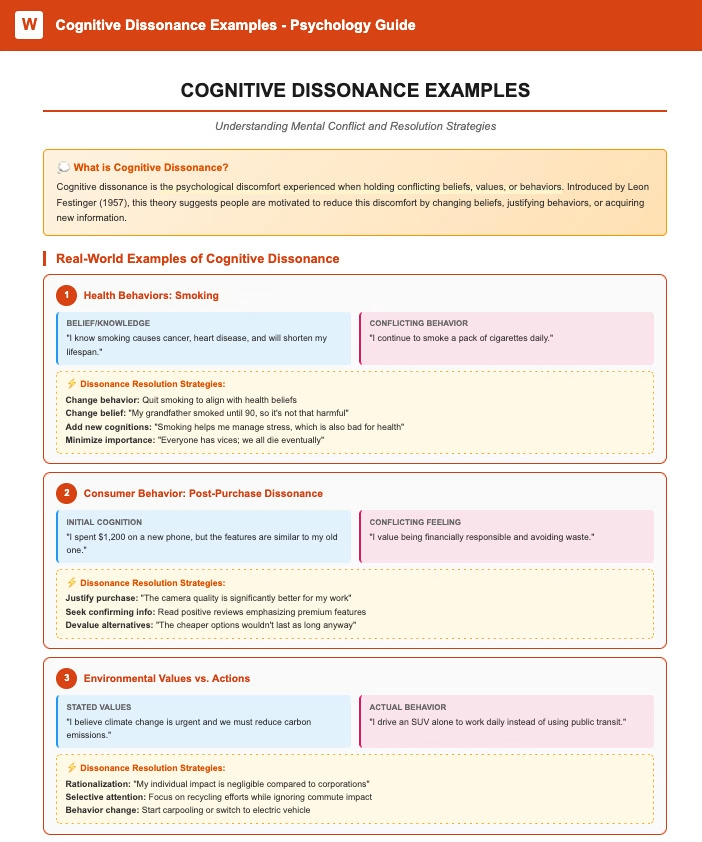
- Smoking while valuing health
- Conflicting beliefs: “Health matters” vs “I smoke.”
- Dissonance arises; the person may rationalize: “I am stressed.”
- This is a classic example of cognitive dissonance because beliefs and actions clash.
- Skipping medication but claiming to take health seriously
- Conflict between values and behavior.
- The person may avoid reminders or minimize the risk.
- Eating junk food while promoting wellness online
- Inconsistency between public identity and private behavior.
- Dissonance might lead to defensiveness or justification.
- Refusing vaccines while wanting to protect family
- Two contradictory beliefs: “I protect my children” vs “I reject a protective measure.”
- Dissonance could lead to selectively consuming misinformation to reduce discomfort.
Education and student life
- Procrastinating while identifying as disciplined
- Cognitive dissonance happens when self-image conflicts with behavior.
- The student may say: “I work best under pressure.”
- Cheating while believing honesty is important
- Strong conflict between beliefs and actions.
- The student may justify it: “The system is unfair.”
- Skipping classes while wanting high grades
- Dissonance involves holding the desire for success alongside avoidance behavior.
- Dissonance reduction often shows up as excuses.
Work, leadership, and ethics
- A manager valuing fairness but showing favoritism
- Conflict between moral beliefs and actions.
- They may rationalize: “That person performs better.”
- An employee criticizing dishonesty while exaggerating results
- Conflicting beliefs and behaviors create tension.
- They may shift attitudes: “Everyone does it.”
- Promoting work-life balance while rewarding burnout
- Values and behaviors misalign at an organizational level.
- Cognitive dissonance can also be collective in teams.
Money and consumption
- Saying “I save money” but buying impulsively
- The discomfort of cognitive dissonance appears after purchase.
- The buyer may justify: “I deserved it.”
- Caring about the environment but overusing single-use plastics
- Dissonance creates guilt; people may minimize impact: “One person does not matter.”
- Criticizing debt while using buy-now-pay-later repeatedly
- The person may experience dissonance and then rationalize: “It is temporary.”
Social media and identity
- Posting “authenticity” content while curating a false image
- Cognitive dissonance often increases when identity is public.
- Avoidance of criticism becomes a dissonance reduction strategy.
- Condemning gossip while spreading rumors
- The person may protect self-image by reframing: “I am warning others.”
Values, politics, and community norms
- Valuing equality but supporting unfair treatment in a specific case
- Conflict between beliefs and real behavior.
- Dissonance might be reduced through “exceptions.”
- Believing in kindness but being cruel under stress
- Dissonance arises; the person blames stress or provocation.
Ready to turn cognitive dissonance into a high-scoring paper (not just a definition)?
You will get:
A topic-focused outline with researchable angles
Strong examples you can cite and analyze correctly
A clear theory-to-argument structure (intro → analysis → conclusion)
Polished editing and formatting support (APA, Harvard, or your required style)
Cognitive dissonance in relationships: examples that show why dissonance can affect trust
Cognitive dissonance in relationships is common because relationships involve identity, attachment, loyalty, and social expectations.
Here are usable relationship-focused examples:
- “Honesty matters” but hiding messages from an ex
- Holding two conflicting beliefs: “I am loyal” vs “I am hiding things.”
- The person may rationalize: “I am avoiding conflict.”
- Over time, cognitive dissonance can affect trust and intimacy.
- Wanting commitment but entertaining other options
- Conflict between their beliefs and behaviors.
- Dissonance might lead to self-justification or blaming the partner.
- Saying “I respect you” but using insults during arguments
- Dissonance experienced after the argument may lead to excuses (“I was angry”) rather than behavior change.
- Claiming to support a partner’s goals but sabotaging them
- Dissonance arises because self-image (“supportive”) clashes with actions.
These show how dissonance can affect communication patterns, emotional safety, and relationship stability.
Signs of cognitive dissonance you can spot in yourself and others
If you want to know whether you experience cognitive dissonance, look for these signs of cognitive dissonance:
- Defensiveness when questioned
- Justifying or rationalizing
- Avoiding information that threatens existing beliefs
- Minimizing the importance of the issue
- Shifting blame
- Selective exposure (only consuming confirming views)
- Feeling guilt, tension, or irritation—people often feel cognitive dissonance as a pressure to “explain themselves”
These signs are your clue that dissonance is active and dissonance reduction is underway.
Causes of cognitive dissonance: why it happens and what can cause dissonance
The causes of cognitive dissonance in the examples above usually fall into patterns:
- Conflicting beliefs
- Holding two contradictory beliefs at the same time.
- Conflict between beliefs and actions
- Values and behaviors do not match.
- Beliefs due to external pressure
- For example, acting against personal beliefs because of peer pressure, authority, or incentives.
- Threats to identity
- Dissonance could intensify when someone’s self-image is challenged.
- New information challenging existing beliefs
- Cognitive dissonance happens when evidence contradicts what people “already know” or want to believe.
In short, dissonance arises from inconsistency, and people try to fix that inconsistency quickly.
Effects of cognitive dissonance: the cognitive consequences that matter in real life
The effects of cognitive dissonance can be helpful or harmful depending on how it is resolved.
Common cognitive and behavioral outcomes:
- Increased stress and anxiety
- Avoidance of health services or difficult conversations
- Resistance to feedback or corrective information
- Polarization and attitude hardening
- Rationalization that maintains harmful behavior
- Motivation to change when the person chooses action over justification
In academic writing, you can refer to:
- the impact of cognitive dissonance on decision-making
- cognitive consequences such as biased processing and selective attention
- how cognitive dissonance affects long-term behavior patterns
How to reduce cognitive dissonance: dissonance reduction strategies that actually work
People reduce dissonance in predictable ways. Your goal (in self-growth or interventions) is to choose the healthiest path.
Strategy 1: Change behavior to align with beliefs
- This is the most direct way to reduce cognitive dissonance.
- Example: quitting smoking because health matters.
Strategy 2: Change the belief (sometimes unhealthy)
- Example: “Smoking is not that harmful.”
- This reduces discomfort but can reinforce risky behavior.
Strategy 3: Add new beliefs to reduce the dissonance
- Example: “I only smoke socially.”
- These are beliefs to reduce discomfort without changing action.
Strategy 4: Reduce importance
- Example: “Life is short anyway.”
- This lowers the degree of dissonance.
Strategy 5: Seek supportive information and avoid contradictions
- Short-term relief, long-term distortion.
- This is common when people have strong existing beliefs.
If your goal is personal improvement, choose strategies that shift behavior or improve decision-making rather than justifying harm.
How to resolve cognitive dissonance in a healthy way (without denial)
To resolve cognitive dissonance (or resolve the dissonance) in a way that supports growth:
- Name the conflict clearly: “My values and actions do not match.”
- Identify the trigger: What belief, identity, or fear is being threatened?
- Pick one change: behavior or belief—prefer behavior when health, ethics, or relationships are at stake.
- Use small steps: a realistic plan reduces shame and increases follow-through.
- Ask for feedback: trusted support can keep you honest without humiliation.
This is where cognitive dissonance can help: the discomfort is a signal, not a life sentence. Properly handled, it becomes motivation.
Addressing cognitive dissonance in writing: how IvyResearchWriters.com helps you use examples correctly
Students often lose marks because they list examples without theory. A strong paragraph connects:
- the example
- the conflicting beliefs and behaviors
- how dissonance reduction happens
- what the effects are
- how the theory explains it (Festinger; social psychology; cognition)
At IvyResearchWriters.com, we help you:
- select the best cognitive dissonance examples for your topic
- build theory-driven analysis (not just storytelling)
- write polished academic sections (definitions, frameworks, discussion)
- structure essays, proposals, and literature reviews clearly
Quick recap: the simplest way to explain cognitive dissonance examples
- Cognitive dissonance occurs when there is inconsistency between beliefs, values, or actions.
- It creates mental discomfort.
- People try to reduce that discomfort through dissonance reduction: changing behavior, changing beliefs, adding justifications, minimizing importance, or avoiding information.
- The effects can include either growth (if behavior changes) or denial (if justification dominates).
Frequently Asked Questions
1) What are 7 signs of cognitive dissonance?
Understanding cognitive dissonance starts with recognizing the inner tension. Cognitive dissonance arises when your beliefs or values conflict with your actions, or when your beliefs or attitudes clash with new information. It is called cognitive dissonance because it is a mental conflict that cognitive dissonance creates—and yes, everyone experiences cognitive dissonance at some point.
7 common signs (mix of behavior and feelings):
- Defensiveness when your view is challenged (those feelings of dissonance can spike fast).
- Justifying choices to protect beliefs and values (excuses that make actions feel “right”).
- Avoiding information that could threaten your position (because dissonance would increase).
- Minimizing the issue (“It is not a big deal”) to reduce this dissonance.
- Shifting blame to circumstances or other people.
- Mood changes such as irritability, guilt, or anxiety—clear cognitive dissonance effects.
- Contradictory behavior (saying one thing, doing another), where the conflict can lead to cognitive dissonance again and again.
In academic writing, you can phrase it like this: the mismatch between behavior or beliefs triggers discomfort, which pushes a person to restore consistency.
2) What are the 5 common types of cognitive dissonance?
Different patterns cause cognitive dissonance in different settings. Here are five common types you can use in essays and case analyses:
- Belief–Behavior dissonance
- Your actions conflict with beliefs or values (for example, valuing health but skipping treatment). This mismatch often lead to cognitive dissonance.
- Decision dissonance
- After choosing Option A, you start defending it and rejecting Option B to feel consistent.
- Effort dissonance
- You worked hard for something disappointing, so you convince yourself it was worth it to protect self-image.
- Information dissonance
- New facts clash with your beliefs or attitudes, and you react by rejecting or reframing the evidence.
- Social/Identity dissonance
- Your need to belong clashes with personal standards; you may change behavior or beliefs to fit group expectations.
In real life, dissonance plays out as people try to align with their beliefs (or adjust their beliefs) so the internal conflict feels smaller.
3) How do I know if I’m experiencing cognitive dissonance?
A simple test: are you trying to make something inconsistent feel consistent?
You might may experience cognitive dissonance if:
- You feel uneasy, guilty, or tense—strong feelings of dissonance.
- You notice your actions do not match your beliefs and values.
- You keep explaining yourself internally or to others (quick rationalizations).
- You avoid conversations or evidence that challenges you (because cognitive dissonance may feel threatening).
- You swing between two positions depending on the situation.
This is important: cognitive dissonance can cause stress and defensiveness, and those reactions can become patterns caused by cognitive dissonance over time. It can also work the other way—cognitive dissonance can lead to positive change if you choose to adjust actions rather than excuses.
What helps most?
To resolve dissonance, name the conflict clearly and choose a path to reduce this dissonance—either by changing actions to match values or by thoughtfully revising a belief that is no longer accurate.
4) What is an example of cognitive dissonance in a relationship?
Example (clear and realistic):
One partner strongly values honesty and loyalty (beliefs and values), but they hide messages from an ex. The conflict between their actions and beliefs or values is where cognitive dissonance arises. The person may feel anxious and defensive—common cognitive dissonance effects—and then try to justify it (“I am avoiding drama”) to reduce this dissonance.
Why it matters:
- The mismatch can damage trust, because secrecy is inconsistent with the identity they want to maintain.
- Over time, cognitive dissonance can lead to more rationalizations, repeated secrecy, or relationship conflict—patterns caused by cognitive dissonance if the underlying inconsistency is not addressed.
A healthier route is to resolve dissonance by aligning behavior with values—choosing to communicate honestly so actions align with their beliefs.

