

Brenda Ann Spencer: The 1979 Cleveland Elementary School Shooting Explained
Introduction
The story of Brenda Ann Spencer remains one of the most disturbing cases in American history. The school shooting in San Diego on January 29, 1979, marked one of the earliest modern examples of a mass shooting at a school in the United States.
This blog explores the case in depth, examining what happened, the people involved, the legal consequences, and the lasting cultural impact—including how Spencer’s infamous words inspired the Boomtown Rats song “I Don’t Like Mondays.”
Spencer
The name Spencer is now synonymous with one of the earliest widely publicized school shooting in the United States.
The case is frequently referenced in discussions of:
- Youth violence
- Gun control
- Mental health
- Media influence
It remains a pivotal moment in American history regarding school safety.
Brenda
Brenda Ann Spencer was a troubled teenager living in San Carlos, a neighborhood in San Diego County.
- She had a history of behavioral issues
- She lived across the street from the school
- She had access to firearms, including a BB gun and later a rifle
Her background has been widely analyzed in criminology and psychology.
Brenda Spencer
Brenda Spencer became known as the school shooter Brenda Spencer, responsible for opening fire on an elementary school from her home.
On the morning of the attack:
- Spencer opened fire from her house
- She targeted people outside the school
- Victims were caught in the line of fire without warning
The event shocked the nation and became a defining moment in discussions of youth crime.
Cleveland Elementary School
The incident took place at Grover Cleveland Elementary School, often referred to as Cleveland Elementary School in San Diego.
The school was located directly across the street from the school where Spencer lived, giving her a clear vantage point.
Students and staff were arriving for the day when the gunfire began.
Shooting
The shooting began when Spencer used a 22 caliber rifle, a semi-automatic weapon, to fire at individuals outside the school.
- She opened fire without warning
- Multiple victims were struck
- A police officer were injured while responding
The attack lasted several hours as Spencer barricaded herself inside her home.
1979
The events of 1979 marked a turning point in public awareness of school violence.
On January 29, the quiet community of San Diego became the site of one of the earliest high-profile school shootings.
This incident predates many later tragedies but set a precedent for media coverage and public concern.
Grover Cleveland Elementary School
At Grover Cleveland Elementary School, tragedy struck when staff members were preparing for the school day.
- Principal Burton Wragg was attempting to help students
- Custodian Mike Suchar was assisting outside
Both men were fatally shot during the attack.
Cleveland Elementary School in San
The Cleveland Elementary School in San Diego became the focal point of national attention.
Victims included:
- Principal Burton Wragg and custodian Mike Suchar
- Several children and adults who were injured
The community was left devastated by the violence.
San Carlos
The San Carlos neighborhood, once quiet and suburban, became permanently associated with the tragedy.
Spencer lived just a street from the school, making the attack particularly shocking.
Brenda Spencer Was 16
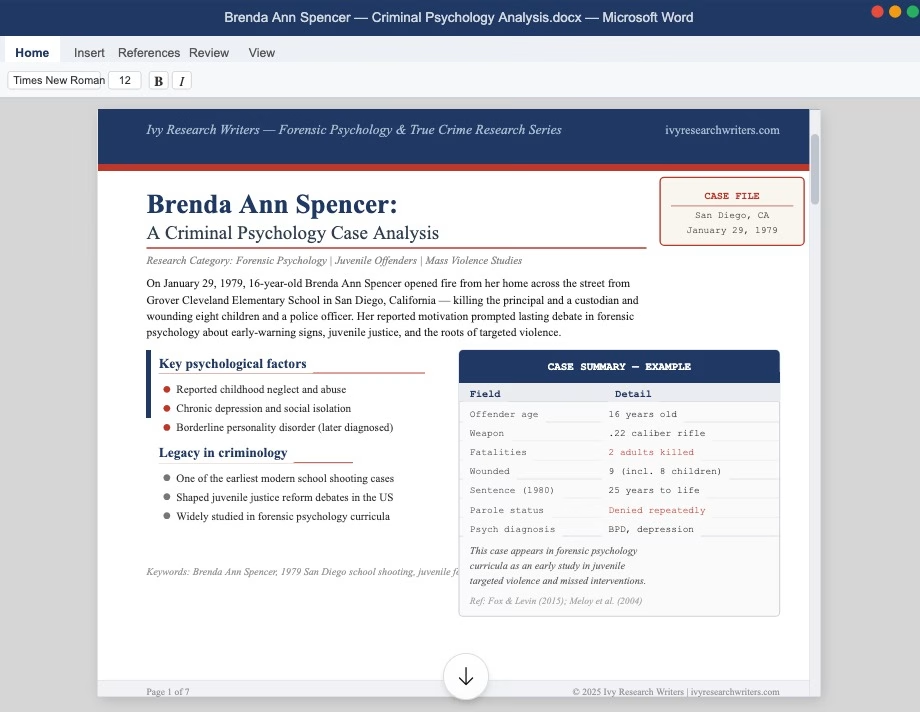
Brenda Spencer was 16 years old at the time of the shooting.
- She was a 16-year-old Brenda Ann Spencer
- She was charged as an adult
- The case raised questions about juvenile justice
Her age remains a critical aspect of the case, influencing both legal outcomes and public reaction.
What Happened on January 29, 1979
On January 29, 1979, Spencer used a semi-automatic 22 caliber rifle to fire at people waiting outside the school.
- She targeted principal Burton Wragg to open the gates
- She also shot Wragg and custodian Mike Suchar
- Children and a police officer were injured
When asked why, Spencer said, “I don’t like Mondays,” a statement that shocked the public.
Victims and Impact
The attack resulted in:
- Two counts of murder (Wragg and Suchar)
- Multiple injuries
- Long-term trauma in the community
The case became one of the earliest examples of a shooting in the United States involving a school.
Arrest and Charges
After the shooting:
- Spencer barricaded herself inside her home
- Police negotiated her surrender
She was later charged with murder and assault, including:
- Two counts of murder
- Assault with a deadly weapon
She ultimately pleaded guilty to two counts.
Sentence and Parole
Spencer received a sentence of 25 years to life.
- She became eligible for parole after serving time
- Multiple parole hearings have been held
- She has been repeatedly denied parole
The Board of Parole Hearings continues to review her case.
Parole Hearings and Later Years
Since becoming eligible:
- Spencer has appeared before the parole board multiple times
- She has remained incarcerated since 1979
- Her requests have consistently been denied
Her case continues to draw media attention, including coverage by CBS 8 and News 8.
Cultural Impact
The case inspired:
- The Boomtown Rats song “I Don’t Like Mondays,” written by Bob Geldof
- Ongoing media analysis and documentaries
The phrase became symbolic of the randomness and horror of the act.
APA Research Essay: Brenda Ann Spencer and the 1979 Cleveland Elementary School Shooting
Title Page
Brenda Ann Spencer and the 1979 Cleveland Elementary School Shooting: A Criminological and Historical Analysis
Student Name
Institution
Course
Instructor
Date
Abstract
The 1979 Cleveland Elementary School shooting in San Diego, carried out by 16-year-old Brenda Ann Spencer, represents one of the earliest modern school shootings in the United States. This research essay examines the incident through historical, psychological, and criminological perspectives. It analyzes the events of January 29, 1979, the legal proceedings, and the broader social impact. The case highlights issues such as youth violence, media influence, and criminal responsibility. By evaluating primary facts and secondary interpretations, this paper contributes to understanding the long-term implications of early school shootings in American history.
Introduction
On January 29, 1979, Brenda Ann Spencer, a 16-year-old living in San Carlos, San Diego County, carried out a shooting at Grover Cleveland Elementary School. Positioned across the street from the school, Spencer used a .22 caliber rifle to open fire on students and staff arriving for the day. The incident resulted in two deaths and multiple injuries, marking a pivotal moment in discussions of school violence in the United States.
This research essay explores the background of the offender, the sequence of events, legal outcomes, and the broader societal implications of the case.
Background and Context
Brenda Spencer was a troubled teenager with documented behavioral concerns prior to the incident. Reports indicate that she had access to firearms, including a BB gun and later a semi-automatic rifle. Her environment, psychological state, and social context have been widely debated in criminological literature.
The shooting occurred at Grover Cleveland Elementary School in San Diego, a public school located directly across from Spencer’s residence. This proximity enabled her to carry out the attack without immediate detection.
The Incident
On the morning of January 29, 1979, Spencer opened fire using a .22 caliber rifle. Victims included Principal Burton Wragg and custodian Mike Suchar, both of whom were fatally shot while assisting students outside the school.
Several others, including children and a police officer, were injured. The attack unfolded over several hours as Spencer barricaded herself inside her home before eventually surrendering to law enforcement.
When questioned, Spencer reportedly stated, “I don’t like Mondays,” a remark that drew widespread media attention and later inspired cultural responses.
Legal Proceedings
Following her arrest, Spencer was charged with two counts of murder and assault with a deadly weapon. Despite being a minor, she was charged as an adult due to the severity of the crime.
She ultimately pleaded guilty and received a sentence of 25 years to life. Since becoming eligible for parole, Spencer has appeared before the Board of Parole Hearings multiple times, but has consistently been denied release.
The case illustrates how the legal system addresses juvenile offenders in cases involving extreme violence.
Psychological and Criminological Analysis
From a criminological perspective, the Spencer case raises questions about motivation, mental health, and environmental influences.
Key considerations include:
- The role of early behavioral warning signs
- Access to firearms by minors
- The influence of media attention on offender behavior
Some analysts argue that Spencer’s desire for attention—evidenced by statements about wanting to “get on TV”—reflects a pattern seen in later mass shootings.
Social and Cultural Impact
The 1979 shooting is often cited as one of the earliest modern school shootings in American history. It contributed to growing awareness of school safety and youth violence.
The case also had a lasting cultural impact. The Boomtown Rats song “I Don’t Like Mondays,” written by Bob Geldof, brought international attention to the incident and its underlying issues.
Media coverage played a significant role in shaping public perception, raising ethical questions about reporting on violent crimes.
Discussion
The Spencer case demonstrates the complexity of interpreting violent acts committed by minors. While legal accountability is necessary, understanding underlying causes is equally important for prevention.
The incident also highlights systemic gaps, including limited mental health intervention and insufficient control over firearm access. These factors remain relevant in contemporary discussions of school shootings.
Conclusion
Brenda Ann Spencer’s actions on January 29, 1979, represent a tragic and formative event in American history. As one of the earliest widely recognized school shootings, the case continues to inform discussions on criminal justice, youth behavior, and public safety.
A comprehensive understanding of this case requires balancing historical facts, legal analysis, and psychological insight. Such an approach is essential for developing effective strategies to prevent similar incidents in the future.
References
American Psychological Association. (Year). Publication manual of the American Psychological Association (7th ed.).
Centers for Disease Control and Prevention. (Year). Youth violence prevention.
Geldof, B. (Year). I Don’t Like Mondays [Song].
Scholarly articles on school shootings and juvenile crime.
Struggling with criminology essays, case studies, or APA formatting?
IvyResearchWriters.com provides expert academic writing support tailored to your exact requirements.
Conclusion
The story of Brenda Ann Spencer is a tragic and complex chapter in American history. As one of the earliest widely known school shootings, it continues to shape discussions about youth violence, mental health, and gun control.
Understanding this case is essential for anyone studying criminal justice, psychology, or social issues.
Frequently Asked Questions
FAQs About Grover Cleveland Elementary School and Related History
Where was Grover Cleveland shot?
This question is often misunderstood. Grover Cleveland—the U.S. president—was not shot. However, confusion may arise due to the Grover Cleveland Elementary School shooting in 1979, where violence occurred at a school named after him.
- The incident involved Brenda Ann Spencer, not the president
- A reporter later covered how Spencer refused to come out shooting until negotiations began
In prose: It is important to distinguish historical figures from institutions named after them. The tragedy associated with the school has no direct connection to President Grover Cleveland himself.
Where was Cleveland Elementary School in San Diego?
Cleveland Elementary School in San Diego—officially Grover Cleveland Elementary School—was located in the San Carlos neighborhood of San Diego County, California.
- The school sat directly across the street from Spencer’s home
- The location became widely known after the 1979 school shooting
In context: Following the incident, a district attorney handled the prosecution as Spencer was charged with serious offenses, including counts of murder and assault.
Where in America is Grover Cleveland Elementary School?
Grover Cleveland Elementary School referenced in this case was located in:
- San Diego, California, United States
- Within the San Carlos community
In broader terms, multiple schools across America are named after President Grover Cleveland, but the one tied to this case is specifically in California.
- The case gained national attention and became part of discussions on school safety
- Media coverage, including interviews with a reporter, helped shape public awareness
Who was the only president to never marry?
The only U.S. president who never married was James Buchanan, not Grover Cleveland.
- Grover Cleveland was actually married while in office
- Buchanan remains the only lifelong bachelor president in American history
In reflective prose: Questions like this often appear alongside discussions of historical events, but accuracy is essential. Just as Spencer later became a convict after legal proceedings, historical facts must be clearly separated from misconceptions.
Additional contextual points:
- Spencer claimed her actions were driven by boredom and a desire to get on TV
- She was eventually prosecuted, despite being a minor, and spencer was charged as an adult
- The case drew attention even from those who knew her, including a former classmate

