

Where Is Palestine? A Comprehensive Guide to Geography, History, and the Question of Palestine
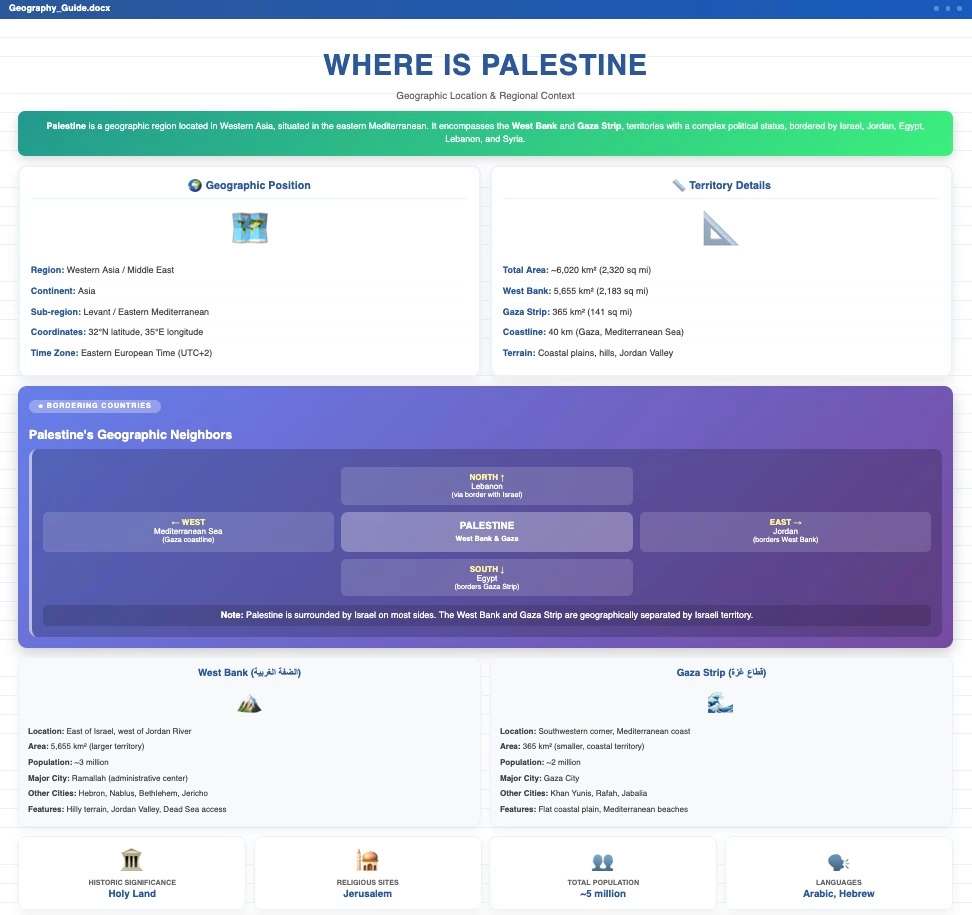
Understanding where is Palestine requires exploring geography, history, politics, and identity. The word Palestine has referred to different territories throughout history, and today it is closely connected to the Israeli-Palestinian conflict in the eastern Mediterranean region.
This guide from IvyResearchWriters.com provides a clear academic explanation of where Palestine is located, the history of Palestine, the partition of Palestine, and the modern political landscape involving Israel and the Palestinians.
Palestine in the Eastern Mediterranean: Geography and Boundaries
Geographically, Palestine is located in the eastern Mediterranean, between the Jordan River and the Mediterranean Sea. Historically, the region of Palestine included what is today:
- The State of Israel
- The West Bank
- The Gaza Strip
- East Jerusalem
To the east lies Jordan, including areas east of the Jordan River. Historically, the boundaries of Palestine shifted depending on the governing power.
Today, when people refer to Palestine, they typically mean the Palestinian territories—the West Bank and Gaza Strip, including East Jerusalem.
Historical Palestine and the Name Palestine
The term Palestine has ancient origins. It was used by Greek and Roman writers and later became associated with the region during the Roman Empire. The name Palestine evolved through centuries of political and religious transformations.
In antiquity, the region included the kingdoms of Israel and Judah, often described as the land of Israel in Jewish historical tradition. Over time, Palestine became a center of religious and cultural development for Jews, Christians, and Muslims.
During the Ottoman period, the region was administered as part of a larger empire without clearly defined modern borders.
The British Mandate for Palestine
After World War I, the League of Nations granted Britain the British Mandate for Palestine in 1922. This period, known as Mandatory Palestine, followed the collapse of the Ottoman Empire.
Under the mandate:
- Britain administered Palestine.
- Jewish immigration increased.
- Arab communities expressed opposition to political changes.
The British Mandate for Palestine laid the groundwork for the later conflict between Israel and the Palestinians.
The Partition of Palestine and the Establishment of Israel
In 1947, the United Nations General Assembly adopted the partition plan for Palestine. The plan proposed partitioning Palestine into two states:
- A Jewish state
- An Arab state
Jerusalem was to be administered separately under international control.
This partition of Palestine aimed to resolve the growing conflict between Israel and the Palestinians, but Arab countries rejected the plan.
In May 1948, the establishment of the State of Israel was declared. Shortly after, the Palestine war erupted between Israel and neighboring Arab countries.
Many Palestinians became refugees during this period, creating what is often called the Palestine problem or the “question of Palestine.”
West Bank, Gaza Strip, and East Jerusalem
Today, Palestine is divided primarily into:
1. The West Bank
Located west of the Jordan River, this territory includes major Palestinian cities and rural communities.
2. The Gaza Strip
A small coastal area along the Mediterranean Sea.
3. East Jerusalem
Palestinians claim East Jerusalem as the capital of a future State of Palestine. Israel considers Jerusalem its unified capital.
The West Bank and Gaza are often referred to collectively as the occupied Palestinian territory. The West Bank and East Jerusalem have been occupied by Israel since 1967, following the Six-Day War.
Israel withdrew from Gaza in 2005, though the area remains central to ongoing conflict.
Israel and Palestine: Conflict and Recognition
The conflict between Israel and Palestine involves competing claims to the land of Palestine.
Key political actors include:
- The Government of Israel
- The Palestinian Authority
- The Palestine Liberation Organization (PLO)
- The Palestine National Council
The Palestine Liberation Organization has historically represented Palestinian political aspirations. The PLO seeks recognition of Palestinian rights and statehood.
The State of Palestine has been recognized by many countries and admitted as a non-member observer state by the United Nations in 2012. However, not all countries recognize Palestine as a sovereign state.
Population and Culture of Palestine
The population of Palestine consists primarily of Palestinians, who are predominantly Arab in ethnicity and culture.
The culture of Palestine includes:
- Arabic language traditions
- Religious diversity (Islam, Christianity)
- Rich artistic and literary heritage
- Strong ties to Jerusalem and historical cities
Palestinian identity is deeply connected to homeland in Palestine and the historical experience of displacement.
Need Help Writing A Research Paper About Israel and Palestine?
👉 Order your custom research paper today at IvyResearchWriters.com and receive academically rigorous, well-structured content on where is Palestine you can submit with confidence.
The Question of Palestine and the Middle East Peace Process
The “question of Palestine” refers to ongoing debates about:
- Borders and boundaries of Palestine
- Recognition of the State of Palestine
- Rights of the Palestinian people
- Security concerns of Israel
Efforts to resolve the conflict include:
- The Middle East peace process
- International diplomacy through the United Nations
- Bilateral agreements between Israel and Arab countries (such as Israel and the UAE)
Despite negotiations, a lasting resolution remains elusive.
Is Palestine a Country?
The answer depends on perspective:
- Many countries recognize Palestine as a state.
- Israel disputes aspects of Palestinian sovereignty.
- The Palestinian Authority governs parts of the West Bank.
- Gaza is administered separately.
Palestine includes the West Bank and Gaza, including East Jerusalem, though parts remain under Israeli control.
A Detailed Timeline of the Israel–Palestine Conflict
The conflict between Israel and Palestine is rooted in competing national movements, historical claims, colonial administration, war, and unresolved political agreements. Below is a chronological breakdown of key events from ancient history to the present.
Ancient and Classical Period (c. 1200 BCE – 600 CE)
c. 1200–1000 BCE
- The ancient kingdoms of Israel and Judah emerge in the region historically known as the land of Israel.
586 BCE
- Babylon conquers Jerusalem and destroys the First Temple.
63 BCE
- Roman Empire conquers the region.
135 CE
- After suppressing a Jewish revolt, Rome renames the area Syria Palaestina, a name that later evolves into “Palestine.”
Ottoman Period (1517–1917)
- The region, often called Palestine, is part of the Ottoman Empire.
- Muslims, Christians, and Jews live throughout Palestine.
- By the late 19th century, modern political Zionism emerges in Europe, advocating for a Jewish homeland.
British Mandate Period (1917–1947)
1917
- Britain issues the Balfour Declaration, supporting the establishment of a Jewish national home in Palestine.
1920–1922
- The League of Nations grants Britain the Mandate for Palestine (Mandate Palestine).
1920s–1930s
- Jewish immigration increases.
- Tensions rise between Jewish and Arab communities.
- Arab revolts occur throughout Palestine.
1939
- Britain limits Jewish immigration due to growing violence.
Partition and War (1947–1949)
1947
- The United Nations General Assembly proposes the Partition Plan for Palestine, dividing Palestine into:
- A Jewish state
- An Arab state
- International administration of Jerusalem
May 1948
- Britain withdraws from Palestine.
- The State of Israel is declared.
- War breaks out between Israel and neighboring Arab countries.
1948–1949 Arab-Israeli War
- Hundreds of thousands of Palestinians become refugees (known as the Nakba, meaning “catastrophe”).
- Gaza comes under Egyptian control.
- The West Bank, including East Jerusalem, comes under Jordanian control.
1967 Six-Day War and Occupation
June 1967
- Israel launches a preemptive strike in the Six-Day War.
- Israel captures:
- West Bank
- East Jerusalem
- Gaza Strip
- Golan Heights
- Sinai Peninsula
The West Bank and Gaza become known as Palestinian territory occupied by Israel.
Rise of the Palestine Liberation Organization (1960s–1980s)
1964
- The Palestine Liberation Organization (PLO) is founded.
1970s–1980s
- The PLO becomes the main representative of the Palestinian people.
- Israel and the Palestine Liberation movement engage in conflict.
First Intifada (1987–1993)
1987
- Palestinians launch a mass uprising (Intifada) in the West Bank and Gaza.
- International attention increases on the Palestinian issue.
Oslo Accords and Peace Process (1993–2000)
1993
- Israel and the PLO sign the Oslo Accords.
- The Palestinian Authority (PA) is established.
- Limited Palestinian self-governance begins in parts of the West Bank and Gaza.
1995
- Oslo II agreement divides the West Bank into Areas A, B, and C.
Second Intifada (2000–2005)
2000
- The Second Intifada begins after tensions surrounding Jerusalem.
- Violence escalates on both sides.
2005
- Israel withdraws from Gaza (removes settlements and military presence).
- Gaza remains under Israeli blockade due to security concerns.
Political Division and Ongoing Conflict (2006–Present)
2006
- Hamas wins Palestinian legislative elections.
2007
- Hamas takes control of Gaza.
- The West Bank remains governed by the Palestinian Authority.
This creates a political division between Gaza and the West Bank.
Recognition of the State of Palestine
2012
- The United Nations admits Palestine as a non-member observer state.
Many countries recognize Palestine, but the United States and some others do not formally recognize it as a sovereign state.
Recent Developments (2010s–2020s)
- Periodic escalations between Israel and Gaza-based groups.
- Settlement expansion in parts of the West Bank.
- Diplomatic agreements between Israel and some Arab countries (Abraham Accords).
- Continued disputes over:
- Jerusalem
- Borders
- Security
- Refugees
- Sovereignty
Key Ongoing Issues
The conflict continues due to unresolved disputes over:
- Status of Jerusalem
- Borders of a potential Palestinian state
- Israeli settlements in the West Bank
- Palestinian refugees
- Security arrangements
- Recognition and sovereignty
Summary
The Israel–Palestine conflict developed through:
- Ancient historical claims
- British Mandate governance
- UN partition proposal
- 1948 war and displacement
- 1967 occupation
- Failed peace negotiations
- Ongoing territorial and political disputes
It remains one of the most complex geopolitical conflicts in modern history.
Summary: Where Is Palestine?
Palestine refers to a region in the eastern Mediterranean that historically included the land between the Jordan River and the Mediterranean Sea.
Today, it is commonly understood as:
- The West Bank
- The Gaza Strip
- East Jerusalem
The region has experienced:
- The British Mandate
- The partition plan for Palestine
- The establishment of Israel
- Ongoing disputes over occupied territories
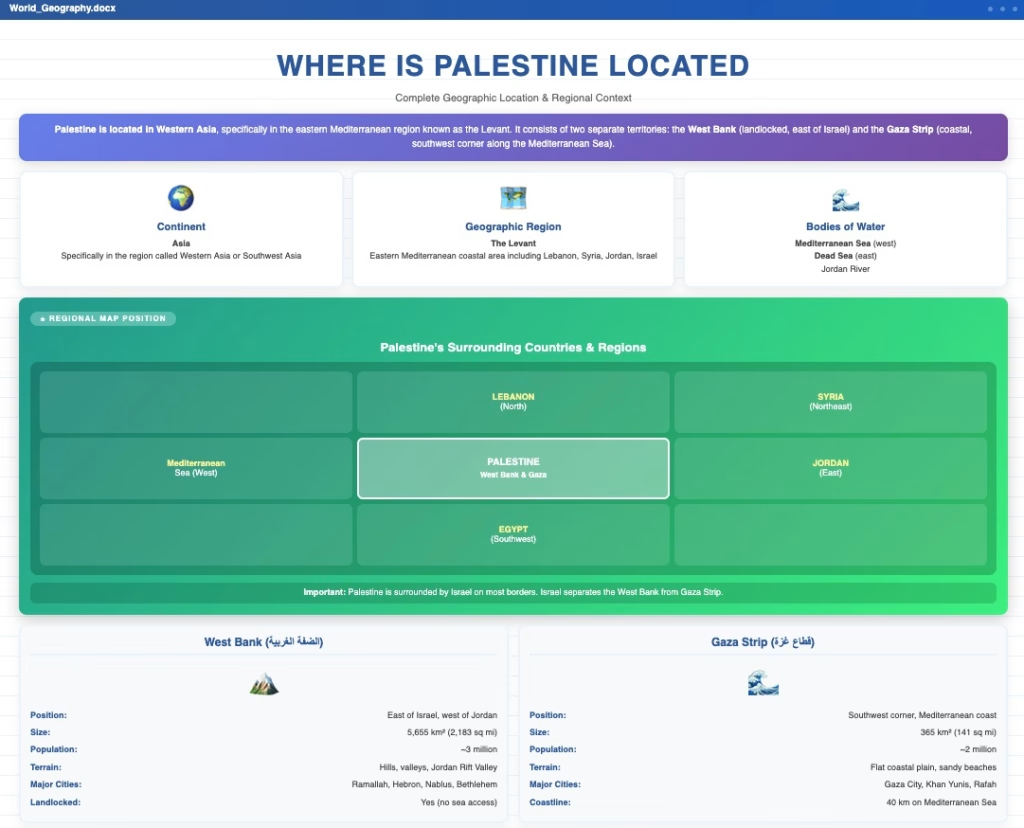
Understanding where Palestine is requires examining both geography and the long history of Palestine.
Need Help Writing About Israel and History of Palestine?
Topics like the history of Palestine, the partition of Palestine, or the Israel-Palestine conflict require:
✔ Accurate historical research
✔ Neutral academic tone
✔ Proper citations (APA, MLA, Chicago)
✔ Critical analysis
At IvyResearchWriters.com, we provide expert assistance with:
- Research papers on the Israeli-Palestinian conflict
- Political science essays
- Middle East studies assignments
- Thesis and dissertation support
👉 Order your custom academic paper today at IvyResearchWriters.com and get clear, well-researched, and properly formatted work delivered on time.
Frequently Asked Questions
Is Palestine a country, yes or no?
The short answer is: It depends on legal and political recognition.
✅ Yes — In Some Contexts:
- The State of Palestine has been recognized by over 130 countries.
- The United Nations admitted Palestine as a non-member observer state in 2012.
- Many international institutions refer to Palestine as a state.
- The Palestinian leadership declares sovereignty over the West Bank, Gaza Strip, and East Jerusalem.
❌ No — In Other Contexts:
- The United States does not officially recognize Palestine as a sovereign country.
- Israel disputes Palestinian statehood.
- The territory referred to as the Palestinian territory occupied by Israel is not fully independent.
Historically, the region was known as Mandate Palestine, administered under British control after World War I. The term Palestine came into wider modern political use during this period.
The status of Palestine is central to what scholars call the “question of Palestine,” which continues to shape Middle Eastern politics.
For academic clarity, many scholars—including analysts at institutions like the Institute for Middle East Understanding and programs in Cambridge Middle East studies—explain that Palestine is partially recognized internationally but not universally acknowledged as a fully sovereign state.
Are Israel and Palestine in the same country?
No. Israel and Palestine are not officially the same country, but the territories are geographically intertwined.
Here is the situation:
- The State of Israel is internationally recognized.
- Palestine claims the West Bank, Gaza Strip, and East Jerusalem.
- The Palestinian territory occupied by Israel includes areas Israel has controlled since 1967.
- Jerusalem remains especially disputed — Palestinians claim East Jerusalem as their capital, while Israel considers the city of Jerusalem its unified capital.
Historically, both territories were once part of Mandate Palestine under British administration. When Britain withdrew from Palestine, competing national movements intensified.
So while Israel and the Palestinians share the same geographic region once called Palestine, they are not the same country.
Why do Israel and Palestine fight?
The conflict between Israel and the Palestinians is rooted in overlapping national claims to the same land.
Key historical causes include:
1️⃣ The British Mandate Period
Under Mandate Palestine, Jewish and Arab communities developed separate national movements. Tensions grew throughout Palestine.
2️⃣ The 1947 Partition Plan
The United Nations proposed dividing Palestine into two states. Arab leaders rejected the proposal, and fighting broke out.
3️⃣ The 1948 War
Following the establishment of Israel in May 1948, war erupted. Many Palestinians became Palestine refugees, a core issue that remains unresolved.
4️⃣ The 1967 War
Israel launched a military campaign and gained control of the West Bank, Gaza Strip, and East Jerusalem. These areas are often referred to as the Palestinian territory occupied by Israel.
5️⃣ Competing National Identity
- Palestinians seek recognition of a homeland in Palestine.
- Israel emphasizes historical ties to what was historically called Palestine and the land of Israel.
- Religious, political, and territorial claims overlap.
Groups such as the Palestine Liberation Organization emerged to advocate for Palestinian rights, leading to ongoing negotiations and confrontation between Israel and the Palestine Liberation movement.
The conflict also involves:
- Security concerns
- Settlements in the West Bank
- Refugee rights
- Sovereignty over East Jerusalem and the Golan Heights
Understanding why Israel and Palestine fight requires studying the full historical timeline, from when Jews of Palestine and Arab communities lived under Ottoman and British rule to modern political developments.
Does the US recognize Palestine as a country?
No. The United States does not officially recognize Palestine as a sovereign state.
- The U.S. recognizes Israel.
- The U.S. maintains that Palestinian statehood should result from negotiated agreements.
- While the United Nations admitted Palestine as a non-member observer state, U.S. policy differs.
Diplomatic relations have shifted over time. The U.S. has supported parts of the Middle East peace process but has not formally recognized Palestine as an independent country.
Why This Topic Requires Academic Precision
Discussions about Israel and Palestine are complex and sensitive. They involve:
- International law
- Mandate Palestine history
- Partition proposals
- Palestinian territory occupied by Israel
- Palestine refugees
- East Jerusalem and the Golan
- The Palestine campaign and subsequent wars
For students writing research papers, it is crucial to:
✔ Use neutral academic language
✔ Cite credible historical sources
✔ Avoid political bias
✔ Understand historical Palestine vs. modern borders

