

Hidden talent examples: How to spot them, develop them, and surprise people with what you can do
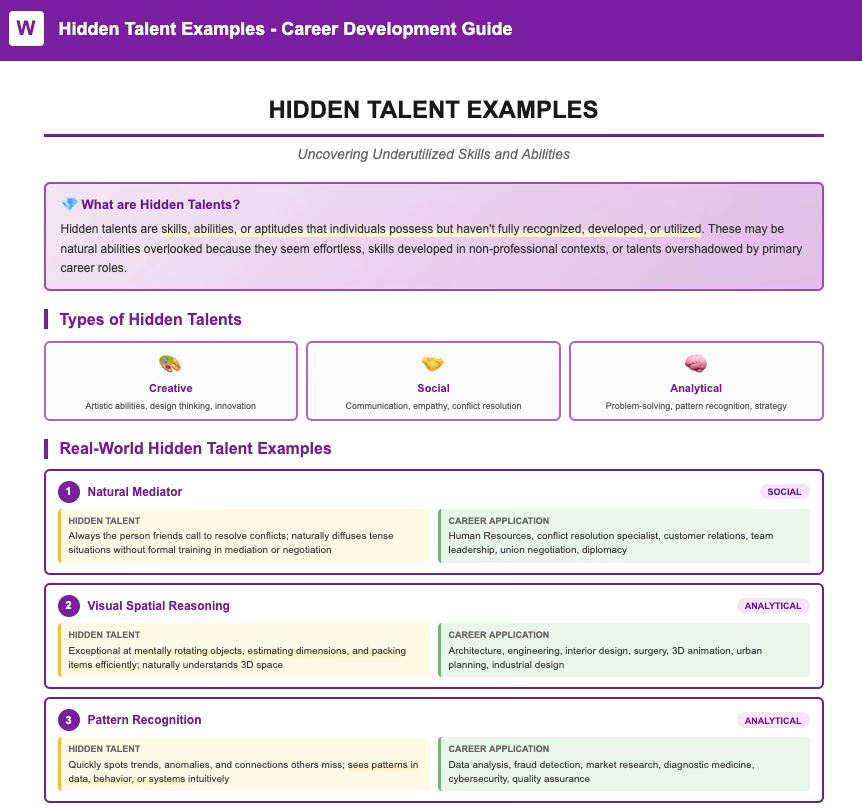
Most people have more talent than they think. The issue is not a lack of potential. The issue is that a hidden strength can be hard to find until life gives you the right situation to reveal it. That is why “hidden talent examples” matters as a topic. When you understand what talent looks like in everyday life, you can spot it in yourself, realize it earlier, and cultivate it into something meaningful.
This post breaks down what talent is, what makes it “hidden,” and a wide range of hidden talent examples—from creative hobbies like poetry, to practical skills like organize and packing, to performance abilities like sing and dance.
Talent
Talent is a natural or developed ability to do something well. It can show up as a skill, a quick learning curve, or a “feel” for a task that other people struggle with. Sometimes talent appears early, and people notice it right away. Other times, talent stays quiet for years.
A useful way to think about it:
- Ability = what you can do (your capacity)
- Skill = what you can do well (refined through practice)
- Gift = what feels unusually natural, especially when you start
- Natural talent = a strong starting advantage that makes progress faster
- Knack = a specific, almost instinctive way of doing something effectively
Talent can be creative, physical, technical, or social. It might look like problem-solving, creativity, attention to detail, or a strategic mindset. Many people assume talent must be dramatic—like performing on stage—but talent can also be quiet and practical, like being handy, being great at organize tasks, or having an eye for aesthetic balance.
And yes—countless people underestimate themselves because their strengths do not match stereotypical “talent” categories.
Hidden talent
A hidden talent is a talent you have but have not fully noticed, named, or used consistently. Hidden talent comes in different forms, and hidden talent comes to the surface for different reasons:
- Lack of exposure: You never tried the activity.
- Fear or shyness: You kept it secret to avoid judgment.
- No feedback: People around you never recognized it.
- Wrong environment: Your daily life never required that ability.
- Comparison trap: You thought you were not “good enough,” so you stopped.
Hidden talent is often overlooked because it is not always visible. Someone may quietly excel at something like embroidery, craft, or packing, but people do not notice because it happens behind the scenes. Another person might have strong artistic abilities, but they never had the time or confidence to explore being artistic.
A hidden talent can also be very specific. For example:
- You might have a knack for picking up any melody and staying in tune.
- You might be surprisingly strategic, like planning routes, budgeting, or solving puzzles quickly.
- You might be extremely handy, able to fix household items without formal training.
Hidden talent is not rare. It is simply under-discovered.
Example
Here are extensive hidden talent examples across different areas. As you read, notice which ones “feel familiar.” That familiarity is usually a clue.
Performance and music hidden talent examples
- Sing naturally well without training (a future singer in the making).
- Staying in tune easily, harmonizing by instinct, or learning songs quickly.
- Playing piano by ear, even if you never had lessons.
- Having rhythm and learning choreography fast as a dancer.
- Being able to dance confidently at events even if you never practiced formally.
These talents often stay hidden because many people assume music is only for “professionals.” In reality, a natural voice, timing, and musical memory are powerful starting points.
Visual arts and design hidden talent examples
- Drawing well with minimal practice—especially proportion, shading, or character design.
- Strong aesthetic judgment (you know what looks “right” in a room, outfit, or layout).
- Great photography instincts—framing, lighting, timing, and storytelling.
- Consistent visual creativity in craft projects, graphic design, or DIY decor.
- Embroidery or intricate work that shows patience and precision.
If your strengths include attention to detail, this category is common. People with detail-oriented minds often surprise people when they finally share what they make.
Food and baking hidden talent examples
- Being able to bake without strict recipes because you understand texture and timing.
- Creating flavor combinations that taste “professional.”
- Decorating cakes or pastries with artistic style.
Cooking and baking are often dismissed as “just hobbies,” but they can reveal high creativity, planning, and technical consistency.
Practical and everyday-life hidden talent examples
- Being excellent at organize tasks—schedules, closets, workflows, and systems.
- Being unusually efficient at packing for trips (space-saving, wrinkle control, logic).
- Being handy—fixing things, assembling furniture, troubleshooting devices.
- Having a knack for learning tools quickly (from basic repairs to digital software).
These talents matter because they improve daily life and workplace performance. They are real abilities, even if they are not glamorous.
Sports and physical hidden talent examples
- Being naturally good at golf—coordination, patience, focus, and technique.
- Being able to climb well (indoor climbing, hiking, endurance, grip strength).
- Having good balance, body control, and movement learning (useful for sports and dance).
Physical hidden talents are often hidden because people assume you must start young. Many skills can be developed quickly once you start, especially if you have natural coordination.
Cognitive and strategic hidden talent examples
- Fast problem-solving under pressure.
- A strategic way of thinking: planning, anticipating outcomes, and making smart tradeoffs.
- Seeing patterns quickly—numbers, language, behavior, or systems.
- Being the person who can “see the solution” when others feel stuck.
This type of talent can be invisible because it looks like “common sense” to the person who has it. But it is not common. It is a strength.
Fine-motor and precision hidden talent examples
- Doing clean, professional-looking manicures and being able to nail small details.
- Building or repairing small items with steady hands and patience.
- Detailed crafts like jewelry-making, model building, knitting, or embroidery.
If you have strong attention to detail, precision talents often appear here.
Poetry
Poetry is one of the most common hidden talents because it can be deeply private. Many talented writers keep their work secret. But poetry is a powerful example of hidden ability because it blends language, emotion, structure, rhythm, and imagery—often with minimal resources.
What makes poetry a hidden talent?
- It is personal, so people fear being judged.
- It is misunderstood; not all audiences “get it,” so writers stop sharing.
- Many people think poetry must follow strict rules, so they do not try.
But poetry is often where creativity becomes visible. If you write lines that make people feel something, if you naturally play with rhythm, metaphors, or voice, that is talent.
Hidden talent examples in poetry
- You can write vivid images and scenes quickly.
- Your lines have rhythm, even without effort—almost like music.
- People understand your message immediately, even when the poem is short.
- You can capture emotion with very few words.
- You revise well and nail the final version with precise wording.
If you are passionate about words, journaling, storytelling, or music, poetry may be a natural home for your talent.
Get started: Send IvyResearchWriters.com your prompt + deadline + word count, and we’ll craft a ready-to-paste draft fast
How to spot your hidden talent (simple, practical methods)
Hidden talents reveal themselves through patterns. Try these methods:
- Track what you learn fast. If you pick something up unusually quickly, that is a clue.
- Notice what people praise. Sometimes others spot your strengths before you do.
- Watch what you do when relaxed. What do you naturally do for fun—draw, sing, organize, bake?
- Look for “effortless wins.” If something feels easy for you but hard for others, you may have a knack.
- Test multiple areas. Because hidden talent is hard to find, experimenting is essential.
Remember: countless talents are discovered by accident—someone tries a new hobby once and suddenly realizes they are good.
How to cultivate a hidden talent so it becomes a real skill
A hidden talent becomes a visible strength when you cultivate it. Here is how:
- Start small and repeat weekly. Consistency beats intensity.
- Get feedback early. Feedback helps people understand what you do well and what to improve.
- Build one portfolio or proof. A short poetry collection, a photo album, a baking page, or a craft set.
- Choose a challenge. Perform one song, submit one poem, take one climbing session, play one round of golf.
- Stay passionate, not perfect. Progress grows faster when you enjoy the process.
Talent is a seed. Skill is what happens when you water it.
Final thoughts: your hidden talent is probably closer than you think
Hidden talent is not magic. It is potential plus opportunity. If you feel drawn to something—writing poetry, learning piano, trying drawing, exploring photography, or becoming more handy—that interest itself may be the first clue. Many talented people start by doing something privately, then slowly build confidence until they can surprise people with what they can do.
Frequently Asked Questions
What is your hidden talent example?
A simple hidden talent example is being unusually good at organizing chaos—like turning a messy schedule, notes, or project into a clean system that actually works. Many people do this naturally and do not realize it is a talent until others rely on them.
Other easy-to-recognize hidden talent examples:
- Writing short, powerful lines (great for poetry, captions, or speeches)
- Picking up melodies quickly or staying in tune without training
- Making food taste “restaurant-level” without strict recipes
- Having a sharp eye for aesthetics (design, outfits, room layout, photography)
- Fixing things around the house without formal training (being handy)
If you need to turn a hidden-talent topic into an A-level discussion post, reflection, or essay, IvyResearchWriters.com can help you pick a strong example and explain it clearly with real-life support.
What is 29 talents?
“29 talents” usually means a broad list of talent categories you can use to identify strengths in yourself (or for an assignment). Here are 29 talent examples you can scan and circle the ones that feel like you:
- Singing
- Dancing
- Drawing
- Poetry writing
- Storytelling
- Public speaking
- Acting
- Photography
- Graphic design
- Video editing
- Playing piano
- Playing another instrument
- Cooking
- Baking
- Crafting (embroidery, DIY, handmade work)
- Interior decorating (aesthetics)
- Fashion styling
- Organization and planning
- Packing efficiently (travel/logistics)
- Problem-solving under pressure
- Strategic thinking
- Teaching/tutoring
- Leadership and delegation
- Negotiation/persuasion
- Emotional intelligence (reading people)
- Writing resumes and professional documents
- Sports coordination (golf, climbing, etc.)
- Tech troubleshooting
- Attention to detail (proofreading, quality checks, precision tasks)
If your professor wants this as a short paper, self-reflection, or career-planning paragraph, IvyResearchWriters.com can help you turn the list into a polished, well-structured response.
How do I figure out my hidden talent?
You figure it out by testing patterns, not guessing. Here is a fast method that works well for both real life and assignments:
Step 1: Track “fast learning.”
What do you pick up quicker than others—writing, tech, rhythm, sports, organizing?
Step 2: Track “effortless wins.”
What feels easy for you but impressive to others (even if you call it “normal”)?
Step 3: Ask for specific feedback.
Ask three people: “What do I do that you think I’m naturally good at?”
Step 4: Try small experiments for 7 days.
Write 1 short poem daily, take 10 photos daily, practice one song daily, do one craft task daily—then notice what energizes you and what improves fastest.
Step 5: Look for repeat requests.
If people repeatedly ask you to plan, edit, fix, teach, or design—your hidden talent is probably already showing.
If you want, IvyResearchWriters.com can help you turn your discovery process into a strong narrative with clear examples (perfect for reflections, scholarships, personal statements, and career assignments).
What are examples of unique talents?
Unique talents are strengths that are valuable but not “obvious” like singing or sports. Examples include:
- Turning complex ideas into simple explanations (teaching talent)
- Seeing patterns quickly (strategy, analytics, troubleshooting)
- High aesthetic judgment (design, photography, branding)
- Extreme attention to detail (editing, quality control, precision work)
- Calming people down in tense moments (emotional intelligence)
- Fixing or building things intuitively (handy skills, DIY)
- Creative wordplay (poetry, slogans, persuasive writing)
- Organizing messy systems (workflow design, planning, packing)
Want this shaped into a ready-to-submit response (with a strong introduction, real-life examples, and a clean conclusion)? Send your prompt to IvyResearchWriters.com, and you can get a polished, original write-up that fits your rubric and word count.

