

Research Implications Examples: A Complete Academic Writing Guide with Practical and Theoretical Insights
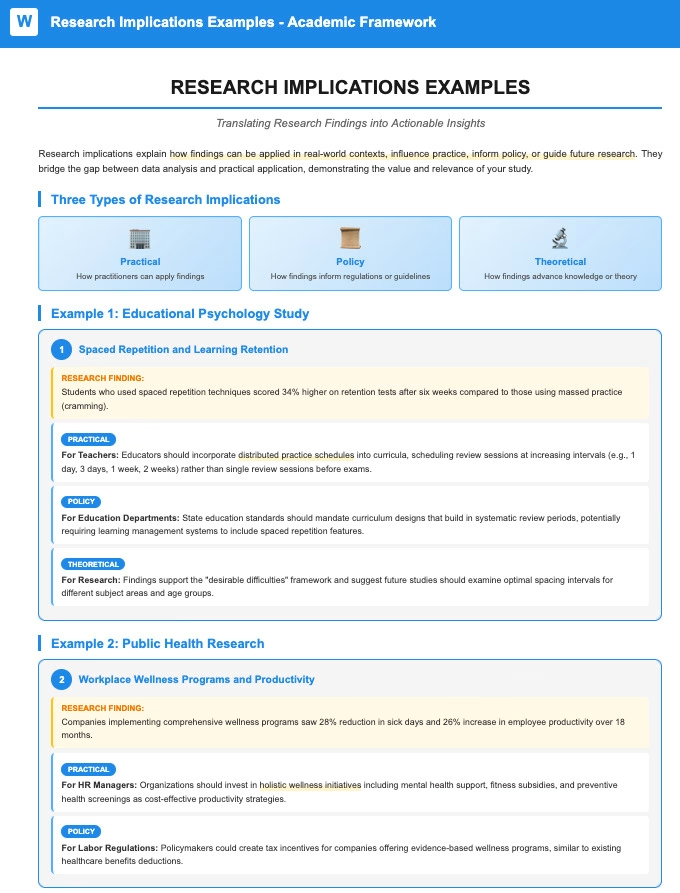
Understanding research implications is one of the most important yet misunderstood parts of academic writing. Many students can describe their research findings, but struggle to explain why those findings matter, who should care, and what actions or future studies should follow. That is exactly where implications come in.
This guide explains research implications, provides clear examples, and shows you how to write implications in research papers, including qualitative research topics. Whether you are working on a dissertation, thesis, or journal article, mastering implications is crucial for demonstrating the significance and impact of your research.
Understanding What Research Implications Mean in Academic Writing
Implications in research refer to the meaning, relevance, and potential impact of your study’s results. They explain how your findings influence:
- Existing theories
- Professional practice
- Policy decisions
- Research design in future studies
In academic research, implications answer the question:
“So what do these findings change or contribute?”
Unlike the results section, which reports what the study found, the implications section interprets what those findings suggest, how they can be used, and why they matter in a broader research field.
Where Implications Belong in a Research Paper
In most research studies, implications are discussed in the research paper discussion section, often alongside or just before implications and recommendations in the conclusion section.
Common locations include:
- Discussion chapter of a thesis or dissertation
- Conclusion section of a journal article
- A standalone “Implications” subsection
Implications are usually written after presenting key findings and before recommending specific actions.
Major Categories of Research Implications Explained
There are several types of implications in research, and strong academic writing often includes more than one.
Practical Implications: Connecting Findings to Real-World Practice
Practical implications explain how research findings can improve real-world practice, professional decision-making, or everyday processes.
Example (education research):
If a study found that a new teaching method improves student engagement, the practical implications may suggest that teachers adopt this method to enhance classroom participation.
Practical implications may target:
- Educators
- Healthcare providers
- Business leaders
- Policymakers
- Technology developers
They often answer:
“How can these results be used in practice?”
Theoretical Implications: Advancing Knowledge and Existing Theories
Theoretical implications focus on how the study contributes to existing theories, models, or academic frameworks.
Example:
If qualitative findings suggest patterns not explained by current theories, the study may challenge or refine existing theoretical assumptions.
Theoretical implications often:
- Extend existing theories
- Question previous studies
- Introduce new conceptual insights
- Clarify relationships between variables
These implications are especially important in academic research and doctoral-level writing.
Implications for Future Research: Guiding Subsequent Studies
Implications for future research explain how your study opens new directions for investigation.
These may include:
- New research questions
- Alternative research methods
- Improved research design
- Different populations or settings
Example:
If a study found limited generalizability due to a small sample size, future research could involve larger, more diverse samples.
Well-written implications for future research help scholars build on your work rather than repeat it.
Social, Political, and Technological Implications
Some studies have broader social implications, political implications, or technological implications, especially in fields like sociology, public policy, and information systems.
Examples include:
- Social implications of inequality research
- Political implications of policy analysis studies
- Technological implications of artificial intelligence research
These implications highlight the potential impact of research beyond academia.
Research Implications Examples from Different Research Designs
Example 1: Quantitative Research Study
Study found:
Remote work significantly improves employee productivity.
Implications of the study:
- Organizations may revise work-from-home policies
- Existing management theories on supervision may need reevaluation
- Future research could examine long-term productivity effects
Example 2: Qualitative Research Topic
Qualitative findings suggest:
Nurses experience moral distress due to inadequate staffing.
Research implications:
- Healthcare administrators should review staffing policies
- Theoretical models of workplace stress may require expansion
- Future research studies could explore coping strategies
This shows how qualitative research implications connect findings to both practice and theory.
How to Write Implications in Research Step by Step
To write implications effectively, follow these steps:
- Restate key findings briefly
- Explain what the findings mean in a broader context
- Identify who is affected (practice, policy, theory, research)
- Discuss potential impact, including positive and negative implications
- Link implications to existing methods or previous studies
Avoid introducing new results. Implications should be based on your results, not speculation.
The Difference Between Implications and Recommendations
A common academic writing mistake is confusing implications with recommendations.
| Implications | Recommendations |
|---|---|
| Explain meaning and significance | Propose specific actions |
| Interpret findings | Suggest what should be done |
| Broader and conceptual | Action-oriented and practical |
Example:
- Implication: The study indicates a gap in teacher training.
- Recommendation: Policymakers should introduce mandatory professional development programs.
Understanding this distinction strengthens your research writing.
Writing Strong Implications for Practice and Policy
When writing implications for practice, focus on:
- Who can use the findings
- How they can be used
- Why they matter
For policymakers, implications may suggest:
- Policy reform
- Regulatory changes
- Resource allocation
Avoid vague statements. Effective implications explain how findings can be used without prescribing actions—that comes in recommendations.
Want a strong “Implications and Recommendations” section that is clearly based on your findings—not generic filler?
At IvyResearchWriters.com, we turn your main findings into clear implications of research (theoretical and practical), then add actionable research recommendations with specific actions based on your results—written in an academic discussion style that earns marks.
Common Mistakes When Writing Research Implications
Avoid these errors:
- Repeating results instead of interpreting them
- Making claims not supported by findings
- Being too general or obvious
- Mixing implications with recommendations
- Ignoring negative implications or limitations
Clear, focused implications highlight the significance of your research.
Why Research Implications Are Crucial in Academic Research
Implications:
- Show the value and contribution of your study
- Demonstrate critical thinking
- Connect findings to real-world contexts
- Justify future research studies
- Strengthen the conclusion section
Without implications, research lacks direction and relevance.
Final Thoughts: Turning Research Findings into Meaningful Impact
Well-written research implications bridge the gap between data and impact. They help readers understand why your study matters, how it contributes to existing knowledge, and what future studies should explore.
Whether your focus is practical and theoretical implications, implications for future research, or policy-relevant insights, learning how to write implications is a critical academic skill.
If you need expert support crafting high-quality implications and recommendations, Ivy Research Writers is here to help transform your research into work that truly matters.
Frequently Asked Questions
How to write implications of research?
Writing the implications is easiest when you treat implications as the “so what” of your main findings. In most research papers, implications go in the section written in the discussion (often under “Implications and Recommendations”).
A simple method you can follow (point + prose):
- State the findings of the study in 1–2 sentences (do not repeat the whole results section).
- Explain what the results mean: implications discuss the meaning and impact based on the outcome of the research.
- Label the theoretical and practical angle: is it theoretical or practical (or both)?
- Write the important implications as clear claims that are based on your findings (not opinions).
- Include practical implications by linking to certain practices in real settings (policy, teaching, healthcare, business).
- Add research recommendations separately as actionable next steps and real-world recommendations (implementation and policy).
- Close by suggest future work: what subsequent research should test, what research might examine next, and why.
Key rule: Implications must directly follow from the evidence, and you should keep a clean distinction between research implications (meaning/impact) and recommendations (specific actions).
If you want your discussion to read like a high-scoring model, IvyResearchWriters.com can turn your study findings into polished theoretical and practical implications plus specific actions based on your exact results.
What is an example of implication?
Here are research examples showing both theoretical and practical implications:
Example 1 (Practical implication):
- Study findings: Students using a structured feedback tool improved writing clarity more than students receiving unstructured comments.
- Implication (practical): Based on your findings, instructors can adopt structured feedback tools to improve student writing outcomes—especially in large classes where consistency matters.
- Actions based / specific actions based: Implement the tool across assignments and train graders to use the same rubric language.
Example 2 (Theoretical implication):
- Findings of the study: Motivation predicted persistence more strongly than prior achievement.
- Implication (theoretical): The results support theory suggesting motivational factors may be more central than academic background in explaining persistence, which warrants refinement of existing models in later work.
- Suggest future / subsequent research: Future studies should test whether this relationship holds across different contexts and populations.
What does implication mean in a research paper?
In a research paper, an implication explains the implications of research—the meaning, significance, and potential impact of your results. It answers:
- What do the findings imply for theory or practice?
- How can the findings be used?
- What should happen next?
Implications are usually written in the discussion because they interpret the main findings and show what follows from the evidence. They can be theoretical or practical, and strong papers often include both theoretical and practical implications. The best implications are clear, evidence-linked, and (when appropriate) connected to actionable changes and real-world recommendations.
What are the 10 examples of sources of research problems?
A research problem often comes from gaps, tensions, or needs in real life and academic literature. Here are 10 common sources:
- Previous studies reporting inconsistent results (a tension that needs explanation)
- Gaps in the literature where topics are under-studied or missing in specific contexts
- Real-world practice issues (certain practices failing or producing unequal outcomes)
- Policy challenges where decisions need evidence (program effectiveness, resource allocation)
- New technologies creating new risks or opportunities (requiring updated research)
- Changes in populations or environments that make older evidence less applicable
- Professional experience or field observation revealing persistent problems
- Stakeholder needs (patients, students, workers) that demand better solutions
- Emerging social trends creating new behaviors or pressures that research might explain
- Theory limitations where existing theories do not fully explain new findings or contexts
If you share your topic area, IvyResearchWriters.com can help you choose the best research problem source, frame it as a strong problem statement, and align it with implications, recommendations, and a coherent discussion.

