

Situation Analysis Example: How to Analyze Your Business Environment Like a Pro
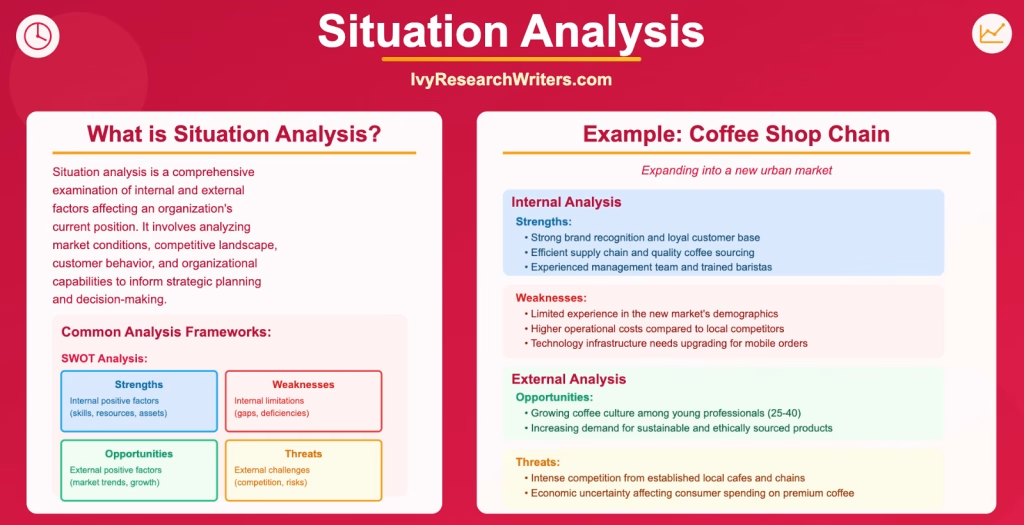
In today’s competitive business landscape, understanding your internal and external environment is essential for developing effective strategies. This is where a situation analysis comes in — a powerful tool for making informed decisions and creating a successful marketing plan.
At IvyResearchWriters.com, we help students, marketers, and business leaders master the art of situational analysis through clear frameworks, professional examples, and research-backed methods.
What Is a Situation Analysis?
A situation analysis is a structured evaluation of the internal and external factors that affect your business performance. It provides valuable insights into your company’s current position, market trends, competitors, and growth opportunities.
Definition:
A situation analysis is a detailed review of the internal and external environment of an organization to identify its strengths, weaknesses, opportunities, and threats.
In simple terms, situational analysis is like taking a snapshot of your business landscape — assessing what’s working, what isn’t, and what external forces may impact your business.
Why Conduct a Situation Analysis?
Conducting a situational analysis helps organizations:
- Gain insights into internal strengths and weaknesses.
- Identify external factors such as market trends and technological advancements.
- Develop targeted marketing strategies that resonate with your target audience.
- Create contingency plans for potential opportunities and challenges.
An effective analysis also supports strategic planning, ensuring every marketing campaign aligns with real data rather than assumptions.
Need a professional situation analysis for your project, marketing plan, or business proposal?
Our experts at IvyResearchWriters.com can help you analyze, identify, and act on opportunities that drive success.
How to Conduct a Situation Analysis
To conduct a situation analysis, businesses and marketing teams follow several systematic steps. The analysis involves collecting data, evaluating performance, and identifying gaps for improvement.
Steps to Conduct a Comprehensive Situational Analysis:
- Define Objectives:
Clearly outline why you are performing the analysis—whether it’s to launch a new product or service or to improve your current marketing efforts. - Collect Internal Data:
Review internal factors such as employee skills, financial performance, production capabilities, and customer feedback. - Assess External Factors:
Examine external sources such as government policies, technological advancements, competitor activities, and the overall business environment. - Use Analysis Methods:
Apply tools like SWOT, PESTEL, Competitor Analysis, and 5C Analysis to gain deeper insights. - Summarize Findings:
Prepare an analysis report highlighting key findings and recommended marketing strategies. - Develop Strategic Actions:
Use the insights gained to create actionable steps that capitalize on your strengths and address weaknesses.
Situational Analysis Methods
Several analysis methods can be used to conduct a detailed evaluation of your business context. Here are the most common situational analysis methods:
SWOT Analysis
A SWOT Analysis evaluates your Strengths, Weaknesses, Opportunities, and Threats.
- Strengths: Internal advantages, like brand reputation or skilled staff.
- Weaknesses: Areas that need improvement.
- Opportunities: External factors like market gaps or emerging trends.
- Threats: Risks such as new competitors or regulatory changes.
Example:
A coffee shop identifies its strength as customer loyalty, a weakness as limited delivery service, an opportunity in online sales, and a threat from large franchises.
PESTEL Analysis
A PESTEL Analysis studies external factors that affect your business:
- Political: Government policies and trade laws
- Economic: Inflation, consumer spending
- Social: Lifestyle changes and cultural shifts
- Technological: New innovations and automation
- Environmental: Sustainability and green practices
- Legal: Labor laws and compliance
This analysis helps marketing teams anticipate changes and adapt marketing strategies accordingly.
5C Analysis
The 5C framework assesses your business environment through five perspectives:
- Company: Internal performance and brand value
- Customers: Behavior, preferences, and needs
- Competitors: Positioning and market share
- Collaborators: Partners, suppliers, and distributors
- Climate: Broader economic and technological landscape
Example:
A tech startup uses 5C analysis to study how customer demand and competitor innovation affect its new app launch.
Situation Analysis in Marketing
So, what is situational analysis in marketing?
It’s a structured process where marketing teams assess all factors influencing their marketing campaigns, including internal strengths and weaknesses, market trends, and competitor actions.
Situation analysis marketing focuses on identifying where your brand currently stands in the market position and how to develop targeted marketing strategies to improve visibility and sales.
For example, before launching a new skincare line, marketers conduct a situation analysis using customer surveys, focus groups, and market research to identify the ideal target audience and pricing strategy.
Situation Analysis Example
Let’s explore a practical situation analysis example for clarity.
Example: A Local Restaurant Chain
Objective:
To expand into a new city while maintaining quality and customer satisfaction.
Step 1 – Internal Factors (Strengths & Weaknesses):
- Strong customer loyalty and high-quality food (strengths)
- Limited online presence and delivery options (weaknesses)
Step 2 – External Factors (Opportunities & Threats):
- Growing demand for fast-casual dining (opportunity)
- Rising ingredient costs and new competitors (threats)
Step 3 – Analysis Methods Used:
- SWOT Analysis to assess the business environment.
- PESTLE Analysis to study government policies and food safety regulations.
- Competitor Analysis to understand pricing and marketing tactics.
Step 4 – Insights Gained:
- Expansion should focus on digital marketing and delivery partnerships.
- Leverage brand reputation to gain a competitive advantage.
Step 5 – Strategic Plan:
- Launch a website with online ordering.
- Collaborate with delivery platforms.
- Introduce loyalty rewards to enhance retention.
This situational analysis example demonstrates how an organization can use multiple tools to make informed marketing decisions.
More Situation Analysis Examples
A situation analysis is a structured evaluation of a business’s internal and external factors to determine its current standing in the market. It provides valuable insights into strengths, weaknesses, opportunities, and threats that shape marketing strategies and overall business operations.
Below are detailed situation analysis examples from various industries and scenarios.
1. Retail Clothing Brand – SWOT and Market Analysis Example
Objective:
To improve brand positioning and customer engagement in the youth fashion market.
Internal Factors (Strengths & Weaknesses):
- Strengths:
- Strong social media presence and influencer partnerships.
- Wide range of trendy and affordable products and services.
- Weaknesses:
- Limited physical store coverage.
- Inconsistent customer service quality.
External Factors (Opportunities & Threats):
- Opportunities:
- Expansion into e-commerce and digital advertising.
- Sustainable fashion trends gaining popularity.
- Threats:
- Rising competition from global fast-fashion brands.
- Supply chain disruptions impacting delivery timelines.
Insights & Strategy:
The situational analysis involves understanding customer behavior through surveys and digital analytics. The brand can capitalize on online engagement by enhancing its website experience, offering eco-friendly collections, and forming local business partners for delivery efficiency.
2. Healthcare Organization – PESTEL and SWOT Example
Objective:
To assess external factors influencing the rollout of new telehealth services.
Internal Factors (Strengths & Weaknesses):
- Strengths:
- Experienced medical professionals and advanced digital infrastructure.
- Strong patient trust and data protection protocols.
- Weaknesses:
- Limited marketing expertise in digital campaigns.
- Dependence on third-party telehealth platforms.
External Factors (PESTEL Analysis):
- Political: Supportive government policies for digital healthcare.
- Economic: Growing demand for affordable virtual consultations.
- Social: Increased acceptance of online healthcare solutions post-pandemic.
- Technological: Rapid technological advancements in AI diagnostics.
- Environmental: Sustainability initiatives for e-waste reduction.
- Legal: Data privacy regulations impacting storage and transmission.
Insights & Strategy:
The analysis can be used to enhance the brand’s digital presence through patient education campaigns and mobile-friendly portals. Partnerships with local insurance providers can improve accessibility and impact your business positively.
3. Food and Beverage Company – 5C Analysis Example
Objective:
To evaluate the current business environment before launching a new organic beverage line.
1. Company:
Strong production facilities and innovation in flavor development.
2. Customers:
Targeted at health-conscious individuals aged 25–40.
3. Competitors:
Local organic brands and international players like Honest Tea.
4. Collaborators:
Retail distributors, packaging suppliers, and marketing agencies.
5. Climate:
Consumer shift toward eco-friendly packaging and market trends in sustainable products.
Insights & Strategy:
The analysis to identify brand perception showed customers value transparency. To gain competitive advantage, the company can promote eco-friendly ingredients and fair-trade sourcing while maintaining price competitiveness.
4. Tech Startup – Situational Analysis in Marketing Example
Objective:
To enter the educational technology market with a new learning app.
Internal Strengths & Weaknesses:
- Strengths: Agile team, innovative AI-driven features, and strong UX design.
- Weaknesses: Limited capital for large-scale advertising.
External Opportunities & Threats:
- Opportunities: Growth in e-learning post-COVID and interest from investors.
- Threats: Rapid technological changes and data security concerns.
Insights:
The situational analysis marketing process involved customer interviews and market analysis to refine messaging. The startup can focus on collaborations with universities and business partners for content integration.
5. Tourism Agency – PESTEL and SWOT Combined Example
Objective:
To improve competitiveness in the post-pandemic travel market.
Internal Factors:
- Strengths: Personalized travel packages and multilingual staff.
- Weaknesses: Outdated website and limited online payment options.
External Factors:
- Opportunities: Increased interest in eco-tourism and domestic travel.
- Threats: Inflation affecting travel budgets; new entrants offering lower prices.
PESTEL Highlights:
- Political: Visa policy changes encouraging tourism.
- Economic: Moderate global economic recovery.
- Social: Travelers prefer sustainable destinations.
- Technological: Need for mobile-friendly booking systems.
- Legal: Compliance with safety and refund regulations.
Insights & Strategy:
The analysis plays a crucial role in adapting travel packages to new consumer behavior. The agency can invest in website upgrades, influencer marketing, and loyalty programs to develop targeted marketing strategies.
6. Manufacturing Firm – Internal and External Analysis Example
Objective:
To expand into new international markets while managing potential challenges.
Internal Factors:
- Strengths: Advanced machinery and cost-efficient production.
- Weaknesses: Dependence on a small supplier network.
External Factors:
- Opportunities: Trade agreements and rising demand in developing countries.
- Threats: Currency fluctuations and new import tariffs.
Insights:
The situational analysis involves understanding the factors that can influence supply chain efficiency and export pricing.
By performing situational analysis, the firm can optimize supplier diversity and form business partners abroad to stabilize raw material flow.
7. Nonprofit Organization – Situational Analysis Example
Objective:
To evaluate the effectiveness of donor engagement strategies and increase fundraising success.
Internal Strengths & Weaknesses:
- Strong community presence and volunteer base.
- Limited data analytics for donor tracking.
External Opportunities & Threats:
- Opportunities: Growing global awareness of social issues.
- Threats: Donor fatigue and economic instability.
Insights & Strategy:
The situational analysis can help design better storytelling campaigns and adopt CRM systems for donor segmentation. The analysis to gain insights ensures improved accountability and long-term sustainability.
8. Education Institution – SWOT and Market Analysis Example
Objective:
To attract more international students and enhance digital learning programs.
Internal Factors:
- Strengths: Renowned faculty and strong alumni network.
- Weaknesses: High tuition fees and outdated website interface.
External Factors:
- Opportunities: Global demand for remote learning.
- Threats: Rising competition from online universities.
Insights & Strategy:
By integrating modern LMS systems and analyzing the situation through student feedback, the institution can improve marketing strategies and attract a global audience.
Analyzing the Situation: The Role of Internal and External Factors
Analyzing the situation means assessing everything that influences your company’s success, both inside and outside the organization.
Internal Factors
Include your internal strengths, employee capabilities, company culture, brand equity, and financial health.
External Factors
Refer to market dynamics, technological advancements, competitors, and customer needs that shape your strategy.
Together, these internal and external factors form the foundation for situational analysis and guide decision-making across departments.
How Situation Analysis Helps Organizations
A thorough situation analysis can help organizations:
- Gain insights into strengths, weaknesses, and market opportunities.
- Identify opportunities for innovation or diversification.
- Develop marketing strategies that resonate with customers.
- Make informed business decisions and analyze internal performance.
- Adapt to changes in the external environment quickly.
Ultimately, the analysis will help you align your marketing plan with your business goals and maintain long-term sustainability.
Writing a Situation Analysis Report
When you write a situation analysis, your report should include:
- Executive Summary – Overview of purpose and findings.
- Internal Analysis – Strengths, weaknesses, and operational insights.
- External Analysis – Market trends and competitive landscape.
- Key Insights – What the analysis uses to identify opportunities.
- Strategic Recommendations – Actionable next steps to capitalize on your findings.
Your analysis report becomes a roadmap for effective marketing plan execution.
Conclusion: The Power of Situational Analysis in Strategic Marketing
In a fast-evolving marketplace, situational analysis is essential for strategic growth. It allows businesses to analyze internal and external factors, anticipate challenges, and develop marketing strategies that drive measurable success.
Whether you’re preparing an academic paper or a professional marketing plan, a solid situation analysis ensures your decisions are backed by data and insight — not guesswork.
At IvyResearchWriters.com, our experts craft detailed, research-based situation analysis examples and marketing reports that help students, entrepreneurs, and corporations make smart, evidence-driven choices.
Frequently Asked Questions
What Are Examples of Situational Analysis?
Situational analysis can take many forms depending on the type of current business or industry being evaluated. Essentially, it helps you understand how internal and external factors impacting your organization shape strategy and outcomes.
Examples include:
- SWOT Analysis – Evaluates internal factors such as strengths and weaknesses alongside opportunities and threats in the external environment.
- PESTEL Analysis – Studies how political, economic, social, technological, environmental, and legal factors can influence your business operations.
- Competitor and Market Analysis – Focuses on market share, positioning, and gaps in products and services compared to key business partners or competitors.
- 5C Analysis – Examines Company, Customers, Competitors, Collaborators, and Climate for deeper analysis to gain insights.
Example: A retail company performing situational analysis may identify rising e-commerce demand (opportunity) and increasing supply costs (challenge)—insights that guide decisions about online expansion.
At IvyResearchWriters.com, we create real-world situational analysis marketing examples that apply these frameworks to help businesses, students, and researchers interpret market trends effectively.
How Do You Write a Situation Analysis?
Writing a situation analysis means combining research, structure, and insight to describe your current business environment. The goal is to explain situational analysis in a way that informs strategy.
Here’s how to do it effectively:
- Define the Objective:
Clearly state why the analysis is being conducted — for a new campaign, product launch, or overall strategy update. - Collect Data:
Gather internal and external factors impacting your business — such as performance metrics, market analysis, and business operations data. - Analyze Internal Factors:
Evaluate strengths and weaknesses to understand what’s working inside your organization (resources, staff, capabilities). - Assess External Factors:
Identify potential challenges from competitors, regulatory changes, or consumer behavior shifts. - Draw Insights and Recommendations:
Use the analysis to develop strategies that capitalize on strengths and address weaknesses.
Pro Tip: A strong situational analysis can help you anticipate market changes before they occur and adjust marketing plans accordingly.
IvyResearchWriters.com assists students and businesses in performing situational analysis reports that are data-driven, professionally formatted, and academically sound.
What Are the 5 Main Components in Situational Analysis?
The five main components of a comprehensive situational analysis marketing report cover both internal factors such as strengths and external dynamics shaping performance.
- Internal Environment – Includes resources, management, and business operations efficiency.
- External Environment – Covers market analysis, competitors, and industry trends.
- Customer Insights – Focuses on behaviors, needs, and satisfaction related to products and services.
- Competitive Landscape – Evaluates key rivals and business partners to identify opportunities for differentiation.
- Strategic Implications – Converts findings into an analysis to develop future goals and marketing strategies.
These components ensure your analysis can be used to make informed decisions that improve your marketing strategies, product innovation, and brand positioning.
At IvyResearchWriters.com, we help clients structure their reports using these components, ensuring every section delivers clear, actionable analysis to identify opportunities and threats.
What Is the Situation Analysis?
A situation analysis is an essential step in strategic planning and marketing management. It provides a deep understanding of the current business environment, enabling leaders to adapt to internal and external pressures effectively.
In simple terms:
A situation analysis involves examining your company’s internal strengths and weaknesses and external opportunities and threats to determine how well you are positioned in the market.
The analysis plays a crucial role in:
- Assessing market readiness for new products and services.
- Identifying factors that can influence customer decisions.
- Enhancing collaboration with business partners and suppliers.
- Developing analysis to gain insights that improve growth and sustainability.
By understanding these dynamics, a situational analysis can help you build strong, data-backed marketing campaigns that align with your long-term objectives.
At IvyResearchWriters.com, our writers specialize in crafting tailored situational analysis marketing papers and business reports that turn complex market data into actionable insight — helping clients strengthen their competitive advantage and achieve sustainable success.

