

Internal vs External Validity: A Comprehensive Guide for Researchers

When designing and analyzing research studies, the concepts of internal and external validity are crucial for understanding the credibility and applicability of your findings. Whether you’re conducting quantitative research or dealing with research methods in general, the distinctions between internal and external validity can make a significant difference in how your results are interpreted and used.
In this blog post, we will explore the definitions, importance, and examples of internal validity and external validity. We will also dive into ways to improve both types of validity and how to avoid common threats to validity in your research.
Internal Validity: What Does It Mean?
Internal validity refers to the extent to which a study can demonstrate a clear cause-and-effect relationship between the independent variable and the dependent variable, free from other influencing factors. It ensures that the changes observed in the dependent variable are truly caused by the manipulation of the independent variable, not by any confounding variables.
Internal Validity Definition
A high level of internal validity means that you can confidently attribute the observed effects to the treatments or interventions applied during the research study.
For example, in a randomized controlled trial (RCT) testing a new drug, internal validity ensures that any observed effects are due to the drug and not other factors, such as differences in participant characteristics.
Improving Internal Validity
To improve internal validity, researchers should:
- Randomize participants to treatment and control groups to eliminate selection bias.
- Use blinding to ensure that both researchers and participants are unaware of the intervention they are receiving.
- Control for potential confounding variables by either randomizing or statistically controlling for them.
Threats to Internal Validity
Several factors can threaten internal validity, such as:
- Selection bias: When the study sample is not randomly selected, leading to uneven groups.
- Regression to the mean: When extreme values in the data tend to move closer to the average over time.
- History effects: When external events affect the study participants during the research period.
By recognizing and addressing these threats, researchers can enhance the integrity of their findings.
External Validity: What Does It Mean?
External validity refers to the extent to which the results of a study can be generalized beyond the specific conditions or sample of the study. In other words, it addresses whether the findings of a study are applicable to real-world settings.
External Validity Refers to Whether Study Results Can Be Generalized
Ecological validity, a subset of external validity, refers to whether the study results are applicable in real-world scenarios. A study with high external validity should be able to produce results that can be applied to a broader population of interest.
For example, if a study on classroom learning is conducted with a group of college students, its external validity would be questionable when generalized to younger children or people from different cultural backgrounds.
Threats to External Validity
Common threats to external validity include:
- Sampling bias: When the sample is not representative of the general population.
- Situational factors: When the study is conducted in a highly controlled or artificial environment that doesn’t reflect real-world conditions.
Improving External Validity
To enhance external validity, researchers can:
- Use a representative sample that mirrors the larger population they intend to generalize to.
- Conduct research in real-world settings (or at least settings that closely resemble real-world environments).
- Randomly assign participants to different groups to avoid systematic differences.
By addressing these factors, researchers can increase the likelihood that their findings will be applicable outside the specific study conditions.
Reliability and Validity in Research
While validity focuses on whether a study measures what it intends to measure, reliability concerns the consistency and stability of the results over time. In other words, reliability refers to how consistent the results are across different measurements, while validity refers to how well the study measures the intended phenomenon.
What is Reliability?
Reliability in research refers to the consistency of a measure. If a study produces the same results under consistent conditions, it is considered reliable. The concept of reliability is vital to ensure that the findings are not due to random errors but represent a true underlying trend.
Reliability vs Validity: What’s the Difference?
While reliability ensures consistency, validity ensures accuracy. A study can be reliable (producing consistent results) but not valid (measuring what it’s supposed to measure). For instance, a clock that is consistently 10 minutes fast is reliable but not valid.
In research, both reliability and validity are important. A study should aim for both high reliability (consistent results) and high validity (accurate and meaningful results).
Ecological Validity: Ensuring Real-World Relevance in Research
Ecological validity refers to the extent to which the results of a study can be applied to real-world situations. This type of validity is particularly important when the goal is to generalize the findings to natural environments outside of the controlled conditions of the study.
For instance, a research study conducted on classroom learning effectiveness may have high ecological validity if it is performed in actual classrooms with real students rather than in a laboratory setting. The more closely a study reflects real-world conditions, the better it can be generalized to other contexts, thereby improving its external validity.
To achieve high ecological validity, researchers need to ensure that their research methods closely mirror the real-world conditions they intend to study. By using natural settings, appropriate research participants, and ensuring that research groups reflect the characteristics of the target population, the findings can be more confidently applied to broader contexts.
Research Studies: Balancing Reliability and Validity
In the context of research studies, balancing reliability and validity is critical to ensure both consistent and accurate results.
- Reliability in research refers to the consistency of the results, meaning that if the study were repeated, similar outcomes would be obtained. Another word for reliable might be “consistent” or “dependable.” When reliability is high, the reliability of research ensures that any variations in results are not due to random chance but reflect the true underlying phenomenon.
- On the other hand, validity in research defines the accuracy with which the study measures what it intends to measure. Validity is the extent to which the study captures the concept of validity, ensuring that the findings are relevant and meaningful.
A study can be reliable but not necessarily valid. For example, a scale that consistently measures weight but consistently adds five pounds to each reading is reliable but not valid. Test validity helps ensure that the research findings truly reflect the independent variable being studied.
Research Methods: Ensuring High Quality and Accuracy
When selecting research methods, it is essential to incorporate strategies that enhance both reliability and validity. For example, using randomized controlled trials (RCTs) and random assignment can help eliminate bias, thus ensuring a more reliable study outcome. By carefully controlling variables and ensuring proper measurement tools, researchers can also achieve better validity, making sure their study reflects the concept they are testing.
Reliability psychology also plays a role in research methods, where consistency in measurements is crucial. If a research study is reliable but not valid, it will not provide meaningful results. Researchers must carefully evaluate their research methods to ensure that they are measuring what they intend to measure, thus improving both the reliability and validity of their research outcomes.
Quantitative Research: Strengthening Validity and Reliability
In quantitative research, reliability and validity are paramount in ensuring the accuracy and consistency of measurements, particularly when dealing with large sample sizes and statistical analysis.
- Reliability in quantitative research refers to the consistency of measurements, meaning that when a test or tool is used multiple times, it produces the same results. This reliability is essential when conducting external validity statistics, which help to analyze the generalizability of findings across different populations or settings.
- Validity in quantitative research is often assessed through various types of validity such as content validity, criterion validity, and construct validity. Content validity ensures that the measure fully captures the construct being studied, while criterion validity assesses how well the test correlates with other established measures. Construct validity refers to how well the test measures the theoretical concept it is intended to measure.
By incorporating both validity and reliability, quantitative research becomes a powerful tool for deriving conclusions that are both accurate and consistent, allowing researchers to confidently generalize findings to larger populations.
Defining Reliable and Valid: Key Concepts in Research
In any research study, understanding the terms reliable and valid is fundamental to assessing the quality of the research.
- Define reliable: A research method or instrument is considered reliable if it consistently produces the same results under similar conditions. Reliability means that the measurement tool is dependable and consistent over time.
- Define valid: Validity refers to how well an instrument or test measures what it is intended to measure. If a research tool accurately captures the variable it is designed to assess, it is considered valid.
Reliability and validity are closely linked yet distinct concepts. Reliability ensures that a study’s results are consistent, while validity ensures that those results are meaningful and accurate. Reliability vs validity is a common debate in research, as reliable results that are not valid do not provide useful or truthful information.
Reliability Meaning and Its Role in Research
The reliability meaning in research is the consistency of a measurement. When a study is reliable, it means the results can be repeated under similar conditions. The reliability of research definition refers to the extent to which the results of the research can be trusted to be the same if repeated. In reliability psychology, for example, if the same test produces the same result over time, it is considered reliable.
What is reliability in research? It refers to the consistency and stability of the data and measurements. Research reliable findings ensure that any conclusions drawn from the study can be confidently repeated in future studies under similar conditions.
Validity: The Foundation of Accurate Research
Validity in research is equally important as reliability. Validity definition in science is the degree to which a test or study measures what it intends to measure. Validity meaning in psychology refers to how well a psychological test or assessment tool measures the specific psychological concept it is designed to evaluate. Validity psychology meaning emphasizes whether the tool is measuring the construct it claims to measure, such as intelligence or personality traits.
The validity reliability relationship refers to how both must be considered together: a measurement must be reliable to be valid, but reliability alone does not guarantee validity. For example, a test might consistently measure the same thing (reliable), but if it does not measure what it’s supposed to (invalid), its results will not be meaningful.
What Is Validity in Research?
What is validity in research? It is the degree to which a research study accurately answers the research question and measures the variables it is intended to study. For instance, validity shows whether the research findings truly reflect the relationships between the variables in a study and are not influenced by external factors or biases.
Definition for validity in research includes various types, including content validity, construct validity, and criterion validity. These ensure that a study accurately measures the variables it aims to study and produces findings that can be generalized to the broader population.
Need Expert Assistance on Validity in Research?
Understanding and ensuring validity in your research is crucial for accurate and meaningful results. At Ivy Research Writers, we specialize in helping researchers like you navigate the complexities of internal, external, and construct validity to strengthen your study’s credibility.
Contact us today for professional guidance and support in designing and refining your research to ensure your findings are both reliable and valid!
Population Validity and Generalizability
Population validity refers to whether the sample of participants in a study accurately reflects the population of interest. If a sample is not representative of the population, the findings cannot be generalized beyond that sample.
For instance, if a study uses only university students from a single country, its population validity might be limited, and its findings may not apply to other age groups, cultures, or settings. This limitation is particularly important when external validity of your study is being evaluated.
Types of External Validity
There are two types of external validity to consider: population validity and ecological validity.
- Population validity ensures that the study sample is representative of the broader population, allowing findings to be generalized to other groups.
- Ecological validity refers to whether the study’s results can be applied to real-world situations or natural settings.
Both types of external validity are crucial for the applicability of research findings in broader contexts, as they help researchers ensure that their results are meaningful beyond the specific study conditions.
Manipulating an Independent Variable: Internal vs External Validity
In research, manipulating an independent variable in a study helps establish cause and effect relationships. However, it also has implications for both internal validity and external validity.
- Internal validity is the extent to which the study accurately measures the cause-and-effect relationship between the independent variable and the dependent variable. This is critical for research studies that aim to isolate specific causes. Internal validity would be compromised if confounding variables interfere with the results.
- External validity is concerned with whether the study’s findings can be applied to other populations or real-world situations. External validity is established by ensuring the sample is representative of the population and that the study’s conditions resemble real-life settings. Good external validity allows researchers to generalize their findings, but care must be taken not to sacrifice internal validity in the process.
Ensuring Validity in Qualitative and Quantitative Research
In both qualitative research and quantitative research, validity is crucial for ensuring that the research results are meaningful and can be generalized. For instance, in qualitative research, validity can be established by using methods such as member checks or triangulation to ensure the data accurately reflects participants’ experiences. In quantitative research, test validity and statistical methods ensure that the results are not due to random chance but instead reflect the intended constructs.
Research Methods and Study Design
Effective research methods and study design are necessary for achieving both reliability and validity. By carefully selecting appropriate measures and controls, and by using techniques like blinding the research assistants or random assignment, researchers can minimize bias and enhance the study’s internal and external validity.
In clinical psychology, for example, validity plays a key role in ensuring that research findings accurately reflect the phenomena being studied, such as the effectiveness of an intervention. If participants are unaware of what intervention they are receiving (blind design), it helps eliminate bias and ensures better internal validity.
By using the right research methods and ensuring both reliability and validity, researchers can draw more accurate conclusions and make findings that truly reflect the intended research question.
Internal Validity vs External Validity: The Balance
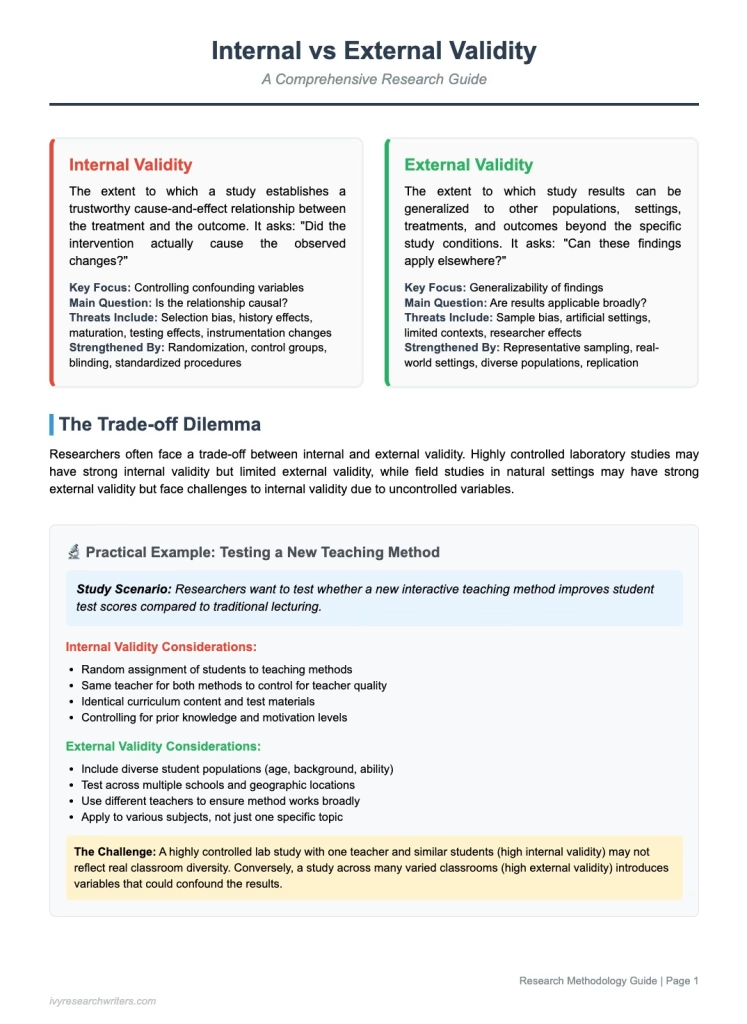
While internal validity ensures that a study can demonstrate a cause-and-effect relationship within a controlled environment, external validity makes sure that these results can be generalized to broader settings or populations.
In some cases, there is a trade-off between the two. A highly controlled lab experiment may have high internal validity but low external validity because the controlled environment doesn’t reflect real-world conditions. Conversely, a study conducted in a natural setting may have high external validity but lower internal validity due to uncontrollable variables.
Examples of Studies with Internal vs External Validity
- Example 1 (High Internal Validity, Low External Validity): A lab experiment where participants are exposed to a specific treatment and all other factors are controlled. While the results are internally valid (the treatment caused the observed effects), the findings may not be applicable to real-world situations.
- Example 2 (Low Internal Validity, High External Validity): A field study on classroom learning, where the study is conducted in a real classroom setting with real students. While the results may be highly generalizable, factors like uncontrolled student behavior could reduce internal validity.
Conclusion: Ensuring High Internal and External Validity in Research
Both internal validity and external validity are essential for conducting high-quality research. By understanding their definitions, potential threats, and ways to improve both, researchers can enhance the credibility and applicability of their findings. Whether you’re conducting quantitative research or using other research methods, a balanced approach to validity will ensure your study is both accurate and generalizable.
For further assistance in improving your research design, including strategies for enhancing internal and external validity, contact Ivy Research Writers today for expert support!
FAQs: Internal Vs External Validity: Internal and External Validity in Research
What is an example of external validity?
An example of external validity can be seen in a study conducted on the effectiveness of a new educational method. If the study is done in a real classroom setting with a diverse group of students (rather than a controlled lab environment), the external validity of the study is high because the findings can likely be generalized to other real-world classroom situations. Ecological validity refers to whether the research findings can be applied to the real world, like how this method would perform across different classrooms or educational settings. To improve external validity, the study could involve a representative sample of students and settings, ensuring that the results are not limited to the specific group of participants in the study.
What is the difference between internal and external validation?
Internal validity refers to the extent to which the results of a study can be attributed to the independent variable and not to other factors. In other words, internal validity is about ensuring that the study’s design, such as random assignment, blinding research assistants, and control of confounding variables, properly isolates the cause-and-effect relationship between the independent variable and dependent variable. Internal validity focuses on accuracy within the study itself.
On the other hand, external validity refers to the ability to generalize the study’s findings beyond the specific conditions of the experiment, including to different populations, settings, or times. While internal validity deals with the integrity of the study’s conclusions, external validity ensures that those conclusions can apply to a broader context.
The key difference between internal versus external validity is that one focuses on the internal consistency of the study, and the other focuses on the applicability of the results to the outside world.
What is the difference between internal and construct validity?
Internal validity focuses on the accuracy of cause-and-effect relationships within a study, ensuring that the independent variable is truly responsible for changes in the dependent variable. In contrast, construct validity refers to whether the test or measure used in the study accurately represents the concept or variable it is intended to measure.
For instance, if a study is examining the effects of stress on cognitive performance, construct validity would concern whether the stress measure (e.g., self-report questionnaire) accurately represents the concept of stress, while internal validity ensures that any changes in cognitive performance are truly caused by stress, not other confounding factors. In short, construct validity ensures that the right thing is being measured, while internal validity ensures that the measurements reflect the true effects of the manipulated independent variable.
What are some examples of internal validity?
Examples of internal validity include:
- Randomized controlled trials (RCTs) where random assignment of participants to treatment or control groups helps eliminate selection bias and ensures that the effects seen are due to the manipulation of the independent variable and not other factors.
- A study that uses blinding (where participants are unaware of what treatment they are receiving) to reduce the risk of bias influencing the outcome measures.
- A well-designed experiment with control groups that isolates the variable of interest (e.g., drug treatment) from other external factors, ensuring that any observed effects are directly due to the manipulation of the independent variable.
Internal validity of a study can be assessed by looking at the extent to which the study controls for potential confounding variables and ensures that the effects seen in the study are not due to biases or other systematic errors.

